
EQT 3Q26: Beat on Spending, Not on Price; Gas Held Back Again
 EQT, the biggest driller in the Marcellus/Utica, released its third-quarter 2026 numbers after the market closed yesterday. Normally we’d also have a call where CEO Toby Rice and CFO Jeremy Knop take analysts’ questions. Not this time. Two days after agreeing to buy Range Resources (see our Oct. 26 post), EQT canceled the call and simply posted its press release and slide deck. So there’s no Q&A to mine. But there’s plenty in the documents. Profit fell 17% because EQT sold less gas at lower prices. It still beat Wall Street’s estimates, mostly by spending less than it said it would. And EQT again chose to leave gas in the ground rather than sell it cheap. Here’s what matters to landowners, competitors, the supply chain, and investors. Read More “EQT 3Q26: Beat on Spending, Not on Price; Gas Held Back Again”
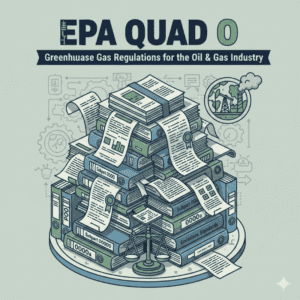 Wait a minute. Didn’t the EPA already fix the Biden-era “Quad O” methane regs? Back in April, MDN told you the EPA had issued a final Quad O rule (see
 Range Resources, the company that drilled the very first Marcellus Shale well back in 2004 on the Renz farm in Washington County, filed its third quarter 2026 update yesterday. It’s likely one of the last quarterly reports Range will file as an independent company. EQT announced Monday that it will buy Range in an all-stock deal worth about $13 billion (see
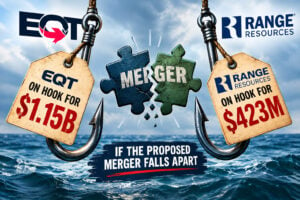 On Monday, we brought you the news that EQT Corporation is swallowing Range Resources in an all-stock deal that values Range at roughly $12.8 billion and creates a combined company worth more than $50 billion, including debt (see
 There’s a new name in shale with “Appalachia” on its list of regions, and we’re not sure yet what it owns here. It’s called NEQ Operating. Last May, we told you that NextEra Energy, the Florida utility giant, was buying a Quantum-backed shale investor called Caliber Resource Partners for $1.3 billion, and that it was setting up a 50/50 joint venture with Quantum to run its oil and gas business (see
 Anthropic, the San Francisco company behind the Claude artificial intelligence (AI) chatbot, filed its initial public offering (IPO) paperwork with the Securities and Exchange Commission (SEC) on Monday (Oct. 26). Buried in the 318-page prospectus, in a risk section titled “Electrical Power and Fuel Constraints,” is an admission that should make every Marcellus/Utica driller, pipeline company, and royalty owner sit up and take notice: some of Anthropic’s planned data centers will run on their own dedicated, on-site natural gas-fired power plants. And Anthropic’s big worry isn’t the gas itself. It’s getting enough pipeline capacity to deliver it.
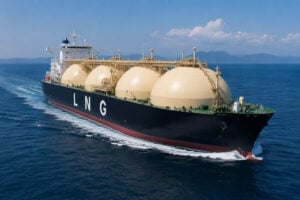 Here’s a story that made us smile this morning. EQT, about to become the country’s biggest natural gas producer once its ~$12.8 billion takeover of Range Resources closes, is leasing two brand-new LNG tankers. And EQT is naming them… wait for it… the Marcellus and the Utica! The ships arrive in 2028. Meanwhile, EQT plans to start trading LNG cargoes as soon as next year, open offices in London and Singapore, and possibly lease up to 10 more ships. Appalachian gas, on EQT-leased ships, with the names of our two great shale plays painted on the side. What’s not to love?
 OTHER U.S. REGIONS: Freeport LNG feedgas cuts knock US demand from recent highs; Vermont families who electrified say they are trapped as utilities keep raising rates; Distributed Energy Infrastructure constructs 3.37 MW solar on bedrock in Upstate NY; RGGI allowance resales – ratepayer costs that don’t fund NY state benefits; Rural North Carolina county residents fight gas pipeline; NATIONAL: U.S. natural gas futures settle higher; Constellation secures conditional DOE loan of up to $5B for nuclear; EPA’s carbon repeal saves billions, protects energy supplies; LA Times recycles “industry knew” playbook against plastics; Energy on edge ahead of USA midterms; INTERNATIONAL: Oil slips as Iran diplomacy picks up; GHG Protocol to push back stricter Scope 2 reporting rules after corporate objections; ICE TTF options hit record open interest as buyers hedge gas prices.