
SoftBank Ohio Gas Plants Get Express Lane Around PJM’s Clogged Queue
 Last month we told you Ohio had asked PJM to dust off the “State Agreement Approach,” a grid-planning tool invented for New Jersey’s offshore wind, and use it instead for the $4.2 billion in power lines feeding the 10-gigawatt SoftBank data center and gas plant complex at Piketon (see Ohio Uses NJ Wind Tool to Fast-Track Piketon Gas/AI Power Lines). That request is now a signed deal. On Tuesday, PJM filed the executed study agreement with the Federal Energy Regulatory Commission (FERC). Tucked inside are two new pieces of news: the project’s gas plants get to skip PJM’s notoriously clogged interconnection queue, and the full turbine list is out. Every one of the 77 turbines is a GE Vernova. Siemens is nowhere to be found. Read More “SoftBank Ohio Gas Plants Get Express Lane Around PJM’s Clogged Queue”
 The Homer City Energy Campus in Indiana County, PA, will be one of the country’s largest natural gas-fired power plants under construction. It burns Marcellus gas, and it needs a lot of water to keep cool. On Wednesday, the Pennsylvania Department of Environmental Protection (DEP) held a public hearing on a permit change that would let the plant send up to 6.8 million gallons a day of used cooling water into Blacklick Creek. All of the roughly a dozen speakers opposed it. DEP says it will decide before the current permit expires at the end of this year. Here’s what the opponents said, and what DEP’s own paperwork says, which is a different story.
 Another data center proposal has landed in Westmoreland County, PA. This one is a 1.1-million-square-foot building on old farmland in South Huntingdon Township, right off I-70 and across the road from the Pittsburgh Renaissance Festival. The developers are Sippel Development Co. of Zelienople and TriEnergy of Sewickley — the latter a company that has spent roughly 30 years buying land for oil and gas development. The plans filed with the township don’t say where the electricity will come from. But we have a pretty good guess. The site sits about a mile from Tenaska’s 940-megawatt natural gas-fired power plant, and gas wells are nearby. Here’s what we know.
  PJM Interconnection, the outfit that runs the electric grid for 13 states (including PA, OH and WV) plus DC, has picked its first three projects for a brand-new fast lane to get big power plants hooked up to the grid. Two of the three are giant battery projects from ENGIE. The third is the one that caught our eye: LS Power plans to add 455 megawatts (MW) to its existing Hunterstown natural gas-fired power plant near Gettysburg, in Adams County, PA. By MDN’s math, that expansion will need roughly 60 million cubic feet of natural gas per day once it’s up and running. Guess where that gas is coming from?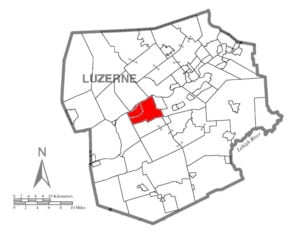

 On Sept. 22, Alpha Compute Corp. (Nasdaq: ALP) said it was buying an old Pennsylvania oil field (county not named) for $5.5 million and planned to put a second 200 MW data center on it (see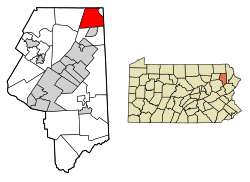
 New Jersey regulators have fined the company building a giant AI data center in Vineland (Cumberland County, South Jersey) $1.07 million for installing and running 62 large natural gas-fired generators without air permits. The NJ Department of Environmental Protection (DEP) calls it “by far the largest” enforcement action ever taken against a data center in the Garden State, and “possibly one of the largest such actions in the nation.” Our math: those 62 engines add up to nearly 123 megawatts (MW) of gas-fired power, running behind the meter at a site that is supposed to become a 300 MW data center serving Nebius and, through Nebius, Microsoft. The developer, DataOne, says the engines are temporary until Bloom Energy fuel cells (which also run on natural gas) take over, and it will now apply for permits.
  Meta’s energy chief closed
  Last month we told you DTE Energy was about to ask Michigan regulators for permission to build two new natural gas-fired power plants totaling 2,100 megawatts (MW) (see