
Shale Insight: The People Who Stayed Because of the Marcellus
 For our final Shale Insight 2026 post, we set aside prices, pipelines, and permits and focus on people. Speakers in Erie told stories about boilermakers told six years ago to retrain for renewables who are now building the country’s largest gas-fired power campus, and about dairy farm kids in Bradford County who never thought they could afford a house and now run Repsol’s Marcellus operations. It was a reminder of who shale is really for. Read More “Shale Insight: The People Who Stayed Because of the Marcellus”
 The Ohio River Valley Institute (ORVI), the radical anti-fossil fuel outfit that wants to shut down Appalachian shale, is at it again. Today ORVI senior researcher Sean O’Leary published an op-ed in the Ohio Capital Journal claiming that shale’s importance to Ohio’s economy is “small and shrinking.” He lists seven “facts.” We checked every one of them against the same government data he cites. Some are technically true but badly misleading. At least one is flat wrong — by a factor of a million. Here’s what the data actually says.
  The hill above Homer City now has more people working on it than the borough below has living in it. Homer City Generation dropped a Labor Day announcement on Friday: more than 1,800 direct-hire tradespeople and skilled contractors are on site building the 4.4-gigawatt (GW) gas-fired plant and data center campus rising from the bones of what was once Pennsylvania’s largest coal-fired power station. The borough of Homer City has roughly 1,800 residents. That’s a nice bit of symmetry, and it says more about what this project means to Indiana County than any press release paragraph could.
 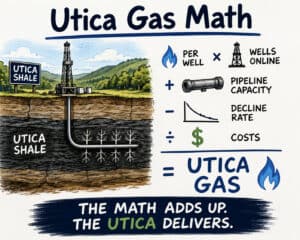 A pile of poster boards in a YMCA gymnasium is not usually where you find the most important number in a $33 billion project. But on Aug. 27, at the Pike County YMCA in Waverly, Ohio, an SB Energy executive told a Columbus Dispatch reporter something that ought to get every Utica producer’s attention: the turbines are already bought. Not ordered. Not “in negotiations.” Bought — for the first phase of what will be the largest gas-fired power plant in American history.
  Devon Energy and Williams spent the last week of July doing something that doesn’t show up on a reserve report: teaching northeastern Pennsylvania teenagers how the gas business actually works. Then, on July 30, the Pennsylvania Chamber Foundation named both companies “Greatest Places to Intern in PA.” Six days later, Devon CEO Clay Gaspar told analysts he’s fielding “no shortage of incoming phone calls” about which assets he might sell — with the Marcellus at the top of everybody’s list. Which raises a question nobody on Wall Street is asking: who inherits the workforce machine?
  Earlier this month, Homer City Generation announced the early completion of demolition and excavation work at its Indiana County, Pennsylvania, site, marking a major milestone in transforming the former coal-fired power plant into a gas-fired power plant and AI data center complex (see
  JobsOhio, a private, nonprofit corporation that works on behalf of the state to drive job creation and new capital investment in Ohio by attracting business, contracts its economic research to Cleveland State University (CSU) to monitor the Utica Shale industry. JobsOhio released the latest CSU twice-a-year report yesterday (full copy below). It shows that Ohio’s shale energy sector drew another $2.9 billion in direct investment between January and June 2025, pushing cumulative investment in the Utica since 2011 to nearly $117.5 billion. All private money! It’s massive.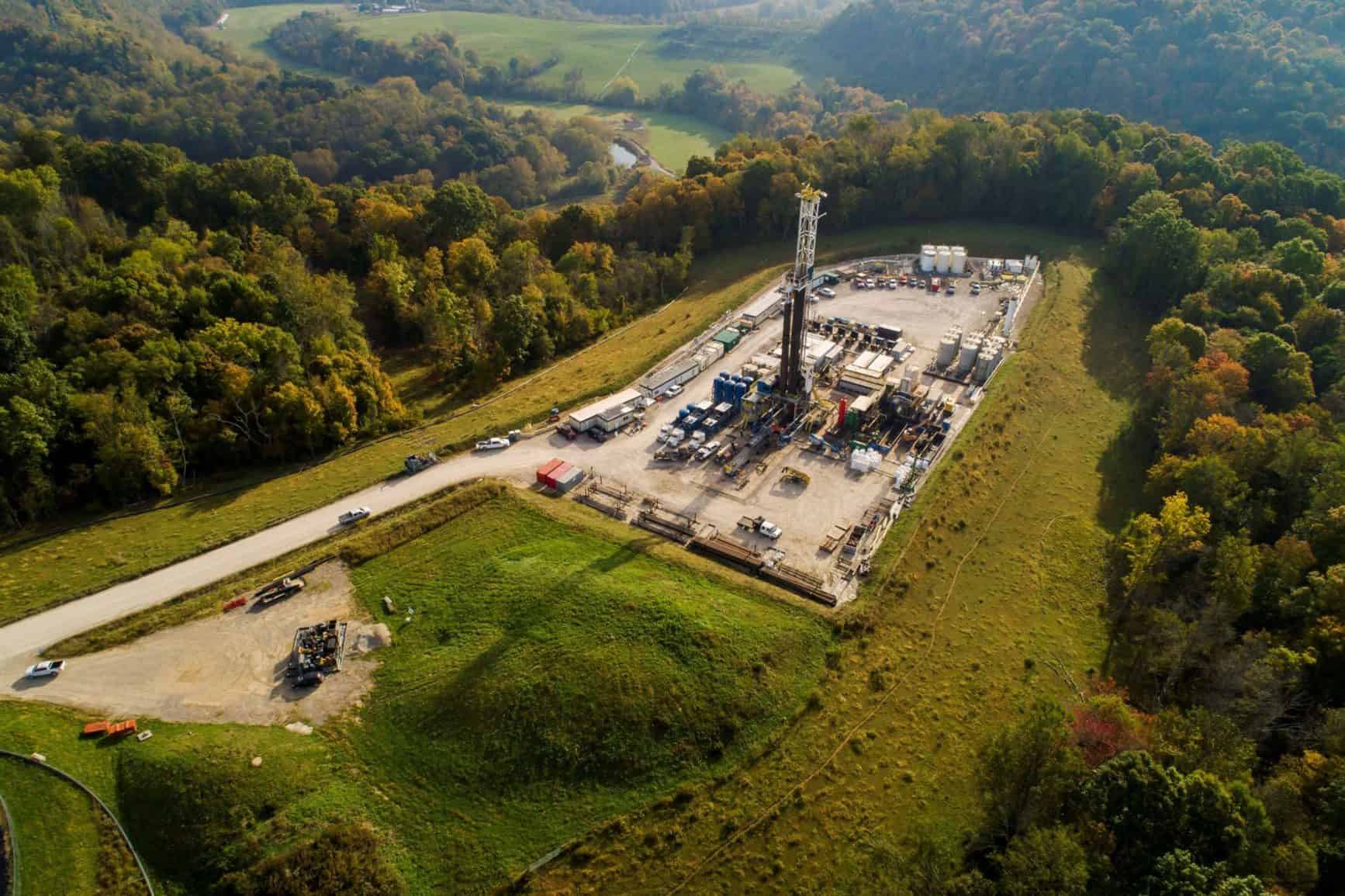
 A study by the Pittsburgh Technology Council and Philadelphia Alliance for Capital and Technologies projects that Pennsylvania’s data center expansion will generate $12 billion in annual economic output and nearly 20,000 jobs by 2036. With a forecasted 4,000% increase in data center construction, the commonwealth is leveraging its status as a leading energy exporter and its $29 billion manufacturing sector to support global cloud infrastructure. By integrating robust natural gas and nuclear resources with data development, Pennsylvania is positioning itself as a leader in the AI economy. That is, IF antis don’t blow the opportunity by blocking new data centers (see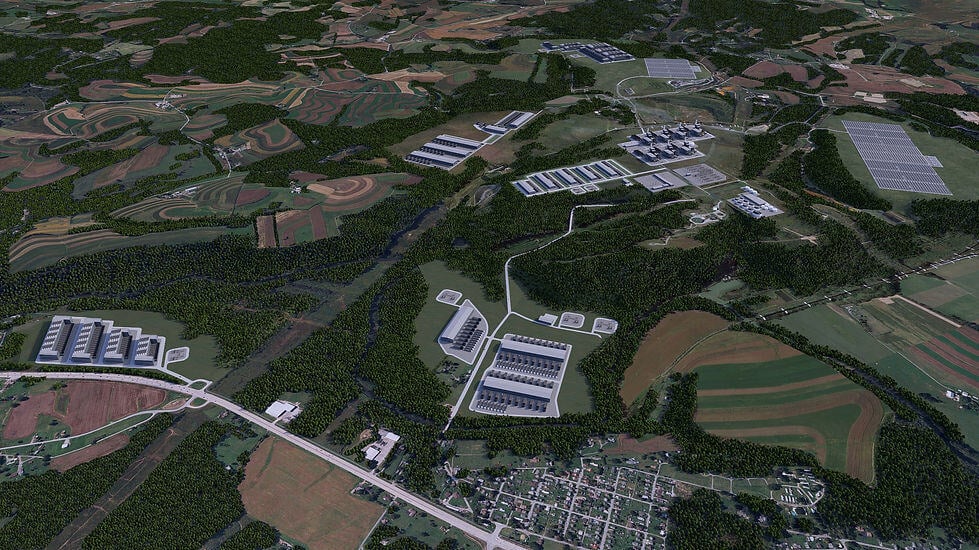
 West Virginia continues to cement its status as a national energy powerhouse, ranking as the fifth-largest natural gas producer in the U.S. and providing 10% of the country’s total natgas supply. The 2025 “Gas Facts” report (copy below) from the Gas and Oil Association of WV (GO-WV) highlights a record production of 3.27 trillion cubic feet, fueling an industry that supports 73,000 jobs and contributes $14.7 billion to the state economy. The sector generates hundreds of millions in tax revenue for schools and infrastructure, alongside $1 billion in landowner royalties. Driven by counties like Wetzel and Tyler, the state remains vital to national energy security.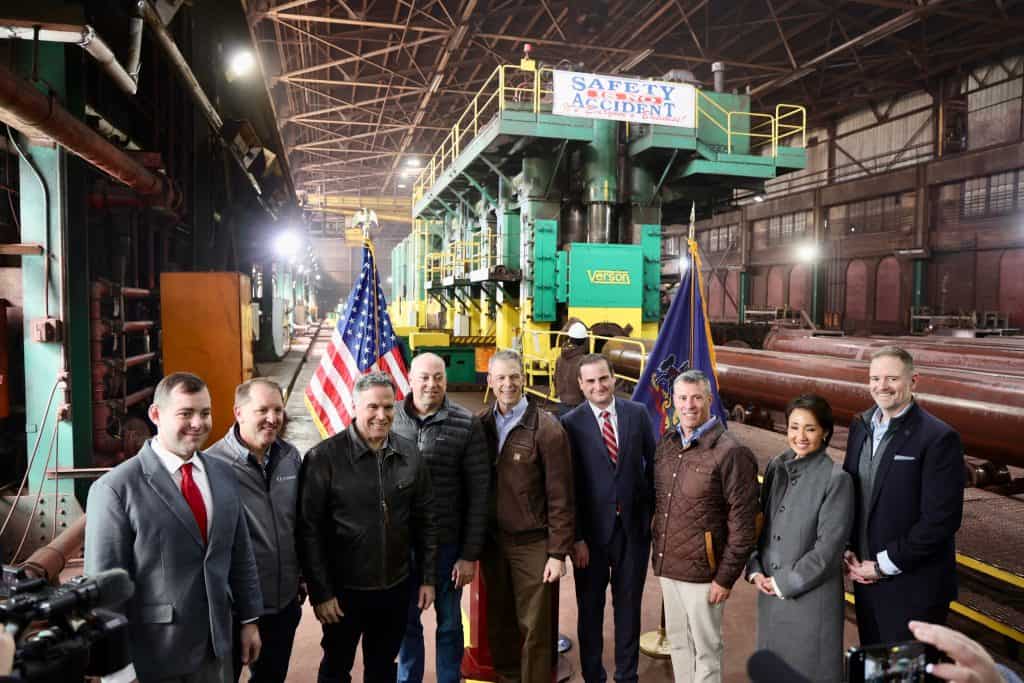
 JobsOhio, a private, nonprofit corporation that works on behalf of the state to drive job creation and new capital investment in Ohio by attracting business, contracts its economic research to Cleveland State University (CSU) to keep tabs on the Utica Shale industry. JobsOhio released the latest CSU updated report earlier this week (full copy below), showing that more than $114.6 billion has been invested in Ohio across natural gas, natural gas liquids, and petrochemical supply chain industries since 2011. Ohio’s shale energy sector drew approximately $3.5 billion in fresh capital between July and December 2024.
 Vallourec Star, a steel pipe manufacturer in Youngstown, OH, serving the shale and other industries, was approved yesterday by the Ohio Tax Credit Authority for a seven-year job creation tax credit. It means the company will create 40 new full-time positions. The tax credit supports Vallourec Star’s plan to expand its current operations to manufacture a new line of high-quality steel pipe.
  Pennsylvania is aggressively positioning itself as a leader in the AI data center race with an ambitious $92 billion, state-level initiative (see