
Industrywide Issues | Litigation | Pennsylvania | Regulation | Statewide PA | Statewide WV | West Virginia
West Virginia Takes Pennsylvania to Court Over Energy Credits
 West Virginia has sued the Pennsylvania Public Utility Commission in federal court, arguing that two Pennsylvania laws — Act 40 of 2017 and Act 114 of 2020 — built a wall around the state’s “alternative energy credit” market and locked out every power producer outside Pennsylvania’s borders. West Virginia Attorney General JB McCuskey filed the 54-page complaint on September 3 in the U.S. District Court for the Middle District of Pennsylvania, and here’s the kicker: the PUC’s own annual report, published seven months earlier, told the legislature that these very rules needed a second look. Read More “West Virginia Takes Pennsylvania to Court Over Energy Credits”
 West Virginia State Treasurer Larry Pack released a report Tuesday that finally puts real numbers on a question a lot of Mountain State residents have been shouting past each other about: when a giant data center lands in your county, who actually gets the tax money? The answer, according to Treasury Strategic Analyst Mark Muchow, is that two projects alone — the Penzance Management campus in Berkeley County and Google’s project in Putnam County — would generate more than $103 million a year in property taxes, and roughly 62% of it stays home with county commissions and county school boards.
 Peregrine Energy Partners, the Dallas-based royalty buyer we’ve been tracking since 2019, is back in the Marcellus/Utica with its checkbook open. Yesterday (Aug. 4), the company announced it closed five separate mineral and royalty deals — two of them right here in the M-U — totaling roughly 3,680 net royalty acres and interests in more than 1,240 producing wells. The first Appalachian deal is a cash-flowing overriding royalty portfolio in Susquehanna County, PA, covering about 936 gross acres and 86 producing horizontal Coterra Energy (now Devon Energy) wells, with more than 50 DUCs and PUDs behind them in both the Upper and Lower Marcellus.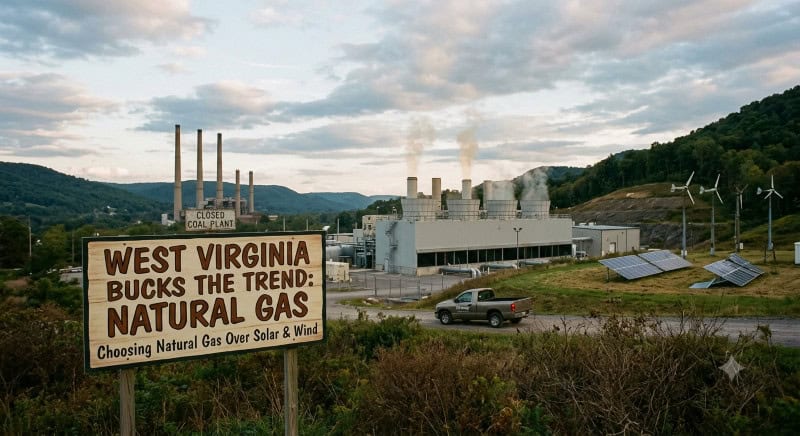
 The West Virginia Supreme Court of Appeals ruled in favor of Equinor USA Onshore Properties Inc. (formerly Statoil) in a multi-million dollar tax dispute last Friday. The case has major implications for how the state calculates severance taxes for natural gas liquids. The decision reversed an intermediate court’s procedural dismissal, entitling Equinor to over $19 million in tax refunds for the years 2014, 2015, 2016, 2018, and 2019. The dispute centered on the definition of “gross proceeds” and the timeliness of administrative appeals in a years-long battle with the West Virginia tax commissioner.
  Antero Resources, the largest Marcellus/Utica (M-U) driller in West Virginia, released its Q1 2026 update last week. Antero placed 20 Marcellus wells to sales during Q1 with an average lateral length of 11,652 feet. Thirteen of these wells have been online for approximately 60 days with an average rate per well of 25 MMcfe/d, including 1,457 Bbl/d of liquids per well. Antero’s drilling and completion capital expenditures during Q1 were $222 million. In addition to capital invested in drilling and completion activities, the company invested $25 million in land during the first quarter. Through its land investment, Antero added approximately 5,400 net acres, representing 24 incremental drilling locations at an average cost of approximately $900,000 per location.
  West Virginia Governor Patrick Morrisey is spearheading what he calls the “50 by 50” energy initiative, a plan for the state to grow its electric energy production from a current 16 gigawatts (GW) of generation to 50 GW by 2050 (see
  In early February, MDN told you about West Virginia Senate Bill (SB) 706, which proposed reducing the state’s severance tax from 5% to 3% for new natural gas and oil wells drilled after June 30, 2026, that meet specific production thresholds (see
 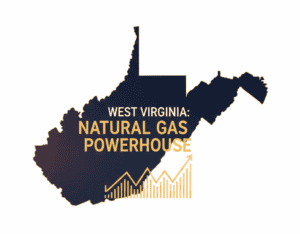 West Virginia continues to cement its status as a national energy powerhouse, ranking as the fifth-largest natural gas producer in the U.S. and providing 10% of the country’s total natgas supply. The 2025 “Gas Facts” report (copy below) from the Gas and Oil Association of WV (GO-WV) highlights a record production of 3.27 trillion cubic feet, fueling an industry that supports 73,000 jobs and contributes $14.7 billion to the state economy. The sector generates hundreds of millions in tax revenue for schools and infrastructure, alongside $1 billion in landowner royalties. Driven by counties like Wetzel and Tyler, the state remains vital to national energy security.
  This is disappointing. The United Mine Workers of America (UMWA) held a press conference yesterday in Charleston, WV, to oppose new natural gas power plants in West Virginia, citing concerns over coal job losses and community instability. UMW International President Brian Sanson criticized proposed projects by Mon Power and FirstEnergy, arguing that these gas-fired facilities threaten thousands of mining careers while providing only “temporary” construction jobs and minimal permanent staffing. He is urging state and federal lawmakers to enact codified legal protections for the coal industry.
  Another new gas-fired power plant is on the way in West Virginia! FirstEnergy subsidiaries Mon Power and Potomac Edison have selected a 35-acre site in Maidsville (Monongalia County), West Virginia, for a new 1,200-megawatt natural gas power plant. Located adjacent to the existing Fort Martin Power Station, the facility is designed to provide reliable, affordable energy for approximately 500,000 homes. Pending approval from the WV Public Service Commission, construction could begin in 2027 with operations starting in 2031.
  Antero Resources Corporation has reached a proposed settlement with the U.S. Department of Justice (DOJ) and the state of West Virginia to resolve Clean Air Act violations at 242 oil and gas facilities in West Virginia and Ohio. To address unauthorized volatile organic compound (VOC) emissions, Antero will invest approximately $5.8 million in system improvements and monitoring, reducing annual emissions by over 1,100 tons. The company will also pay a $3.8 million civil penalty and spend $1.5 million to permanently plug and remediate abandoned wells in WV. Total price tag: $11.1 million.
  Antero Resources, the largest Marcellus/Utica (M-U) driller in West Virginia, released its Q4 2025 update yesterday. In 2025, Antero Resources underwent a “transformational expansion” highlighted by the acquisition of HG Energy, the largest acquisition in Antero’s history, which the company closed on just last week (see