
Access Midstream Partners | Anadarko | Bradford County | Energy Companies | Energy Services | Industrywide Issues | Lease & Royalty Payments | Litigation | Mitsui | Pennsylvania | Williams
Royalty Conspiracy Theory Now 0-for-3 in Williamsport Federal Court
 A federal judge in Williamsport has thrown out two 10-year-old lawsuits filed by northeastern Pennsylvania landowners who claimed Anadarko, Mitsui, and Williams (the old Access Midstream) were running a mob-style racket to shrink royalty checks. If that sounds familiar, it should. The same lawyers made the same argument in a sister case we first told you about in 2015, and the same judge tossed that one too. The landowners’ “Chesapeake/Access conspiracy” theory is now zero for three. Read More “Royalty Conspiracy Theory Now 0-for-3 in Williamsport Federal Court”
 It’s a sellout, and we now have the full scorecard. On Tuesday, the Bureau of Land Management (BLM) auctioned drilling rights to 40 parcels of federal minerals under Ohio’s Wayne National Forest (WNF), and every parcel found a buyer. The 2,776.84 acres in Monroe and Washington counties brought $11,097,693 in total receipts. Five companies won leases, and one of them, Apex Energy Operating III LLC, walked off with nearly two-thirds of the acreage. We have BLM’s full parcel-by-parcel results, embedded below. It’s the first federal lease sale in the WNF since March 2017.
  CNX Resources isn’t going anywhere in north-central West Virginia. At a community event at the Blacksville Volunteer Fire Department social hall, CNX Chief Operating Officer Navneet Behl laid out a drilling calendar for the company’s Wadestown operation in western Monongalia County through 2029. CNX has 24 wells already producing on three pads there, is working on six more wells on those same pads, and is building a brand-new pad slated for 13 more wells. The company says it expects to pay about $525 million in royalties on those 19 new wells. That’s the good news. The not-so-good news came from the same guy: Behl admitted CNX can only drill so much in Appalachia because there still aren’t enough pipelines to haul the gas away.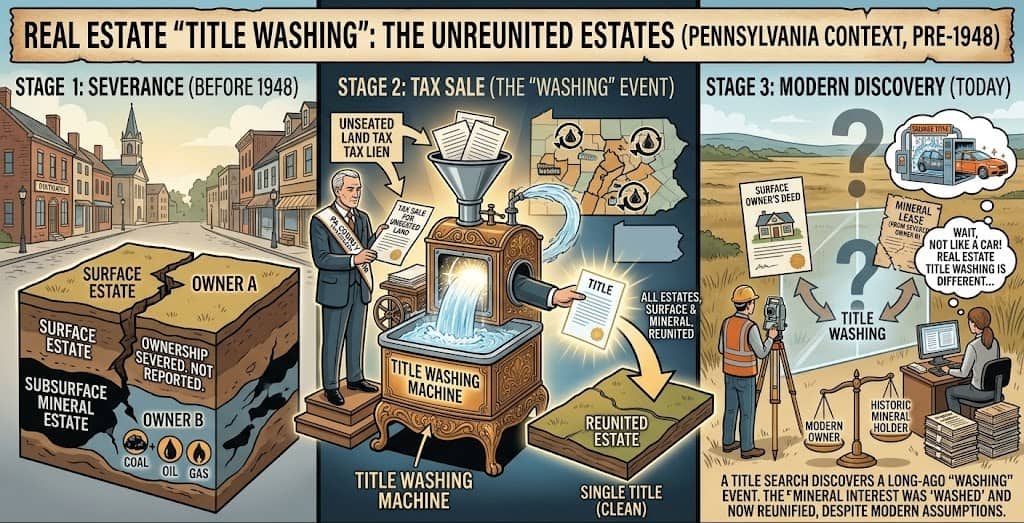

 A federal appeals court has handed XTO Energy (ExxonMobil’s shale subsidiary) a win in a long-running Western Pennsylvania royalty lawsuit, ruling Monday that XTO did NOT give up its right to push some landowners into private arbitration — even though it spent 55 months litigating the case before it asked. The case is Salvatora v. XTO Energy Inc., a cousin of the Kriley case MDN has also followed. Same defendant, same Pittsburgh courthouse, same plaintiffs’ firm, same complaint: landowners say XTO shaved too much off their royalty checks for “post-production costs” — the gathering, compression, and processing charges that move gas from the wellhead to a buyer.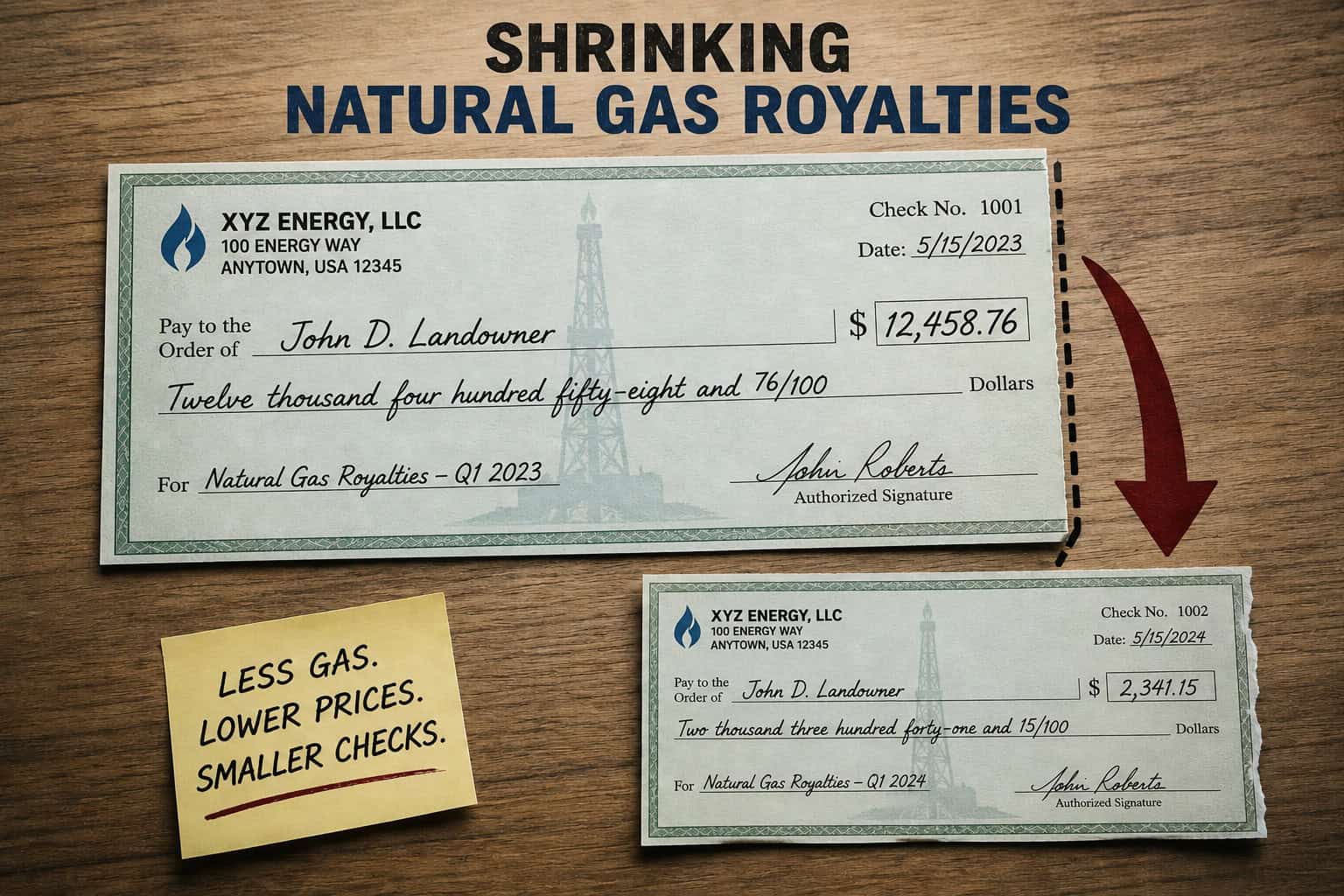
 In March, MDN told you that Butler County landowners were appealing after a federal judge tossed their royalty class action against XTO Energy (see
  WhiteHawk Minerals (NYSE: WHK), the Philadelphia company that has quietly become one of the largest mineral and royalty owners in the Marcellus, filed its first full quarterly report as a public company this week: $111.8 million of new acquisitions, record production of 70.0 MMcfe/d, and its first real dividend at $2.00 per share annualized. But the most interesting thing WhiteHawk said all week wasn’t in the press release. It came out of CEO Daniel Herz’s mouth on Thursday’s earnings call — some of the biggest drillers in Appalachia are now partnering with WhiteHawk to buy minerals ahead of the drill bit.
  Two panels at
  One of the biggest landowner-vs.-driller cases in Ohio shale history just ended — with no verdict, no dollar figure, and a two-page piece of paper. On July 29, a group of Belmont County mineral owners and Rice Drilling D LLC (owned by EQT) jointly asked a federal judge to throw out the case for good, roughly two months after it was supposed to go in front of a jury. Eight years, 580 docket entries, and one of the most consequential lease questions in the Utica — settled behind closed doors.
  Peregrine Energy Partners, the Dallas-based royalty buyer we’ve been tracking since 2019, is back in the Marcellus/Utica with its checkbook open. Yesterday (Aug. 4), the company announced it closed five separate mineral and royalty deals — two of them right here in the M-U — totaling roughly 3,680 net royalty acres and interests in more than 1,240 producing wells. The first Appalachian deal is a cash-flowing overriding royalty portfolio in Susquehanna County, PA, covering about 936 gross acres and 86 producing horizontal Coterra Energy (now Devon Energy) wells, with more than 50 DUCs and PUDs behind them in both the Upper and Lower Marcellus.
 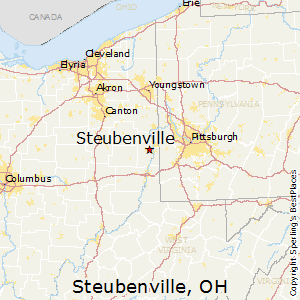 After months of deliberation, Steubenville (Jefferson County), Ohio, City Council voted to accept a bid and proceed with leasing the city’s mineral rights to the oil and gas industry, including areas near residential neighborhoods and Beatty Park. Some residents voiced strong opposition, citing threats to the park’s ecosystem, health concerns, and insufficient public involvement, urging the council to reject bids or form a resident-inclusive committee. Fourth Ward Councilman Royal Mayo voted against it, questioning fracking’s health effects. First Ward Councilman David Albaugh supported it, noting that surrounding areas are already fracked and that no well pad would be built in Steubenville. The money (over $1 million!) is expected within 90 days.
  Ohio’s program to lease state-owned land for fracking beneath it (never on top) has been an astonishing success. Ohio has earned $314 million from leasing roughly 22,000 acres of state parks and wildlife areas for fracking. Most came from signing bonuses: $62 million for 6,200 acres under Salt Fork State Park and $238 million for Jockey Hollow and Egypt Valley wildlife areas. Royalties have also begun flowing—Infinity Natural Resources has paid $11.3 million from Salt Fork production since October 2025.
  Ohio’s Utica shale boom ignited around 2011 in northeastern counties, with Carroll County emerging as the epicenter of early drilling. Operators like Chesapeake Energy targeted the oil and liquids-rich “wet gas” windows in Carroll, Columbiana, and Harrison counties. However, as operators refined their geologic understanding, they discovered the formation’s most prolific “dry gas” window lay to the southeast. Development steadily migrated toward Belmont, Monroe, Jefferson, and Guernsey counties, where deeper, overpressured rock formations yielded massive volumes of natural gas. By the mid-2010s, these southern counties dominated Ohio’s Utica production, eclipsing the northern pioneers that first proved the play’s potential. However, three years ago, Encino Energy “cracked the code” on Ohio Utica oil drilling, and activity began migrating north again (see