
EQT Swallows Range Resources in $50B Merger: Biggest M-U News Ever!
 Twenty-two years ago today, Range Resources’ Renz #1 well in Washington County, PA, unlocked the Marcellus Shale and kicked off the shale revolution here in the Northeast. This morning, on that very anniversary, Range agreed to sell itself to EQT Corporation in an all-stock deal that creates the largest natural gas producer in the country, period. MDN has been writing about the Marcellus/Utica since Jan. 2009, and we can’t think of a bigger piece of news to hit the region. The company that started it all is being folded into the company that turned it into an industrial powerhouse. Below we give you the deal numbers, then the best stuff from this morning’s 8 a.m. conference call with analysts—including what this means (for now) for landowners and the midstream. Read More “EQT Swallows Range Resources in $50B Merger: Biggest M-U News Ever!”
 Eight weeks. Same number. The Marcellus/Utica held at 33 rigs yet again for the week ended October 23, and this time the national count joined the party, holding at 603 for a third straight week. Underneath that flat national total, oil rigs added one and gas rigs lost one. Frac spreads slipped by five, a second straight weekly drop. On the price board, the gap between oil and gas went from wide to ridiculous: WTI climbed to settle at $103.27 a barrel, while natural gas tumbled 15% for the week to roughly $2.64 per MMBtu. And new this week: MDN’s Marcellus/Utica Rigs by County, a county-by-county map in table form showing exactly where all 33 of our rigs are drilling, which will now be a regular part of this weekly update. (Spoiler: Susquehanna County is at zero.) Plus: Antero takes over the top spot on the Enverus permit list, and National Fuel Gas shows up on the rig list.
  State Sen. Gene Yaw (R-23), who has chaired the Senate Environmental Resources & Energy Committee since 2013, wants Pennsylvania’s data centers to pay their own version of the shale impact fee. On Thursday (Oct. 23), Yaw sent a co-sponsorship memo to all Senate members announcing plans for an annual, statewide “data center impact fee” modeled on Act 13 of 2012, the law that created the impact fee drillers have paid every year since. Yaw says the fee would be based on each facility’s size and electricity demand, and would be paid every year a data center operates. That’s different from today’s system, where towns rely on one-time deals negotiated with developers. The money would go to host communities and statewide programs, just like the shale fee. What’s not in the memo? Any dollar figures. Here’s the memo, followed by what it means (and what it doesn’t say).
 Early last week, we told you Europe blinked on its crazy methane import rules, with the European Commission (the EU’s executive branch) proposing a one-year delay (see
  Back in April, MDN told you about Enbridge’s ~$300 million job to move the natural gas lines that hang off the Bourne and Sagamore bridges and run them under the Cape Cod Canal instead (see
  Did the ground rumble in Westmoreland County on Sunday, October 4, because of fracking? The Pennsylvania Department of Environmental Protection (DEP) asked that question, checked EQT’s nearby Porter well pad, and found nothing abnormal. EQT’s pressure logs for that day were clean, no violations were cited, and DEP asked for more paperwork. That’s good news for EQT, even if the headline you may have seen elsewhere makes it sound much more ominous.
 MARCELLUS/UTICA REGION: With a trifecta, PA Democrats would pass energy reforms and rein in data centers; OTHER U.S. REGIONS: NY’s fracking ban is pure evil — but Hochul refuses to lift it; QatarEnergy in talks with Venture Global to buy LNG in long term supply deal, sources say; Mitsubishi Power doubles footprint in Chatham County, GA; NATIONAL: U.S. natural gas futures fall on mild near-term weather; Hedge funds are record short natural gas on mild winter outlook; We served opposing presidents, but we agree on how to fix the data-center mess; Exchanges urge CFTC to block Kalshi’s perpetual oil futures plan; Energy abundance means a bright American future — if Dems don’t get in the way; INTERNATIONAL: Brent tops $116 as Middle East risks grow; Physical oil prices drop in Mideast; Why Trump and Carney haven’t touched energy in their tariff war; Global warming may have halted an emerging ice age, study suggests.
  The Marcellus/Utica region received 12 new shale well permits last week, October 12-18, up 3 from 9 the week before. Pennsylvania issued 9 of the new permits. Ohio issued 2. And West Virginia issued a single new permit. The drillers who received new-well permits last week were: Antero Resources, Ascent Resources, Expand Energy, Range Resources, and Seneca Resources. Before we go further, a quick housekeeping note: Starting this week, MDN counts only permits for brand-new wells in the headline number. State agencies also issue renewals (more time to drill a well that was already permitted), modifications (changes to a well that was already permitted, like a new wellbore path), and in Ohio, “deepen” permits. Those wells were already counted the first time around, so counting them again would double-count. We now list them separately, in their own section below.
  Allegheny County, home to Pittsburgh, just became the first county in the nation to force private employers to pay for 12 weeks of parental leave — at up to 100% of wages, with the employer footing the entire bill. County Executive Sara Innamorato signed the regulation yesterday, two days after County Council approved it 11-4. Here’s what caught our eye (thanks to a heads-up from PIOGA): the mandate doesn’t care where your headquarters is. If you’re a driller or service company with 15 or more employees anywhere, and one of your employees works 80 hours in Allegheny County in a year, that worker is covered.
  Another one bites the dust in northeastern Pennsylvania. On Wednesday night, Archbald Borough Council (Lackawanna County) voted 7-0 to deny a zoning request for the Wildcat Ridge Data Center Campus, a 14-building AI “hyperscale” project proposed for roughly 575 acres on the mountainside above Business Route 6. The campus would have needed 1.6 gigawatts (GW) of electricity, more than 3.3 million gallons of water per day in summer, and 588 diesel-powered backup generators. About 175-200 residents packed the borough building’s gym and erupted in cheers when the vote came down. The developer, Brooklyn-based Cornell Realty Management, isn’t talking, but just about everyone in the room expects an appeal to county court. Why should Marcellus folks care? Because 1.6 GW of new, around-the-clock electric demand is, in our neck of the woods, a gas demand story.
  Yesterday, the Pennsylvania Department of Environmental Protection (DEP) threw another party, this time to celebrate the 500th orphan and abandoned well plugged since Josh Shapiro became governor in January 2023. Good for them. Seriously. But we can’t help noticing that Ohio plugged 480 orphan wells in 2025 alone, nearly as many as PA has plugged in almost four years. From 2023 through 2025, Ohio plugged 1,215 old wells. That’s 2.4 times PA’s entire Shapiro-era total, and it doesn’t count a single well Ohio has plugged so far in 2026.
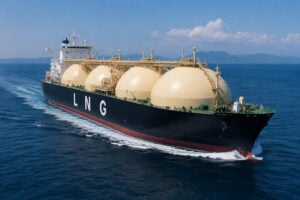 Here’s a sentence we never thought we’d write: Qatar is buying American LNG. Qatar sits on top of the world’s largest natural gas field and, until this year, was one of the two or three biggest LNG exporters on the planet. Yet this week Cheniere Energy announced two long-term deals to supply state-owned QatarEnergy with 4 million tonnes per annum (mtpa) of LNG through 2054. Half of it will come from Cheniere’s Sabine Pass export plant in Louisiana. And Sabine Pass is a place where Marcellus/Utica gas has been showing up for years. Translation: some of the gas drilled in PA, OH, and WV will very likely end up owned by a Middle East country, which will resell it around the world. Who’d a thunk it?
  There’s a new sheriff in town. Well, technically a retired police chief. On Thursday evening (Oct. 22), more than 150 residents gathered in Penn Township, Westmoreland County, for the kickoff of the Citizens Energy Council (CEC), a grassroots group that supports natural gas drilling and openly pushes back against the anti-fossil fuel activists who have dominated township meetings in this part of Pennsylvania for more than a decade. CEC’s leader, former Penn Township Police Chief John Otto, summed up the group’s message in three words: “Enough is enough.” Music to our ears!
  Here’s a rare thing in Washington: a bill that passed both the House and Senate without a fight, helps drillers, and doesn’t cost taxpayers a dime. On Tuesday, President Trump signed the License to Drill Act into law. The new law keeps alive a 20-year-old program called the Permit Processing Improvement Fund (PPIF). Under the PPIF, drillers who want to drill on federal land pay a fee for each drilling permit application, and that money goes to pay the federal workers who process those permits. The program was set to expire on Sept. 30, but now runs through fiscal year 2037. Most of the action is out West. But with the first federal leases in Ohio’s Wayne National Forest in nearly a decade now in drillers’ hands, it matters a little bit here too.