
Md. Gov. Moore Skips Data Center Moratorium, Adds Task Force Instead
 Maryland Gov. Wes Moore took the podium in Annapolis last week and did something that disappointed just about everybody: he did NOT slap a moratorium on new data centers. Instead, he signed an executive order (EO) that creates a new state task force to grade data center projects, a public “dashboard” to track them, and a ban on secret deals between state agencies and developers. He also wants lawmakers to kill a 2020 sales tax break for data centers. The antis at Food & Water Watch (FWW) are grumbling that it’s not enough. What they REALLY want to kill is the gas-fired power plants that would keep the lights on. Read More “Md. Gov. Moore Skips Data Center Moratorium, Adds Task Force Instead”
 Washington came to Erie last week with one message for
  The highly functional and responsible Susquehanna River Basin Commission (SRBC), unlike its dysfunctional and irresponsible counterpart, the Delaware River Basin Commission (DRBC), continues to support the shale energy industry by approving water withdrawals and consumptive use requests for responsible, safe shale drilling. The SRBC published a notice in the September 26th Pennsylvania Bulletin that the SRBC approved and/or renewed 35 general water use permits in August for individual shale gas well drilling pads in Bradford, Clinton, Elk, Lycoming, Sullivan, Susquehanna, Tioga, and Wyoming counties.
  New Jersey regulators have fined the company building a giant AI data center in Vineland (Cumberland County, South Jersey) $1.07 million for installing and running 62 large natural gas-fired generators without air permits. The NJ Department of Environmental Protection (DEP) calls it “by far the largest” enforcement action ever taken against a data center in the Garden State, and “possibly one of the largest such actions in the nation.” Our math: those 62 engines add up to nearly 123 megawatts (MW) of gas-fired power, running behind the meter at a site that is supposed to become a 300 MW data center serving Nebius and, through Nebius, Microsoft. The developer, DataOne, says the engines are temporary until Bloom Energy fuel cells (which also run on natural gas) take over, and it will now apply for permits.
  CNX Resources has decided to walk straight into the anti-drilling movement’s favorite scare story. Two weeks ago, the Pittsburgh driller announced it will bolt continuous, real-time radiation monitoring onto its Radical Transparency program — the first-in-the-nation public-private data deal it signed with PA Gov. Josh Shapiro and the Dept. of Environmental Protection (DEP) in November 2023. Ambient gamma radiation detectors will run around the clock at unconventional well pads and certain produced water facilities, with the raw numbers going to CNX, DEP, and the public at the same time. CNX will also start publishing the radiation surveys it already runs on every truckload of waste leaving its sites. None of this is required by law. That’s the whole point.
  Remember that July morning when 4,000 megawatts (MW) of Northern Virginia data centers yanked themselves off the PJM grid because of a routine, properly cleared fault on a single transmission line (see
  Back in April, we told you the PA Department of Environmental Protection (DEP) had once again extended the three “temporary” air permits for Shell’s ethane cracker plant in Monaca (Beaver County) while the agency slogs through Shell’s full Title V permit application (see
 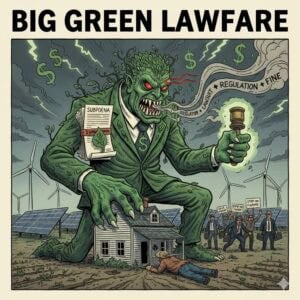 Chatham County, North Carolina’s Board of Commissioners last week unanimously passed a resolution opposing Enbridge Gas North Carolina’s proposed 28-mile natural gas pipeline from Siler City to Moncure. This isn’t a garden-variety “we don’t like it” resolution. It authorizes the county to actively fight the project by challenging environmental permits, teaming up with like-minded groups, working the media, organizing residents, and coaching landowners on how to resist condemnation. In other words, a county government just signed itself up as a Big Green activist group, with taxpayers picking up the tab.
  Boardwalk Pipelines’ Kosciusko Junction Pipeline Project, a 111-mile, 36-inch pipe across Mississippi that will carry Marcellus/Utica gas (and gas from other plays) to Southeast markets, now has all the federal permits it needs. FERC voted to approve the project at its Sept. 10 open meeting. On Sept. 23, the Federal Permitting Council announced that all federal permitting was finished. What’s next? Shovels. Boardwalk’s plan on file with FERC calls for construction to begin in December, about 10 weeks from now, with first gas flowing as early as April 2028.
  The Pennsylvania Farm Bureau (PFB) is one of the good guys. Probably 99% of the time, MDN is right there cheering PFB on — for private property rights, for sensible regulation, for keeping Harrisburg off the farmer’s back. But yesterday PFB released a 23-page paper making the case for a “temporary, limited moratorium” on large-scale data center development in Pennsylvania. This is the other 1%. We think PFB is wrong on this one, and we’ll tell you why. Politely. Friends are allowed to disagree.
  Expand Energy — America’s #1 gas producer, which drills in Pennsylvania under the name Expand Oper LLC — just picked up a fresh batch of Notices of Violation from DEP. Pressure tests witnessed by DEP inspectors on Aug. 6 and Aug. 13 confirmed new casing/cementing defects in four wells across three pads in Susquehanna and Wyoming counties, while two more pads remain under watch for older, unresolved issues.
  Here’s one you don’t see every day. The North Carolina Utilities Commission (NCUC) has said “no” to a Duke Energy gas-fired power plant. On Sept. 18, the commission voted 3-1 to deny Duke Energy Progress a certificate of public convenience and necessity (CPCN, the state’s permission slip to build) for a 255-megawatt (MW) gas-fired “peaker” turbine at the Smith Energy Complex in Richmond County. Price tag: $584 million. The twist? The three commissioners who voted no are all Republican appointees, and the lone vote in favor came from a Democrat. Nobody on the commission said gas is the problem. The problem, they said, is data centers: how much of this plant’s power data centers will use, and who would pay for it.
  DeepRock Disposal Solutions wants two of its Noble County, Ohio, injection wells back in service — and the Ohio Department of Natural Resources (ODNR) keeps saying no. ODNR’s Division of Oil and Gas Resources Management shut the Travis and Warren wells in January 2023, blaming them for a 2021 brine eruption that cost the state $1.28 million to clean up. DeepRock argued its case at a hearing in April. It lost. The division chief issued a fresh order on July 31 continuing the suspension, and on Aug. 28 DeepRock appealed to the Ohio Oil and Gas Commission. Here’s the part our readers should circle on the calendar: under Ohio Administrative Code, DeepRock has 120 days from that July 31 order — until roughly Nov. 28 (our count) — to submit a plan fixing what the division found, or plug both wells permanently.
  The Upper Burrell Township (Westmoreland County, PA) Planning Commission hit the pause button Tuesday on recommending the township’s latest draft data center ordinance. The delay gives residents time to email their wish lists to supervisors before an Oct. 7 meeting. Supervisors hope to pass the ordinance at a special meeting in October, ahead of the Nov. 2 end of their data center moratorium, and Westmoreland County gets a say, too. The rules won’t touch TECfusions’ existing operations at the former Alcoa/Arconic campus, but they would govern new development there. Buried in the 26-page draft is a line that should make every Marcellus/Utica (M-U) driller and landowner sit up: every new data center must supply its own baseload power. And the township says its next project is writing rules for power plants.