
Accidents | Energy Companies | Expand Energy | Industrywide Issues | Pennsylvania | Pipelines | Susquehanna County
Expand’s Susquehanna Week: Minor Pad Fire, New 4-Mile Water Line
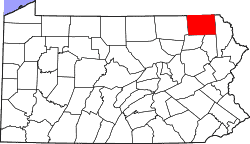
Expand Energy’s operating arm made the Pennsylvania Department of Environmental Protection (DEP) news twice last week, both times in Susquehanna County. One item sounds scary but isn’t: A small “flash fire” inside a compressor building on a well pad, and the equipment put it out before firefighters arrived. The other is a new permit for a 4-mile temporary waterline that will carry fresh water to Expand’s Marcellus wells in Auburn Township. It’s the second such line DEP has OK’d in that township in a month. David Hess at PA Environment Digest Blog flagged both items. Here’s the scoop. Read More “Expand’s Susquehanna Week: Minor Pad Fire, New 4-Mile Water Line”
 A year and a day after the Farnsworth #4 orphan well blew out and burned six people inside Ohio’s Wayne National Forest, one of the survivors went to court. Chazz Bates — a 20-year-old rig hand at the time — filed suit Aug. 21 in Washington County Common Pleas Court against his own employer, Monroe Drilling Operations LLC, and the cementing subcontractor on the job, Zanesville-based Formation Cementing Inc. The complaint, which also names 10 unidentified “John Doe” defendants, alleges the two companies skipped basic well control before pumping cement into a well nobody had pressure-tested — and that an ODNR inspector had flagged Monroe Drilling’s homemade wellhead as leaking and inadequate two months before the explosion.
  On Thursday morning, a natural gas leak at the Saunders Creek Regulator Station near Milton, WV (Cabell County) forced TC Energy’s Columbia Gas Transmission (TCO) to declare “force majeure” on the Mountaineer XPress (MXP) pipeline, one of the biggest Marcellus/Utica takeaway pipes in the region. Starting with today’s gas day (Friday, Sept. 25), the affected segment of MXP is cut to zero capacity until further notice. TCO estimates the hit to firm customers at 1.8 million dekatherms (MMDth) per day, which is roughly 1.8 billion cubic feet per day (Bcf/d) of Appalachian gas that suddenly needs somewhere else to go. Traders noticed. The October NYMEX futures contract settled up 27.4 cents (+9.06%) at $3.297 per MMBtu, the highest in about three months and the biggest one-day gain since January.
  The U.S. Chemical Safety and Hazard Investigation Board (CSB) last Wednesday, Sept. 16, released its final report on the June 4, 2025, explosion and fire at Shell Polymers Monaca, the ethane cracker plant in Beaver County, PA (see
  Range Resources had a genuinely rotten 16 hours at its Laurel Hill B well pad in Cogan House Township, Lycoming County, last week. First, a gasket blew on a water filter pod and sent recycled frack water down the pad’s fill slope. Then, while the state inspector was standing there writing that one up, a water truck hauling more of the same stuff drove off the access road and rolled over. MDN obtained both DEP inspection reports, and they tell a more complete story than the headlines indicate.
  We finally have a number. Two weeks after a casing failure sent frack water gushing across the Infinity Natural Resources (NYSE: INR) Cooper well pad in Young Township, Indiana County, PA, the Department of Environmental Protection (DEP) has put an estimate on it: 336,000 gallons of frack flowback water released during the incident. An “undetermined amount” of that reached Whiskey Run, the small stream below the pad. Here’s what that number actually means — and what it still doesn’t tell us.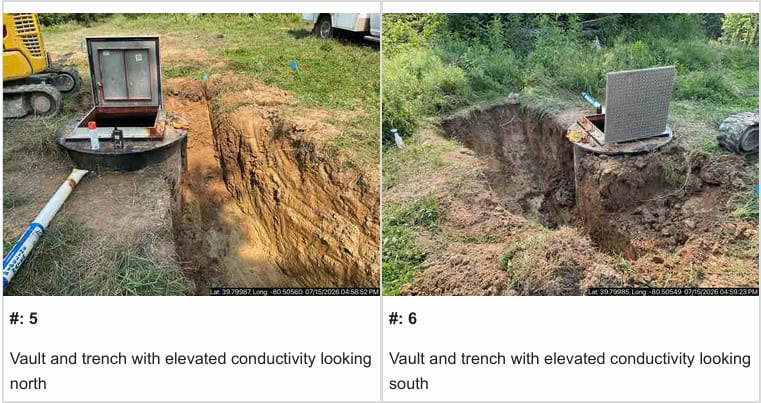
 On April 5 (Easter Sunday), Coterra Energy reported that approximately 400,000 to 704,000 gallons of freshwater were released from an impoundment at the Brooks shale gas well pad in Susquehanna County, Pennsylvania. The release began at 8:02 a.m. when all six stanchion valves opened simultaneously, flowing by gravity into a pasture and reaching Meshoppen Creek before being discovered by a landowner’s relative that evening. Coterra attributed the incident to a corrupted software configuration file, which also prevented remote valve closure and disabled electronic notifications.
 In July 2022, MDN brought you news of a possible frac-out, or “inadvertent return” that happens when drilling mud pops out of places where it’s not supposed to — places outside the borehole being drilled (see
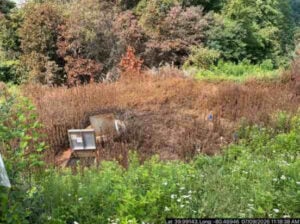
 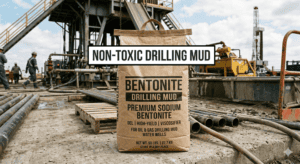 If a tree falls in a forest and no one is around to hear it, does it make a sound? Similarly, if a pipeline being drilled loses 28,500 barrels (1.2 million gallons) of nontoxic drilling mud into an abandoned coal mine void, does it matter? The environmental left is attempting to make a big deal out of MarkWest Liberty Midstream’s drilling project in Washington County, PA, in which the company has, over a series of 19 different episodes, lost a cumulative 28,500 barrels of nontoxic bentonite drilling mud into an old coal mine void as it drilled the Chiarelli to Imperial Pipeline Project, between October 2025 and January 2026. Bentonite is the same stuff used to make kitty litter and toothpaste.
 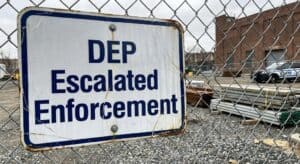 On August 17, Eureka Resources’ Williamsport Second Street facility (one of the three wastewater treatment plants previously operated by Eureka) leaked some of its stored untreated frack wastewater, which ended up in the nearby Susquehanna River via a storm drain (see
 On December 17, 2025, a casing failure and loss of well control occurred at one of three wells during fracking operations at a Range Resources pad in Washington County, PA. After gas pressure spiked to 2,000 psi, the company stabilized the well and later installed two kill plugs. Despite Range sending an immediate email notification, the Pennsylvania Department of Environmental Protection (DEP) cited Range for failing to use the required website portal for instant alerts. Additionally, the company missed deadlines for a mandatory Area of Review report regarding potential “communication” with other O&G wells and/or water wells in the area.