
M-U Rigs Stuck at 33 for 7th Week; Oil Tops $100, Gas Slips
 Seven weeks. Same number. The Marcellus/Utica held at 33 rigs again for the week ended October 16, while the national count held at 603 for a second straight week, tying the 52-week high set last week. Underneath that flat national number, oil rigs dropped by three and gas rigs added one. Frac spreads slipped by four, snapping a five-week winning streak. On the price board, oil and gas went in opposite directions: WTI blasted past $100 to settle at $101.41 a barrel, while natural gas fell back to $3.116 per MMBtu. Plus: Expand Energy grabs the top spot on the Enverus permit list, and a name we don’t recognize shows up at No. 4. Read More “M-U Rigs Stuck at 33 for 7th Week; Oil Tops $100, Gas Slips”
 On Friday, we told you a leak on Columbia Gas Transmission’s Mountaineer XPress (MXP) pipeline had pushed Appalachian gas down to $1.06 (see
 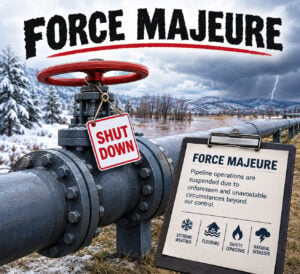 On Thursday, physical (spot) natural gas sold at Louisiana’s Henry Hub (the national benchmark) went for $3.30 per MMBtu. On the same day, gas sold at Texas Eastern M-2, which is the main price point for gas produced in southwestern Pennsylvania, West Virginia, and Ohio, went for $1.055. That’s the same molecule of methane, and our version fetched about 32 cents on the dollar. Why? Because a pipeline carrying Appalachian gas out of the region sprang a leak again. Here’s what happened, why it matters to your royalty check, and why there’s some good news on the horizon.
  It’s a go. Yesterday, one day ahead of its own October 15 deadline, National Fuel Gas Company’s (NFG) board approved a plan to split the 124-year-old company in two. Seneca Resources and the NFG Midstream gathering business will spin off as a new, publicly traded Marcellus/Utica driller. The company is calling it “IUG” for now (short for Integrated Upstream and Gathering) because it doesn’t have a real name yet. Seneca president Justin Loweth will be the CEO. NFG shareholders will get the new shares tax-free. Don’t hold your breath, though. The split isn’t expected to close until the second half of 2027.
  The Delaware Riverkeeper Network and PennFuture fought for years for the right to challenge Transco’s Regional Energy Access (REA) pipeline permits before Pennsylvania’s Environmental Hearing Board (EHB). They got their wish. Then they lost at the EHB. And yesterday, they lost again in federal court. A three-judge panel of the U.S. Court of Appeals for the Third Circuit unanimously upheld the state Department of Environmental Protection’s (DEP) water permits for the Williams-owned pipeline expansion. The court said the groups never showed that the extra water testing they demanded would have changed a thing. Even better, the court handed down a ruling on Pennsylvania’s Environmental Rights Amendment that could make life a lot harder for anti-drillers going forward.
  The 108-mile “Women’s Water Walk” along the route of the proposed Constitution Pipeline wrapped up last Sunday in Schoharie. On Tuesday, the walkers carried jars of creek water to Gov. Kathy Hochul’s office in Albany. The walk is over, but it didn’t end quietly. It gave birth to a new, permanent anti-pipeline coalition run by Frack Action. The Governor’s office answered with a carefully worded statement that isn’t quite the “stand strong” pledge the walkers came for. And the walk’s fundraising came up about 80% short of its goal.
  The Marcellus/Utica water business just got a bit more consolidated. HydroEdge Solutions, a Canonsburg (Washington County, PA) company that moves frack water from point A to point B, has acquired a majority interest in Bridgeville (Allegheny County) based RES Water. The combined outfit will have about 350 employees, five water treatment, recycling, and storage facilities in Pennsylvania, roughly 700,000 barrels of storage, and the ability to process up to 116,000 barrels of water per day. If the HydroEdge name rings a bell, it should. Back in June, HydroEdge (operating as Myers Water Transfer) bought one of the three Williamsport-area sites formerly run by troubled Eureka Resources, a story MDN has followed closely since Eureka’s “black goop” spill into the Susquehanna River in August 2025.
  Here’s one you don’t see every day. A Democratic polling firm, one that boasts of helping elect Democrats all the way up to the White House, says a majority of New York voters want the Constitution Pipeline built. And it isn’t close on natural gas itself: roughly three out of four New Yorkers support using natural gas in the Empire State. Somebody, please forward this to Food & Water Watch, which has been telling anyone who will listen that the “overwhelming majority” of New Yorkers oppose Constitution. Before we pop the champagne, though, there’s some fine print you need to see, including the question of who paid for this poll.
 The first domino has fallen. Last Thursday, National Fuel Gas Company (NFG) closed its purchase of CenterPoint Energy’s Ohio natural gas utility, the Dayton-area company formerly known as Vectren Energy Delivery of Ohio. Why should Marcellus/Utica folks care about a utility deal in the Miami Valley? Because NFG’s CEO told us several weeks ago that this closing clears the way to split off Seneca Resources, NFG’s drilling arm, into its own separate company (see
  Back in July, we told you Tennessee Gas Pipeline (TGP), a Kinder Morgan subsidiary, had launched a non-binding open season for its 219 South Project (see
  Back in 2022, then-Massachusetts Attorney General (now Governor) Maura Healey hit the campaign trail and bragged, “I stopped two gas pipelines from coming into this state” (see
 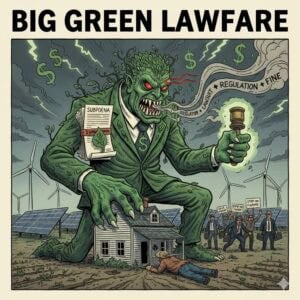 Back in August, we told you FERC had approved Kinder Morgan’s $5.2 billion pair of Southeast pipeline projects, and we told you to expect Big Green to come after it (see