
3rd Circuit Tosses Riverkeeper Challenge to Transco REA Permits
 The Delaware Riverkeeper Network and PennFuture fought for years for the right to challenge Transco’s Regional Energy Access (REA) pipeline permits before Pennsylvania’s Environmental Hearing Board (EHB). They got their wish. Then they lost at the EHB. And yesterday, they lost again in federal court. A three-judge panel of the U.S. Court of Appeals for the Third Circuit unanimously upheld the state Department of Environmental Protection’s (DEP) water permits for the Williams-owned pipeline expansion. The court said the groups never showed that the extra water testing they demanded would have changed a thing. Even better, the court handed down a ruling on Pennsylvania’s Environmental Rights Amendment that could make life a lot harder for anti-drillers going forward. Read More “3rd Circuit Tosses Riverkeeper Challenge to Transco REA Permits”
 The 108-mile “Women’s Water Walk” along the route of the proposed Constitution Pipeline wrapped up last Sunday in Schoharie. On Tuesday, the walkers carried jars of creek water to Gov. Kathy Hochul’s office in Albany. The walk is over, but it didn’t end quietly. It gave birth to a new, permanent anti-pipeline coalition run by Frack Action. The Governor’s office answered with a carefully worded statement that isn’t quite the “stand strong” pledge the walkers came for. And the walk’s fundraising came up about 80% short of its goal.
  Here’s one you don’t see every day. A Democratic polling firm, one that boasts of helping elect Democrats all the way up to the White House, says a majority of New York voters want the Constitution Pipeline built. And it isn’t close on natural gas itself: roughly three out of four New Yorkers support using natural gas in the Empire State. Somebody, please forward this to Food & Water Watch, which has been telling anyone who will listen that the “overwhelming majority” of New Yorkers oppose Constitution. Before we pop the champagne, though, there’s some fine print you need to see, including the question of who paid for this poll.
 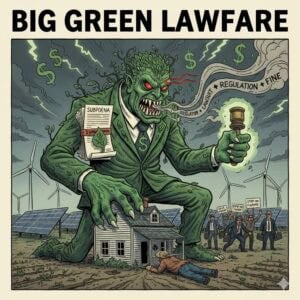 Big Green’s second legal attack against Transco’s Southeast Supply Enhancement Project (SESE) just fired its opening shot. On September 18, Sierra Club, Appalachian Voices, Southern Alliance for Clean Energy, and 7 Directions of Service filed their 142-page opening brief in the D.C. Circuit (Case No. 26-1100), arguing FERC’s approval of the pipeline was “arbitrary and capricious” because the agency allegedly ignored evidence that SESE and a second, co-located pipeline would combine to inflict “severe and potentially permanent” damage on streams across Virginia and North Carolina. Construction on SESE has continued the entire time — including through a failed bid by the same groups to freeze it back in June.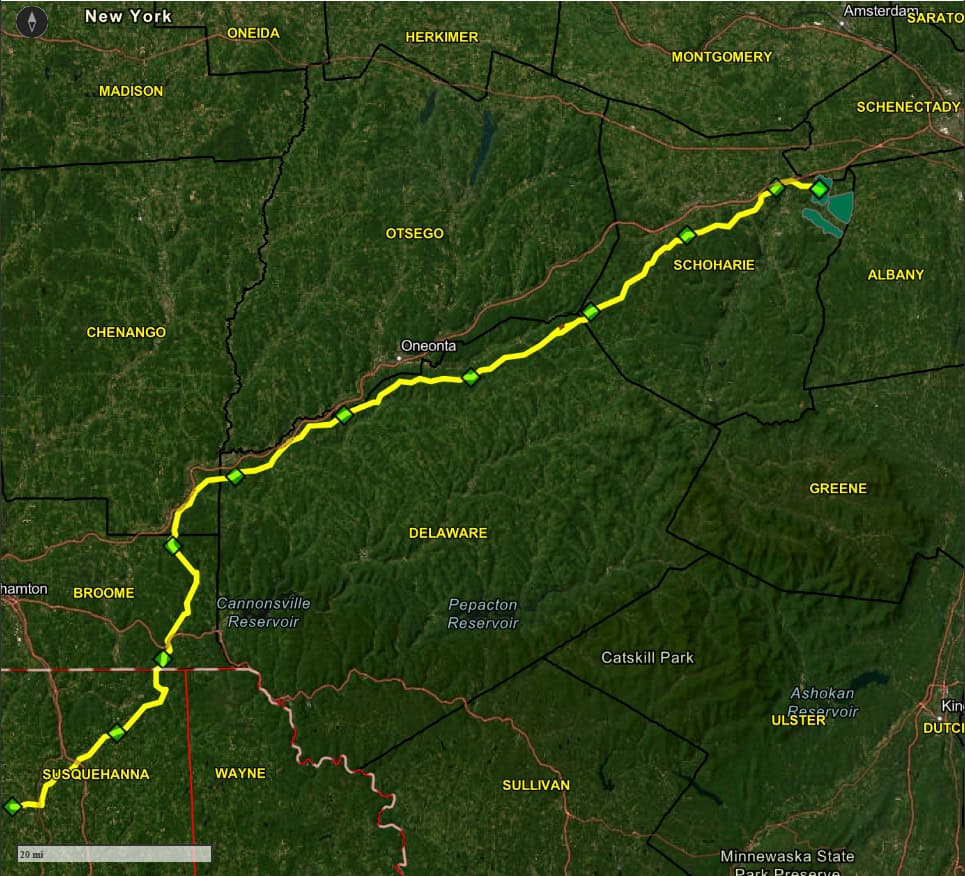
 Big Green scored a win yesterday — but not the win they’re telling you they got. On Tuesday, September 8, a three-judge panel of the U.S. Court of Appeals for the Third Circuit vacated the Clean Water Act Section 401 water quality certification (WQC) that the New Jersey Department of Environmental Protection (NJDEP) issued last November for Williams/Transco’s Northeast Supply Enhancement (NESE) project — the $1 billion, 400,000 Dth/d expansion that carries Marcellus gas from Pennsylvania, across New Jersey, under Raritan Bay, and into New York City (see
 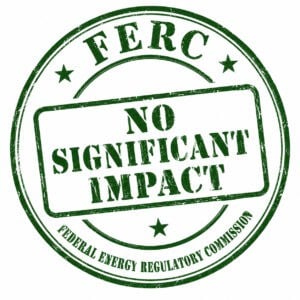 In April, we told you the Federal Energy Regulatory Commission (FERC) was taking a fresh look at the revived Constitution Pipeline and the associated Wright Interconnect project, and that the agency had to decide whether a relatively quick Environmental Assessment (EA) would do the job — or whether it would drag the projects through a full-blown, years-long Environmental Impact Statement (EIS). We got our answer on August 21. FERC staff issued the EA for both projects — 79 pages plus appendices — and the bottom line is the one supporters have been waiting on: building Constitution “would not constitute a major federal action significantly affecting the quality of the human environment.” In plain English — no significant impact. No years-long supplemental EIS is needed.
 Virginia’s environmental cops have hit Transcontinental Gas Pipe Line Company (Transco) with a $179,068.50 civil charge over erosion and sediment control violations on the Pittsylvania County stretch of the Southeast Supply Enhancement (SSE) Project — the single most important new outlet for Marcellus/Utica gas heading south.
  Devon Energy and Williams spent the last week of July doing something that doesn’t show up on a reserve report: teaching northeastern Pennsylvania teenagers how the gas business actually works. Then, on July 30, the Pennsylvania Chamber Foundation named both companies “Greatest Places to Intern in PA.” Six days later, Devon CEO Clay Gaspar told analysts he’s fielding “no shortage of incoming phone calls” about which assets he might sell — with the Marcellus at the top of everybody’s list. Which raises a question nobody on Wall Street is asking: who inherits the workforce machine?
  Williams dropped its second quarter 2026 results after the close on Monday, August 3, and held the analyst call Tuesday morning. The headline numbers are good: adjusted EBITDA of $1.921 billion (up 6%), GAAP net income of $827 million (up 51%), and a raised full-year guidance midpoint of $8.4 billion. Wall Street liked it. But the story for MDN readers isn’t in the headline. It’s buried in the volume tables on page 8 of the release, in a capital spending line nobody read out loud, and in two new Transco projects in Pennsylvania and New Jersey that got about eleven seconds of airtime on the call.
  The Federal Energy Regulatory Commission (FERC) is close to issuing an environmental assessment for the Constitution Pipeline, a 125-mile greenfield pipeline from the Marcellus gas fields of Susquehanna County, PA, to Schoharie County, NY (see