
3rd Circuit Tosses Riverkeeper Challenge to Transco REA Permits
 The Delaware Riverkeeper Network and PennFuture fought for years for the right to challenge Transco’s Regional Energy Access (REA) pipeline permits before Pennsylvania’s Environmental Hearing Board (EHB). They got their wish. Then they lost at the EHB. And yesterday, they lost again in federal court. A three-judge panel of the U.S. Court of Appeals for the Third Circuit unanimously upheld the state Department of Environmental Protection’s (DEP) water permits for the Williams-owned pipeline expansion. The court said the groups never showed that the extra water testing they demanded would have changed a thing. Even better, the court handed down a ruling on Pennsylvania’s Environmental Rights Amendment that could make life a lot harder for anti-drillers going forward. Read More “3rd Circuit Tosses Riverkeeper Challenge to Transco REA Permits”
 Big Green’s second legal attack against Transco’s Southeast Supply Enhancement Project (SESE) just fired its opening shot. On September 18, Sierra Club, Appalachian Voices, Southern Alliance for Clean Energy, and 7 Directions of Service filed their 142-page opening brief in the D.C. Circuit (Case No. 26-1100), arguing FERC’s approval of the pipeline was “arbitrary and capricious” because the agency allegedly ignored evidence that SESE and a second, co-located pipeline would combine to inflict “severe and potentially permanent” damage on streams across Virginia and North Carolina. Construction on SESE has continued the entire time — including through a failed bid by the same groups to freeze it back in June.
  Big Green scored a win yesterday — but not the win they’re telling you they got. On Tuesday, September 8, a three-judge panel of the U.S. Court of Appeals for the Third Circuit vacated the Clean Water Act Section 401 water quality certification (WQC) that the New Jersey Department of Environmental Protection (NJDEP) issued last November for Williams/Transco’s Northeast Supply Enhancement (NESE) project — the $1 billion, 400,000 Dth/d expansion that carries Marcellus gas from Pennsylvania, across New Jersey, under Raritan Bay, and into New York City (see
 Virginia’s environmental cops have hit Transcontinental Gas Pipe Line Company (Transco) with a $179,068.50 civil charge over erosion and sediment control violations on the Pittsylvania County stretch of the Southeast Supply Enhancement (SSE) Project — the single most important new outlet for Marcellus/Utica gas heading south.
  Williams dropped its second quarter 2026 results after the close on Monday, August 3, and held the analyst call Tuesday morning. The headline numbers are good: adjusted EBITDA of $1.921 billion (up 6%), GAAP net income of $827 million (up 51%), and a raised full-year guidance midpoint of $8.4 billion. Wall Street liked it. But the story for MDN readers isn’t in the headline. It’s buried in the volume tables on page 8 of the release, in a capital spending line nobody read out loud, and in two new Transco projects in Pennsylvania and New Jersey that got about eleven seconds of airtime on the call.
 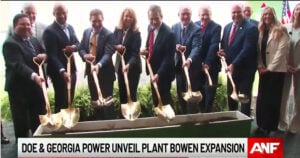 Back in March, we told you about two radical green groups — the Southern Environmental Law Center and the Sierra Club — running to court to block new gas-fired turbines at Georgia Power’s Plant Bowen in Bartow County, Georgia (see
  Last November, New Jersey (and New York) issued a federal Clean Water Act permit to build the Williams Northeast Supply Enhancement (NESE) pipeline project (see
  Williams’ Transco Southeast Supply Enhancement Project (SESE) is a 55-mile, 42-inch-wide pipeline that will run through Pittsylvania County, Virginia, and Rockingham, Guilford, Forsyth, and Davidson counties in North Carolina. Construction for SESE started March 2, 2026, according to FERC filings. Transco (Williams) received its final federal authorization and a Notice to Proceed, and crews mobilized in early spring. Initial activities have included tree felling, installation of acoustic barriers, and test drilling in preparation for blasting. Antis finally gave up trying to block construction of SESE in June (see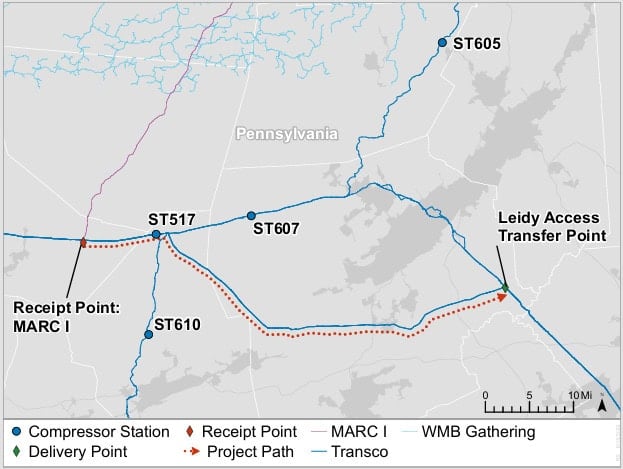
 Williams’ Transco Southeast Supply Enhancement Project (SESE) is a 55-mile, 42-inch-wide pipeline that will run through Pittsylvania County, Virginia, and Rockingham, Guilford, Forsyth, and Davidson counties in North Carolina. It will provide natural gas to Duke Energy customers. Big Green sued to overturn a federal water quality permit issued by the U.S. Army Corps of Engineers. Big Green wanted the court to block construction until the full case could be heard. In May, a three-judge panel from the U.S. Court of Appeals for the Fourth Circuit (4th Circuit) rejected arguments Big Green put forward that claimed the Army Corps’ decision was “arbitrary and capricious” and refused to block construction (see
 It seems that not all of the judges who sit on the U.S. Court of Appeals for the Fourth Circuit (4th Circuit) are clowns, the way the three judges who oversee cases dealing with the Mountain Valley Pipeline (MVP) Southgate project are (see
  In April, MDN reported that anti-fossil fuel fanatics had not yet given up on trying to block construction of the Williams Northeast Supply Enhancement (NESE) pipeline, a $1 billion+ project designed to increase Transco pipeline capacity and flows of Marcellus gas heading into New York City and other northeastern markets. Even though there was an official groundbreaking ceremony at Brooklyn’s Floyd Bennett Field in New York City in April, antis are still doing their best to block this project. They pinned one of their last hopes on a relatively obscure state agency in New Jersey, pressuring it to refuse to issue a license for the project (see