
Groundbreaking Ceremony for NESE Pipe in NYC an All-Star Event
 Yesterday, Williams marked the official start of construction on the Northeast Supply Enhancement (NESE) project with a groundbreaking ceremony at Floyd Bennett Field in Brooklyn, New York City. It was an energy-star-studded event. Williams CEO Chad Zamarin was, of course, there and spoke. Other luminaries attending and speaking included U.S. Secretary of Energy Chris Wright, U.S. Environmental Protection Agency Administrator Lee Zeldin, and U.S. Secretary of the Interior Doug Burgum. Also on hand for the ceremony was (surprise!) FERC Chairwoman Laura Swett. We don’t ever recall a FERC commissioner attending a groundbreaking ceremony for a pipeline. Read More “Groundbreaking Ceremony for NESE Pipe in NYC an All-Star Event”
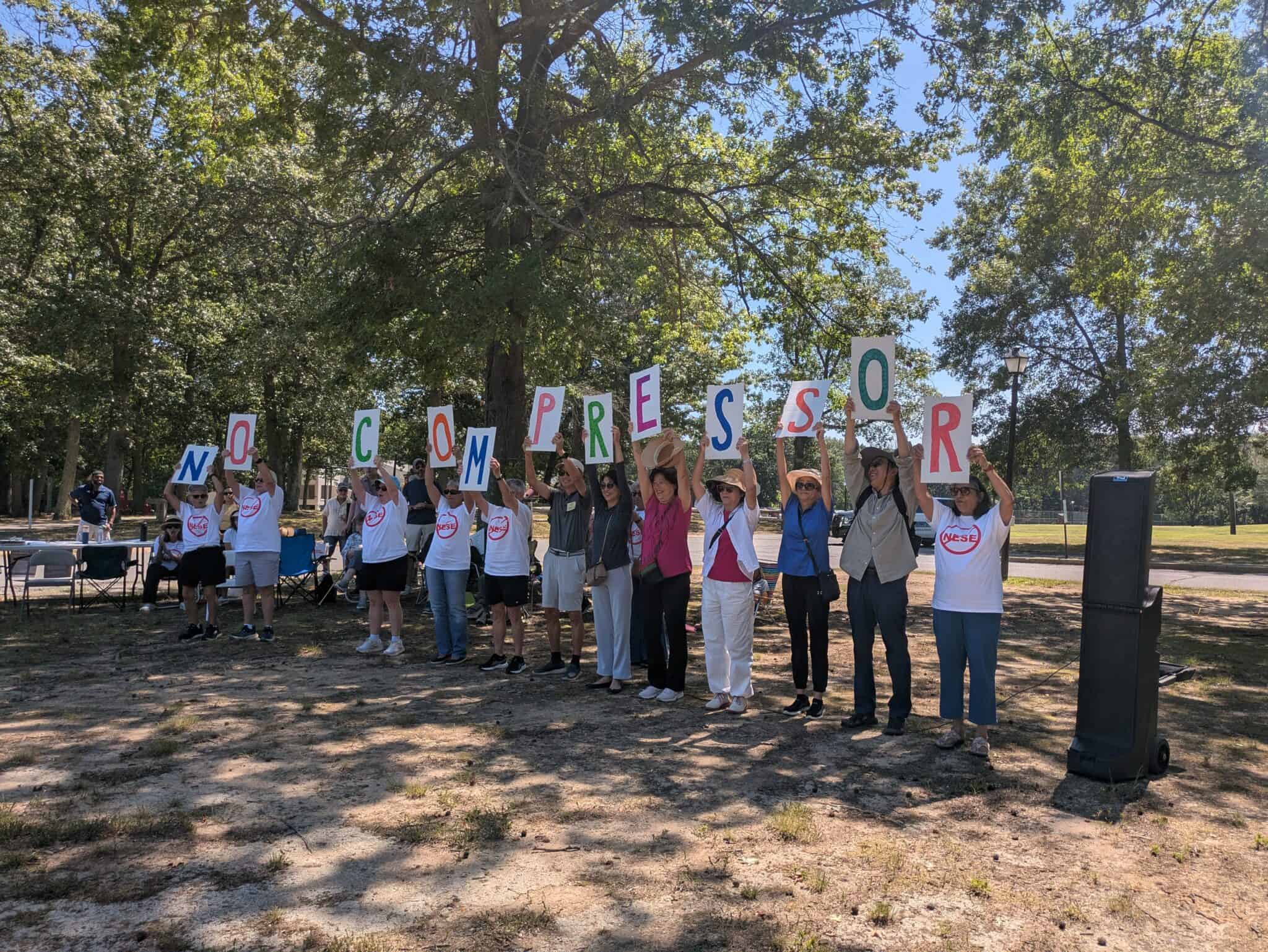
 As we reported last week, anti-fossil fuel fanatics haven’t given up on trying to block construction of the Williams Northeast Supply Enhancement (NESE) pipeline, a $1 billion+ project designed to increase Transco pipeline capacity and flows of Marcellus gas heading into New York City and other northeastern markets (see
  We spotted an interesting article that posits Williams’ strategy is to expand its mighty Transco natural gas pipeline system by increasing the capacity of existing infrastructure rather than building new pipelines. The Transcontinental Gas Pipe Line (Transco) is the largest-volume, highest-capacity interstate natural gas transmission system in the U.S. It spans roughly 10,000 miles (with 60+ compressor stations) from the Gulf Coast (Texas/Louisiana) to New York City. The Williams strategy of expanding Transco rather than building new pipes minimizes disruption to communities and the environment while meeting growing demand from residential, commercial, industrial, and power generation sectors.
  Williams Companies is breaking ground tomorrow on the Northeast Supply Enhancement (NESE) pipeline in Brooklyn — the first new pipeline in New York in over a decade — signaling a broader national natural gas infrastructure boom. Driven by AI data center power demand, LNG export growth, and population expansion, the U.S. is tracking over 150 pipeline projects representing roughly 150 Bcf (billion cubic feet) of daily capacity.
  Anti-fossil fuel fanatics haven’t given up on trying to block construction of the Williams Northeast Supply Enhancement (NESE) pipeline, a $1 billion+ project designed to increase Transco pipeline capacity and flows of Marcellus gas heading into New York City and other northeastern markets. Last November, the states of New York and New Jersey issued federal Clean Water Act permits for their respective states, allowing NESE to be built (see
  Two pipeline kingpins are engaged in a deathmatch with the Federal Energy Regulatory Commission (FERC) to get their competing pipeline projects approved. One is Williams’ Transco Southeast Supply Enhancement Project (SESE), the other is EQT’s MVP Southgate project (see
  In November of last year, both New York and New Jersey issued the required federal water permits for the Williams Transco Northeast Supply Enhancement (NESE) natural gas pipeline project (see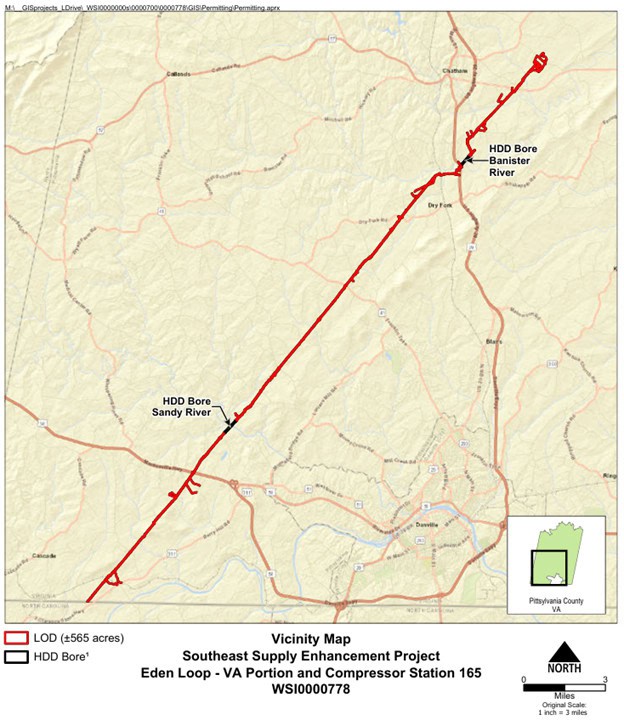
 When the Transcontinental Gas Pipe Line (Transco) was placed into service in 1950, it was hailed as the longest pipeline in the world and the largest single-project construction venture ever attempted. Today, Transco, now owned by Williams, transports about 16% of the natural gas consumed in the United States. More than a single pipeline, Transco is a network stretching nearly 10,000 miles, connecting South Texas to New York. It’s hard to overstate the importance of this pipeline system to the country and to the Marcellus/Utica region. It carries an estimated 4.0 to 4.5 billion cubic feet (Bcf) of M-U molecules every day. We have written over 1,100 posts on MDN, either focusing on or prominently mentioning Transco (
 Two pipeline kingpins are engaged in a deathmatch with the Federal Energy Regulatory Commission (FERC) to get their competing pipeline projects approved. One is Williams’ Transco Southeast Supply Enhancement Project (SESE), the other is EQT’s MVP Southgate project. Both projects would be built in the same general area, starting at the same point near Chatham, Virginia, and ending near Eden, North Carolina. Both claim they have customers ready to take their gas. In a July FERC filing, Williams said that its project could easily handle Southgate MVP’s capacity by adding meter tubes and regulation at an existing station (see
 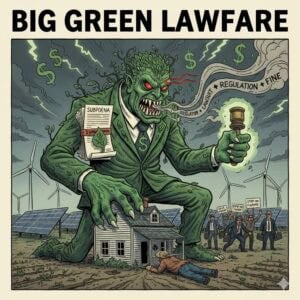 In May, pipeline giant Williams filed a request with the Federal Energy Regulatory Commission (FERC) to expedite the reissuance of a certificate for the Northeast Supply Enhancement (NESE) project, a $1 billion+ project designed to increase Transco pipeline capacity and flows of Marcellus gas heading into New York City and other northeastern markets (see
  Donald Trump once famously said, “We’re gonna win so much. You’re gonna get tired of winning. And you’re going to say, ‘Please, please, it’s too much winning. We can’t take it anymore. Mr. President, it’s too much.’ And I’ll say, ‘No, it isn’t. We have to keep winning. We have to win more!'” He’s keeping his promise to win! However, we’re not tired of winning just yet. 😉 Last Friday, Williams announced that both New York and New Jersey have issued the required federal water permits needed to build the Transco pipeline project called the Northeast Supply Enhancement (NESE). President Trump made a deal (so the rumor goes) with NY Gov. Kathy Hochul, allowing her to continue building a $5 billion offshore wind farm boondoggle in return for building NESE and another project, the Constitution Pipeline (see
 The Northeast Supply Enhancement Project (NESE), part of the mighty Transco pipeline system, is alive once again. A decade after Williams Cos. first proposed the $1-billion-plus natural gas pipeline and a year after the company scrapped it, the 400 MMcf/d capacity expansion for New York City and Long Island has been revived. This revival, primarily attributed to a shift in Washington’s political climate, resulted in a new FERC approval. Now, state regulators in New York and New Jersey are deliberating on the necessary water-quality permits. Once both NY and NJ issue those permits, it will be (more or less) smooth sailing to the construction and completion of the project.