
Anti-Drilling/Fossil Fuel | Enbridge | Energy Services | Industrywide Issues | Pipelines | Regulation
Mass. Gov. Who Bragged About Killing Pipelines Now Wants One, Fast
 Back in 2022, then-Massachusetts Attorney General (now Governor) Maura Healey hit the campaign trail and bragged, “I stopped two gas pipelines from coming into this state” (see Mass. Gov. Again Changes Story re Blocking Two NatGas Pipelines). Fast forward four and a half years. Healey is running for reelection in a race where the No. 1 issue is sky-high energy bills. So what does she do? She writes a letter to President Trump’s Energy Secretary, Chris Wright, asking the feds to hurry up and approve a natural gas pipeline expansion into Massachusetts. You can’t make this stuff up. Read More “Mass. Gov. Who Bragged About Killing Pipelines Now Wants One, Fast”
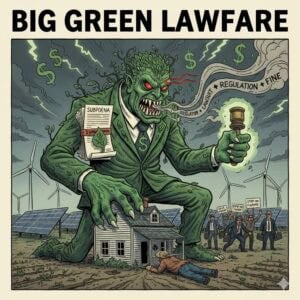 Chatham County, North Carolina’s Board of Commissioners last week unanimously passed a resolution opposing Enbridge Gas North Carolina’s proposed 28-mile natural gas pipeline from Siler City to Moncure. This isn’t a garden-variety “we don’t like it” resolution. It authorizes the county to actively fight the project by challenging environmental permits, teaming up with like-minded groups, working the media, organizing residents, and coaching landowners on how to resist condemnation. In other words, a county government just signed itself up as a Big Green activist group, with taxpayers picking up the tab.
  Here’s a pipeline fight where the bad guys aren’t the greens. Last Friday, the U.S. Court of Appeals for the D.C. Circuit sided with the Federal Energy Regulatory Commission (FERC) and Enbridge subsidiary East Tennessee Natural Gas (ETNG), tossing out a challenge brought not by environmental radicals but by the pipeline’s own customers — a group of small-town gas utilities in Tennessee, Virginia, and Alabama who said they were being stuck with the bill for an upgrade they never asked for.
  A new report from RBN Energy fills in a piece of the Project Beacon puzzle we haven’t fully covered: two separate Millennium Pipeline expansions — one already sanctioned, one still on the drawing board — that DT Midstream and TC Energy are advancing to feed New England’s growing appetite for Marcellus/Utica gas. One is moving fast. The other needs New York State’s blessing, which is never a sure thing.
  Enbridge reported second quarter results on Friday, July 31, and buried in a Canadian midstream giant’s quarterly slide deck — a document that is 90% oil sands, Permian, and balance sheet talk — is the best piece of news Appalachian producers have gotten out of New England in fifteen years. Project Beacon, Enbridge’s proposed expansion of the Algonquin Gas Transmission (AGT) system into New England, ran a binding open season from May 18 to July 1. An open season is simply a pipeline asking shippers to raise their hands and commit, in writing, to buy capacity. CEO Greg Ebel told analysts the response “significantly exceeded our initial expectations.” Matthew Akman, who runs Enbridge’s gas transmission business, said Beacon would be “multiple times” the size of the AGT Enhancement project already underway, and that a big enough Beacon could save New England utility customers more than $1 billion a year.
  Back in May, we told you about a new 28-mile intrastate natural gas pipeline Enbridge Gas North Carolina (EGNC) wants to build in Chatham and Lee counties, running from Siler City southeast to Moncure (see
  Last week, MDN reported that the Energy Secretary of the very liberal Democrat regime that runs Massachusetts had written a letter to the New England Power Generators Association, asking power generators to get on board and support an expansion of the Algonquin Gas Transmission (AGT) pipeline (see
  This is one of those “man bites dog” (or in this case, “woman” bites dog) stories. Rebecca Tepper has, for years, worked for Maura Healey—first when Healey was Attorney General of Massachusetts, and later (now) in Healey’s role as Governor of the state. Tepper is Healey’s Secretary of Energy and Environmental Affairs. Healey is her boss and directs the policies that Tepper executes. So it was a complete shock for us to receive an email from Tepper’s office with a letter attached (see it below) that Tepper sent to Dan Dolan, President of the New England Power Generators Association. The letter encourages (we’d call it demands) New England’s power generators to sign up to receive natural gas during Enbridge’s open season for the recently announced Project Beacon.
  Big Green groups rallied Tuesday in Peekskill (Westchester County, NY) against Enbridge’s proposed Project Beacon, a natural gas pipeline expansion that would increase capacity on the Algonquin Gas Transmission line. Radicals lied by saying the project would “burden ratepayers” already facing high living costs. How do you figure? Algonquin is a transmission pipeline, and its expansion will be paid for by Enbridge (and its shareholders), not by increasing local utility rates. Yet these liars are never called out for their false statements by the media.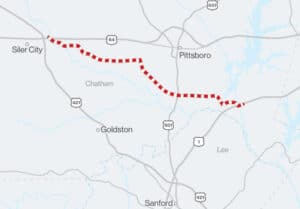
 Enbridge has announced a non-binding open season inviting existing and potential shippers to bid on firm natural gas transportation services. The offer includes up to 300,000 GJ/day (~285 MMcf/d) of capacity for its M12, M12-X, or M17 services. Available paths connect the strategic Dawn Hub to Parkway, Kirkwall, and Dornoch, facilitating efficient gas movement across Ontario to major North American markets. Shippers of Marcellus and Utica molecules will be interested in this open season.
  Enbridge Inc. is a major North American energy infrastructure (primarily pipeline) company based in Calgary, Canada, specializing in the transportation, distribution, and generation of energy. It operates the world’s longest crude oil/liquids pipeline system, transporting 25% of North America’s crude oil, alongside significant natural gas, renewable power, and natural gas utility operations. Enbridge’s fourth quarter 2025 update highlights significant developments impacting the Marcellus/Utica region, primarily driven by surging demand for natural gas to support data centers and power generation, as well as continued infrastructure modernization.