
Duke’s $584M NC Gas Peaker Denied Over Data Center Cost Worries
 Here’s one you don’t see every day. The North Carolina Utilities Commission (NCUC) has said “no” to a Duke Energy gas-fired power plant. On Sept. 18, the commission voted 3-1 to deny Duke Energy Progress a certificate of public convenience and necessity (CPCN, the state’s permission slip to build) for a 255-megawatt (MW) gas-fired “peaker” turbine at the Smith Energy Complex in Richmond County. Price tag: $584 million. The twist? The three commissioners who voted no are all Republican appointees, and the lone vote in favor came from a Democrat. Nobody on the commission said gas is the problem. The problem, they said, is data centers: how much of this plant’s power data centers will use, and who would pay for it. Read More “Duke’s $584M NC Gas Peaker Denied Over Data Center Cost Worries”
 Duke Energy just handed Marcellus/Utica producers something more useful than another press release. It handed us a calendar. Back in July we told you Duke had picked its sites: two 1,360-megawatt (MW) combined-cycle gas plants on its Davie County, North Carolina parcel, and the largest liquefied natural gas (LNG) storage facility in company history directly across the Yadkin River in Davidson County (see
  Duke Energy reported second quarter 2026 results Tuesday, and while the earnings themselves are fine-but-boring utility fare, buried in the slide deck is one of the better demand stories going for Marcellus/Utica producers: Duke now has 6,025 megawatts (MW) of new gas-fired generation sited in North and South Carolina, every announced plant has its gas supply under contract, and the two pipelines that will carry most of those molecules south both trace back to Appalachia.
 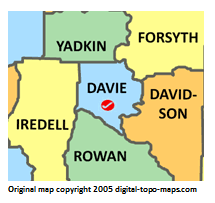 In January, MDN broke the news that Duke Energy was eyeing a 1,360-megawatt (MW) gas-fired power plant on 1,600 acres in Davidson County, North Carolina (see
 Good news! The Public Service Commission (PSC) of South Carolina approved a joint application by Dominion Energy and Santee Cooper to build Canadys Station, a natural gas combined-cycle facility in Colleton County. The plant will generate approximately 2,200 megawatts (2.2 GW) — enough to power over one million homes — addressing the state’s growing energy demand. It will be built on the site of a former Dominion Energy coal plant, roughly 40 miles northwest of Charleston (the “Lowcountry” region), eliminating the need for new land clearing.
 Oberlin, Ohio, officials are weighing a proposal to amend the city’s Community Bill of Rights to allow Dominion Energy Ohio to build a gas pipeline connection to a planned eco-industrial park, unlocking possible state support. Environmental groups and students at Oberlin College (neither of which pay any property or income taxes in Ohio, meaning they don’t have a say) argue the change would weaken Oberlin’s anti-fossil-fuel commitments and revive ties to Enbridge, whose NEXUS pipeline previously “divided” the city. City officials and utility experts counter that renewables alone are not yet feasible, citing constraints on electric capacity and on wind, solar, and geothermal options.
  In March, South Carolina regulators approved Duke Energy’s proposal to build a 1.4-gigawatt (GW) natural gas-fired power plant in Anderson County, marking the utility’s first new generation project in the state in a decade (see
  In January, MDN broke the news that Duke Energy is considering constructing a 1,360-megawatt natural gas power plant on 1,600 acres in Davidson County, North Carolina (see
  Utility company Spire Inc. (based in St. Louis, MO) successfully finalized its $2.48 billion acquisition of Duke Energy’s Piedmont Natural Gas utility business in Tennessee on March 31, 2026. Rebranded as Spire Tennessee, the utility becomes the state’s largest investor-owned natural gas provider, serving over 200,000 customers in the Nashville region via 3,800 miles of pipeline. Approximately 200 former Piedmont employees joined Spire. The natural gas that supplies Tennessee mostly comes from the Marcellus/Utica.
  Anti-fossil fuelers are raising concerns (and stoking fear with county residents) about a potential Duke Energy natural gas power plant in Davidson County, NC, after the project appeared in the company’s long-range planning documents. We first told you about this project three weeks ago (see
  Duke Energy, headquartered in Charlotte, N.C., is one of the largest U.S. energy holding companies, serving 8.7 million electric customers and 1.8 million gas customers across six states as of early 2026. While the company dabbles in unreliable renewables like solar and wind, its bread-and-butter, go-to source for new electric power generation is natural gas, which it gets from the Marcellus/Utica. We’ve reported on many of Duke’s announced new gas-fired power plant projects (