
Energy Companies | Energy Services | EQT Corp | Equitrans/EQT Midstream | Industrywide Issues | Montgomery County | Pipelines | Virginia
MVP Boost Update: FERC Decision Near, State Permit Frozen

Mountain Valley Pipeline’s (MVP) plan to push more natural gas through its existing pipe, a project called MVP Boost, is closing in on a federal decision. FERC staff have already given the project a clean bill of environmental health. But back in Virginia, Boost is stuck in neutral, all because one county can’t seem to make up its mind. The centerpiece of Boost is a brand-new compressor station in Elliston (Montgomery County), Virginia. It’s called the Swann Compressor Station, named after Pittsburgh Steelers Hall of Famer Lynn Swann (MVP’s operator is based in Pittsburgh). Right now, Swann is having trouble getting off the line of scrimmage. Read More “MVP Boost Update: FERC Decision Near, State Permit Frozen”
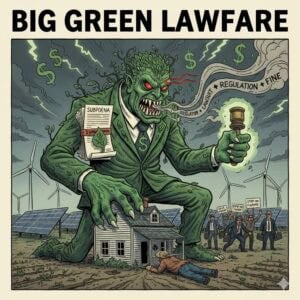 Big Green’s second legal attack against Transco’s Southeast Supply Enhancement Project (SESE) just fired its opening shot. On September 18, Sierra Club, Appalachian Voices, Southern Alliance for Clean Energy, and 7 Directions of Service filed their 142-page opening brief in the D.C. Circuit (Case No. 26-1100), arguing FERC’s approval of the pipeline was “arbitrary and capricious” because the agency allegedly ignored evidence that SESE and a second, co-located pipeline would combine to inflict “severe and potentially permanent” damage on streams across Virginia and North Carolina. Construction on SESE has continued the entire time — including through a failed bid by the same groups to freeze it back in June.
  NextEra Energy and Dominion Energy, which want to combine into the country’s biggest electric utility in a $67 billion deal, launched a full-blown charm offensive (i.e., piles of money) aimed at Virginia yesterday. The two companies unveiled what they call a “transformational” benefits package that doubles bill credits for homeowners (from two years to four), promises 1,000 new direct jobs, and throws in a brand-new office tower in downtown Richmond, paid for by NextEra shareholders. Why all the sweeteners? Because Virginia Gov. Abigail Spanberger says she is “deeply skeptical” the deal is good for her state, and she has formally inserted herself into the regulatory review. Here’s what’s in the new package, how it’s being received, and why it matters to Marcellus/Utica drillers.
  Last week we told you Dominion Energy cleared its first hurdle for the monster 3,000-megawatt (3 gigawatt) Cumberland Energy Center in Cumberland County, Virginia (see
  Virginia Democrats have spent the summer hammering the proposed $67 billion NextEra-Dominion merger — letters to regulators, a 64-question interrogation, a statewide listening tour, a demand for a special session. Last week the pile-on reached the very top when House Speaker Don Scott (D-Portsmouth) filed his own letter with the State Corporation Commission (SCC). Here’s the twist: the same Democrat leaders doing the loudest complaining just refused to do the one thing that would actually slow this deal down.
  Back in May we told you Dominion Energy had brass you know what announcing a monster 3,000-megawatt (3 gigawatt) gas-fired power plant in Cumberland County, Virginia, while its much smaller Chesterfield peaker project was still stuck in the mud after three years of green lawfare (see
 Virginia’s environmental cops have hit Transcontinental Gas Pipe Line Company (Transco) with a $179,068.50 civil charge over erosion and sediment control violations on the Pittsylvania County stretch of the Southeast Supply Enhancement (SSE) Project — the single most important new outlet for Marcellus/Utica gas heading south.
  Back in May we brought you the news that NextEra Energy is buying and merging with Dominion Energy in a deal valued around $66.8 billion (see
  Yesterday, EQT Corporation, the largest Marcellus/Utica-only producer by far, issued its second-quarter 2026 update. We’re pulling out what we consider to be the biggest news from that update for this separate post. During an earnings call with analysts, EQT CEO Toby Rice said that since the Federal Energy Regulatory Commission (FERC) approved the company’s 31-mile Mountain Valley Pipeline (MVP) Southgate project from southern Virginia into northern North Carolina in June (see
  In May, Dominion Energy announced plans to construct a multibillion-dollar, 3-gigwatt (GW) combined-cycle natural gas power plant in Cumberland County to address the state’s rapidly increasing electricity demand, particularly from data centers (see
  Data center growth is rapidly reshaping Northeast power and natural gas markets, with projects clustering near transmission lines, substations, gas-fired power generation, and pipeline corridors. Virginia remains the epicenter, led by Northern Virginia’s massive hyperscale hub and tens of gigawatts of planned capacity. Ohio is emerging fast around Columbus, with more than 15 GW proposed. Pennsylvania could become a major growth story, pairing Marcellus/Utica gas resources with large campuses such as Homer City’s planned 4.5-GW gas-fired/data center redevelopment. However, PA is attempting to shoot itself in the foot with talk of both short- and long-term moratoriums on new data center construction. So, the jury is still very much out on how successful PA will be with data centers.
  Williams’ Transco Southeast Supply Enhancement Project (SESE) is a 55-mile, 42-inch-wide pipeline that will run through Pittsylvania County, Virginia, and Rockingham, Guilford, Forsyth, and Davidson counties in North Carolina. It will provide natural gas to Duke Energy customers. Big Green sued to overturn a federal water quality permit issued by the U.S. Army Corps of Engineers. Big Green wanted the court to block construction until the full case could be heard. In May, a three-judge panel from the U.S. Court of Appeals for the Fourth Circuit (4th Circuit) rejected arguments Big Green put forward that claimed the Army Corps’ decision was “arbitrary and capricious” and refused to block construction (see
  The Virginia Supreme Court issued a ruling last Thursday with far-reaching consequences not only for the plaintiffs who won the case (EQT and Diversified Energy) but also for other conventional and, if it ever develops, shale drillers in the state. EQT and Diversified sued Wise County, VA, alleging that Wise County’s method of valuing their assets in the county overvalued them, resulting in a much higher tax bill. The Supremes agreed and sent the case back to a lower court to rework the valuations.