
Va.’s Democrat Legislature Wants to Raise Data Center Fees by 16%
 Virginia Senate Bill 253, introduced by State Senator Louise Lucas (D-Portsmouth), aims to shift energy infrastructure costs from residents to data centers, potentially saving households a whopping $65 annually. The legislation requires data centers—which account for 20% of Dominion Energy’s sales—to fund their own electrical substations and cover specific “capacity costs.” If the bill becomes law and the proposals in it receive approval from the State Corporation Commission (SCC), the typical monthly energy bill for data centers would rise by about 16%, while the typical bill for residential and other customers would decrease by 3% to 3.5%. Looks like Virginia, with more data centers than any other state in the union, is now closed for data center business. Too bad. Read More “Va.’s Democrat Legislature Wants to Raise Data Center Fees by 16%”
 Two pipeline kingpins are engaged in a deathmatch with the Federal Energy Regulatory Commission (FERC) to get their competing pipeline projects approved. One is Williams’ Transco Southeast Supply Enhancement Project (SESE), the other is EQT’s MVP Southgate project (see
  Last November, Accomack County, Virginia, secured a $6.5 million state grant to expand piped natural gas to the Eastern Shore, a move aimed at stabilizing the local economy (see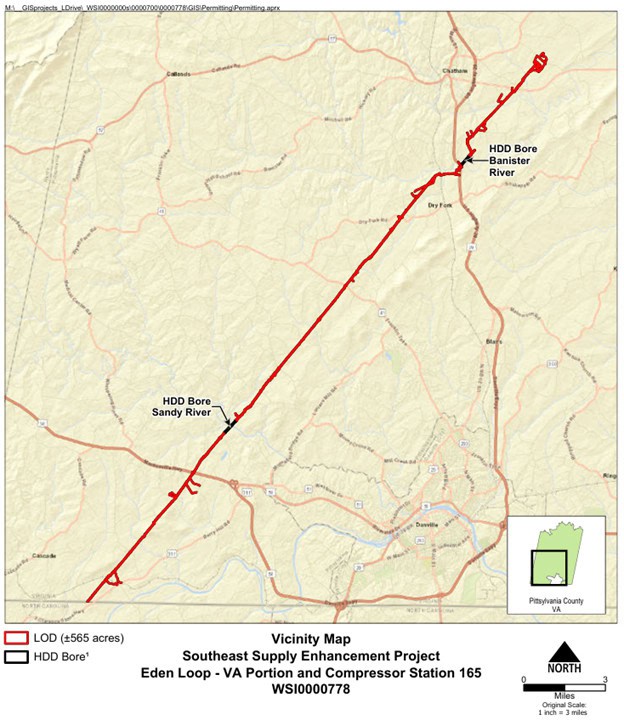
 Mixed signals are coming from Virginia’s regulatory agencies regarding a gas-fired project in Chesterfield. In June 2023, Dominion Energy announced plans to build four small “peaker” electric generating plants in Chesterfield County near Richmond (see
  In June 2023, Dominion Energy announced plans to build four small “peaker” electric generating plants in Chesterfield County near Richmond (see
 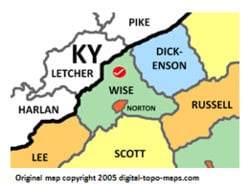 Great news about another new gas-fired power plant coming to Virginia—a plant that will use Marcellus/Utica molecules. Red Post Energy Group and Wise Innovation Hub Venture (OASIS) have signed a Letter of Intent to develop power infrastructure for a major technology and data center hub in Wise County, Virginia, in the southwestern corner of the state. Known as the Maverick Project, this phased initiative aims for a total capacity of 600 megawatts, beginning with an initial 100-megawatt phase.
 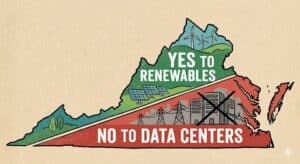 Democrats in Virginia are experiencing political ecstasy at the prospect of reversing four years of common-sense energy policies under outgoing Governor Glenn Youngkin. Gov. Youngkin removed the state from the odious Regional Greenhouse Gas Initiative (RGGI) carbon tax scheme. Incoming Gov. Abigail Spanberger has pledged to re-enroll the state in the program. Youngkin vetoed bills that would have favored unreliable renewable energy. Now, the Dems will not only have Spanberger as Governor, but hardened leftist Ghazala Hashmi as Lt. Governor, and a strong majority in both chambers of the legislature. They are already planning to reintroduce bills favoring renewables and blocking new data centers. It’s a crying shame what Virginia has done in electing these radicals to lead it.
  We suppose it’s no surprise that left-wing Congressional Democrats from North Carolina and Virginia are attacking two natural gas pipeline projects that are close to final approval and the start of construction. One project is Williams’ Transco Southeast Supply Enhancement Project (SESE), the other is EQT’s MVP Southgate project. Both projects would be built in the same general area, starting at the same point near Chatham, Virginia, and ending near Eden, North Carolina. Both have customers ready to take their gas. Southgate recently received a favorable environmental assessment (EA) from the Federal Energy Regulatory Commission (see
  As MDN previously reported, TC Energy’s Virginia Reliability Project (VRP) in the Hampton Roads region (Virginia Beach, Norfolk, Newport News area) started construction in the second quarter of this year. It held a ceremony in September to commemorate the final weld (see
  Two pipeline kingpins are engaged in a deathmatch with the Federal Energy Regulatory Commission (FERC) to get their competing pipeline projects approved. One is Williams’ Transco Southeast Supply Enhancement Project (SESE), the other is EQT’s MVP Southgate project. Both projects would be built in the same general area, starting at the same point near Chatham, Virginia, and ending near Eden, North Carolina. Both claim they have customers ready to take their gas. In a July FERC filing, Williams said that its project could easily handle Southgate MVP’s capacity by adding meter tubes and regulation at an existing station (see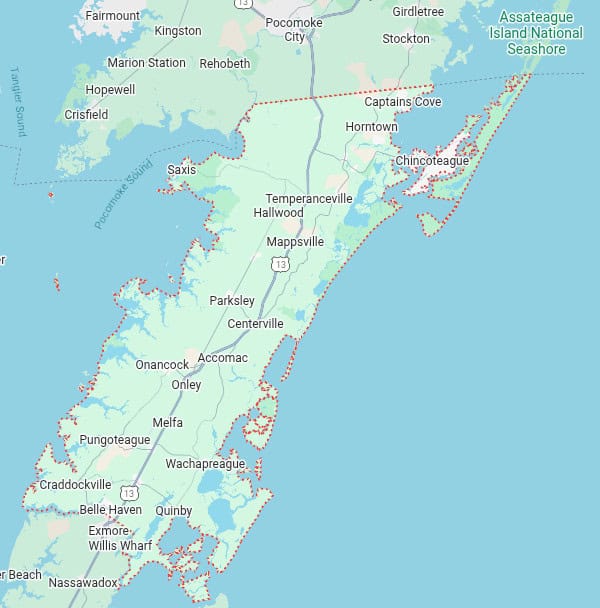

 Those who support natural gas and who live (and work) in Virginia apparently labor under a serious delusion: That far-left Democrat Governor-elect Abigail Spanberger will support expanding (or even the continued use of) natural gas in the state. On the campaign trail in August, Spanberger said that natural gas is going to “be part of the energy mix into the future.” And people actually believed her. Suckers. Those who support natgas are reminding Spanberger of her promise regarding natgas. And now that she’s been elected? “Spanberger’s campaign did not return a request for comment on the future of natural gas in Virginia.” She’s ghosting natgas supporters. Suprised? We aren’t.