
Anti-Drilling/Fossil Fuel | Energy Services | Industrywide Issues | Litigation | North Carolina | Pipelines | Regulation | Transco | Virginia | Williams
4th Circuit Panel Rejects Antis’ Plea to Block Transco SESE Work
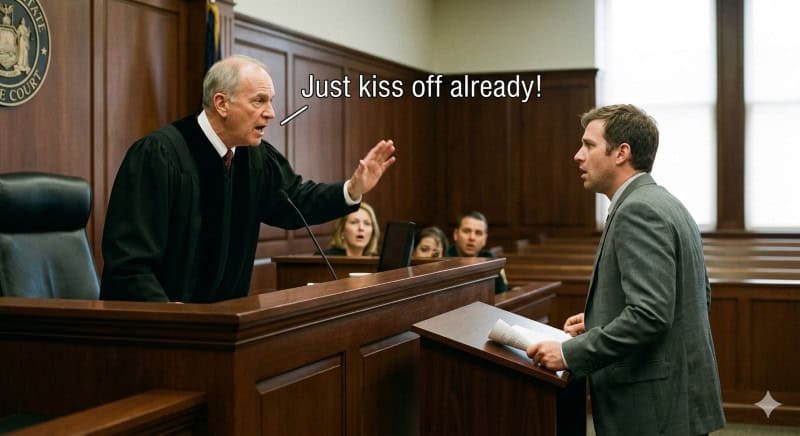 One week ago, MDN told you that a three-judge panel from the U.S. Court of Appeals for the Fourth Circuit (4th Circuit) heard oral arguments from Big Green asking the court to block construction of Williams’ Transco Southeast Supply Enhancement Project (SESE) while a court case challenging permits issued for the project grinds slowly through the legal system (see 4th Circuit Judge Tells Antis to Post a $100M Bond to Block Pipe). This past Monday, the judges politely (in legalese) told Big Green to kiss off. Read More “4th Circuit Panel Rejects Antis’ Plea to Block Transco SESE Work”
 Yesterday, MDN brought you the big news that NextEra Energy and Dominion Energy will combine in an all-stock transaction, creating the world’s largest regulated electric utility business serving approximately 10 million customer accounts across Florida, Virginia, North Carolina, and South Carolina (see
  Virginia is officially rejoining the Regional Greenhouse Gas Initiative (RGGI) carbon tax scheme this July after a liberal court deemed its previous withdrawal under former Governor Glenn Youngkin unlawful. This reentry forces utilities like Dominion Energy to resume purchasing carbon credits—modern-day indulgences for the “sin” of emitting carbon dioxide. The cost will be passed on to ratepayers through monthly bill increases (see
  It seems that not all of the judges who sit on the U.S. Court of Appeals for the Fourth Circuit (4th Circuit) are clowns, the way the three judges who oversee cases dealing with the Mountain Valley Pipeline (MVP) Southgate project are (see
  You have to hand it to Dominion Energy, the company has brass… courage. In June 2023, Dominion announced plans to build four small “peaker” electric generating plants in Chesterfield County near Richmond (see
  Quick, send in the clowns. Don’t bother, they’re here.
 Earlier this year, the Federal Energy Regulatory Commission (FERC) approved the Williams Transco Southeast Supply Enhancement Project (see
  The Mountain Valley Pipeline (MVP), which began operations in 2024 through West Virginia and Virginia, is now slated for an extension, the MVP Southgate, into North Carolina. This expansion faces opposition from some residents and environmental groups who raise concerns about safety, environmental impact, eminent domain issues, and the need for increased natural gas infrastructure (they believe cataclysmic global warming comes from burning natural gas). Despite court challenges and past environmental violations, the project has received government approvals and is forging ahead. On March 23, the Federal Energy Regulatory Commission (FERC) issued a notice to proceed with construction in Virginia.
  Virginia is officially rejoining the Regional Greenhouse Gas Initiative (RGGI) carbon tax scheme this July after a liberal court deemed its previous withdrawal under former Governor Glenn Youngkin unlawful. This reentry forces utilities like Dominion Energy to resume purchasing carbon credits—modern-day indulgences for the “sin” of emitting carbon dioxide, the same thing mammals exhale with every breath. The cost will be passed on to ratepayers through monthly bill increases. Virginians have no one to blame but themselves when their electric bills soar due to this idiotic carbon tax that does nothing more than allow politicians to pass out money to their favorite constituent groups as a reward for voting them into office. Welcome to the USSR of Virginia.
  Last year, MDN warned readers that the newly elected, incoming governor of Virginia, Abigail Spanberger, is a radical left Democrat (see
  Last week, MDN told you about one landowner in Luzerne County, PA, who became an overnight millionaire after selling his small farm to a company planning to build a data center on the land (see
  Despite a “public outcry” (of 13 people), the Chesapeake City (Virginia) Council voted 6-3 last July to approve a compressor station for Virginia Natural Gas (see
 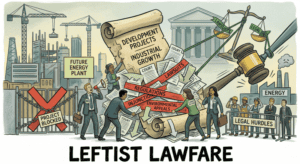 Several Big Green groups, including the Sierra Club, Wild Virginia, Appalachian Voices, and the Center for Biological Diversity, have filed a legal challenge against a permit issued by Virginia for the Mountain Valley Pipeline (MVP) Southgate extension. The Virginia Department of Environmental Quality (DEQ) approved a water permit for the project in January 2026. Big Green radicals argue that the pipeline “threatens” 138 streams, wetlands, and regional drinking water supplies. It’s the typical lawfare tactic used by the left to stall work on projects, hoping to delay them long enough that the builder (EQT in this case) gives up. Or if the builder won’t give up, they have to pay double or triple the price to construct it. That’s the game the radicals are playing.
  In June 2023, Dominion Energy announced plans to build four small “peaker” electric generating plants in Chesterfield County near Richmond (see