
MSC to Allegheny Health Board: Your Own Data Says Shale Is Safe
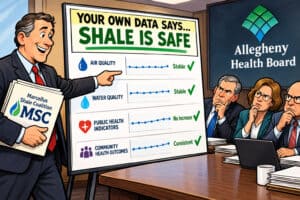 Last Wednesday, MDN told you about the Allegheny County Board of Health’s latest move against shale drilling (see Antis Cheer as Allegheny Co. Moves to Pull Shale Air Exemptions). Right now, shale well pads in the county don’t need an air permit from the county health department because they’re exempt under Article 21, the county’s air pollution rules. In September, the board voted unanimously to have the health department study getting rid of that exemption. It turns out the industry saw this coming and tried to head it off. The Marcellus Shale Coalition (MSC), the main trade group for Pennsylvania’s shale drillers, sent MDN copies of two letters MSC President Jim Welty sent the board before that vote, one dated Aug. 20 and the other Sept. 15. The letters accuse the board’s “Fracking Committee” of doing its work in the shadows. And they point to something the board seems to want everyone to forget: the county’s own data. Read More “MSC to Allegheny Health Board: Your Own Data Says Shale Is Safe”
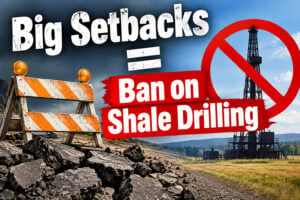 The radical green groups trying to ban new Marcellus/Utica drilling in Pennsylvania through the back door haven’t gone away. They push shale well “setbacks” out to as much as a mile. Yesterday (Oct. 7), a coalition led by the Clean Air Council and Environmental Integrity Project (EIP) marked the two-year anniversary of its rulemaking petition and pushed in Harrisburg, calling on the Shapiro administration to act. The Department of Environmental Protection (DEP) still plans to deliver its recommendation to the Environmental Quality Board (EQB) by the end of this year. The antis are making noise. We need to make more.
  On Tuesday, a crowd of protesters packed the Pennsylvania Capitol Rotunda in Harrisburg to demand a statewide moratorium (a ban, really) on new data centers. Most of the coverage framed it as an outpouring of everyday Pennsylvanians fed up with Big Tech. MDN took a closer look at who organized the rally, who arranged the buses, and who stood at the microphone. What we found: the same groups and many of the same faces that have fought shale drilling, pipelines, and gas-fired power plants in this state for the past 15 years. New signs. Same agenda.
  The 108-mile “Women’s Water Walk” along the route of the proposed Constitution Pipeline wrapped up last Sunday in Schoharie. On Tuesday, the walkers carried jars of creek water to Gov. Kathy Hochul’s office in Albany. The walk is over, but it didn’t end quietly. It gave birth to a new, permanent anti-pipeline coalition run by Frack Action. The Governor’s office answered with a carefully worded statement that isn’t quite the “stand strong” pledge the walkers came for. And the walk’s fundraising came up about 80% short of its goal.
  The Allegheny County Board of Health has fired the first shot in what looks like a slow-motion campaign to squeeze shale drilling out of the county. At its September meeting, the board voted unanimously to have the county health department look into whether Article 21, the county’s air pollution rulebook, should be rewritten to remove permitting exemptions that oil and gas operations now enjoy. Nothing changes yet. But the idea came straight out of the board’s own “Fracking Committee,” chaired by a writer for an anti-fracking group, and the folks at Food & Water Watch are already celebrating. Here’s what happened, what it could mean for drillers and landowners in Allegheny County, and why MDN isn’t buying the “it’s just a review” line.
 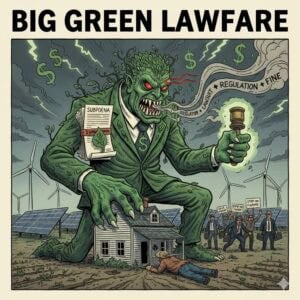 Yesterday was the first Monday in October, which means the U.S. Supreme Court opened a new term. The very first case the justices heard may be the most important case for the oil and gas industry, including Marcellus/Utica drillers, in a generation. The case is Suncor Energy v. County Commissioners of Boulder County. It asks whether a city or county can haul energy companies into its own state court and make them pay for the costs of climate change. If the answer is yes, Chief Justice John Roberts predicted a copycat lawsuit from “a municipality in every single state.” That’s not a scare tactic. It’s a business plan for trial lawyers.
  Back in 2022, then-Massachusetts Attorney General (now Governor) Maura Healey hit the campaign trail and bragged, “I stopped two gas pipelines from coming into this state” (see
  New York’s so-called leaders banned natural gas hookups in new homes (see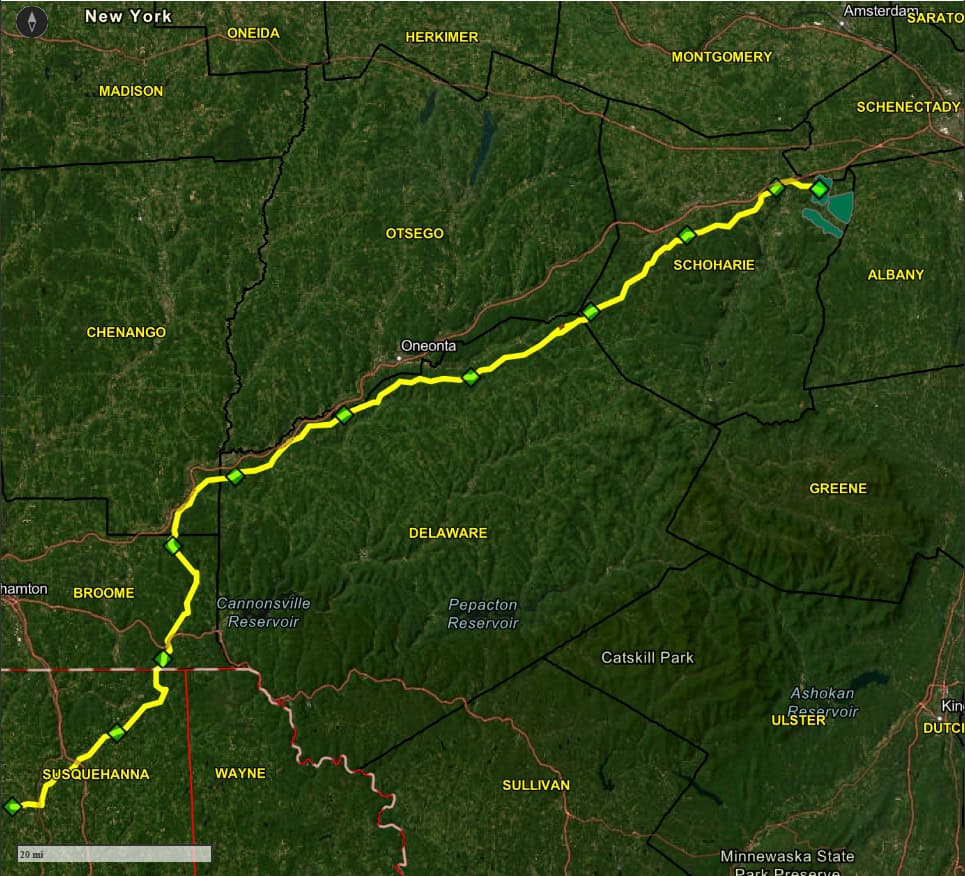
 The Ohio River Valley Institute (ORVI), the radical anti-fossil fuel outfit that wants to shut down Appalachian shale, is at it again. Today ORVI senior researcher Sean O’Leary published an op-ed in the Ohio Capital Journal claiming that shale’s importance to Ohio’s economy is “small and shrinking.” He lists seven “facts.” We checked every one of them against the same government data he cites. Some are technically true but badly misleading. At least one is flat wrong — by a factor of a million. Here’s what the data actually says.
  A Syracuse University professor has published a paper in the Journal of the American Planning Association (JAPA) urging towns to treat AI data centers the way they treated fracking a decade ago. Syracuse’s PR department is billing it as “new research” that shows communities how to handle data centers. There’s just one problem. It isn’t really research—by the author’s own admission, no new data was collected. And several of the “facts” about fracking it leans on are flat wrong, especially about Pennsylvania.
 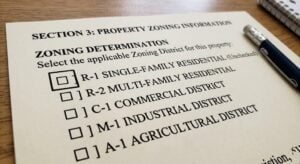 Anti-drilling group Protect PT has opened a new front against the biggest gas-fired AI project in Westmoreland County, Pennsylvania. On Aug. 25, Protect PT and two Upper Burrell residents — Allen Uhler and Guy Fuller — filed a land use appeal in Westmoreland County Court challenging the township supervisors’ approval of TECfusions’ work at the former Alcoa/Arconic research campus. Notably, the appeal doesn’t attack the gas turbines or the Marcellus wells feeding them. It attacks a piece of paper. Or rather, the absence of one.
  Eight anti-fossil fuel groups gathered on the banks of the Delaware River on September 2 to hold a press conference defending the Delaware River Basin Commission’s ban on fracking. Here’s the part that made us laugh: they already won in July. Republican leadership never even offered the amendment that would have stripped the DRBC of its power to ban drilling. So why hold a rally to defend something that isn’t under attack? Because they’re nervous — and when you read what they’re claiming, you can see why.