IER Wants Canadian Oil and Gas Counted as American-Made

Here’s an argument you don’t hear every day: the oil and natural gas the United States buys from Canada shouldn’t count as “imports” at all. That’s the case laid out in a new report from the Institute for Energy Research (IER), published September 18. Change how Washington keeps the books, IER argues, and the alarming-sounding trade deficit with Canada very nearly disappears — no tariffs, no trade war, just honest accounting. Read More “IER Wants Canadian Oil and Gas Counted as American-Made”
 Washington came to Erie last week with one message for
  Here’s a number that should make every Marcellus/Utica landowner and driller wince: $1.590. That’s what gas at the Tennessee Zone 4 Marcellus hub is fetching for October delivery, according to NGI’s Forward Look. Meanwhile, down in Florida, the very same molecule (quite possibly gas that started life in a Pennsylvania or West Virginia well) is priced at $3.960 for October. That’s a $2.37 gap, which means Florida buyers are paying 2.49 times what our local hubs get. The culprit? Not enough pipe heading south. And this week, one of the few big southbound pipes we do have, Mountaineer XPress, sprang a leak.
  The front-month October NYMEX natural gas futures contract settled Friday (Sept. 25) at $3.196 per MMBtu, up 28.4 cents, or 9.75%, for the week. That’s a nice week to be long gas. Most of the fireworks came on Thursday, when a leak on TC Energy’s Mountaineer XPress (MXP) pipeline in West Virginia knocked roughly 1.8 Bcf/d of Appalachian takeaway offline and sent futures up 9.06% in a single day, the biggest one-day gain since January (see
 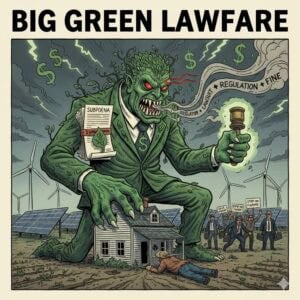 Chatham County, North Carolina’s Board of Commissioners last week unanimously passed a resolution opposing Enbridge Gas North Carolina’s proposed 28-mile natural gas pipeline from Siler City to Moncure. This isn’t a garden-variety “we don’t like it” resolution. It authorizes the county to actively fight the project by challenging environmental permits, teaming up with like-minded groups, working the media, organizing residents, and coaching landowners on how to resist condemnation. In other words, a county government just signed itself up as a Big Green activist group, with taxpayers picking up the tab.
 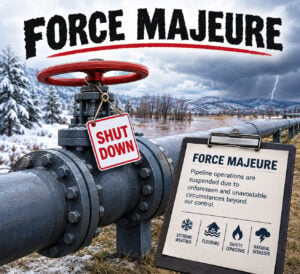 On Thursday morning, a natural gas leak at the Saunders Creek Regulator Station near Milton, WV (Cabell County) forced TC Energy’s Columbia Gas Transmission (TCO) to declare “force majeure” on the Mountaineer XPress (MXP) pipeline, one of the biggest Marcellus/Utica takeaway pipes in the region. Starting with today’s gas day (Friday, Sept. 25), the affected segment of MXP is cut to zero capacity until further notice. TCO estimates the hit to firm customers at 1.8 million dekatherms (MMDth) per day, which is roughly 1.8 billion cubic feet per day (Bcf/d) of Appalachian gas that suddenly needs somewhere else to go. Traders noticed. The October NYMEX futures contract settled up 27.4 cents (+9.06%) at $3.297 per MMBtu, the highest in about three months and the biggest one-day gain since January.
  Boardwalk Pipelines’ Kosciusko Junction Pipeline Project, a 111-mile, 36-inch pipe across Mississippi that will carry Marcellus/Utica gas (and gas from other plays) to Southeast markets, now has all the federal permits it needs. FERC voted to approve the project at its Sept. 10 open meeting. On Sept. 23, the Federal Permitting Council announced that all federal permitting was finished. What’s next? Shovels. Boardwalk’s plan on file with FERC calls for construction to begin in December, about 10 weeks from now, with first gas flowing as early as April 2028.
  Kinder Morgan has a new pipeline project in the works, one MDN has not told you about before, because until yesterday nobody outside the company had heard of it. It’s called the Southeast Connector, and it would run north to south across Middle Tennessee through 10 counties, stitching together two of Kinder’s biggest interstate systems: Tennessee Gas Pipeline (TGP) and Southern Natural Gas (SNG). Kinder VP Allen Fore made the rounds in DeKalb County on Thursday, meeting the county mayor, the Chamber of Commerce, and local media. Land agents may start knocking on doors as early as next week. Target in-service: 2029.
  When Appalachian gas prices fall into the basement, EQT turns down the valves, and CEO Toby Rice says the strategy is paying off. In an interview with Reuters on Tuesday, Rice put a dollar figure on it for the first time: a little over $200 million a year in benefit from selling less gas when prices are low and more when they’re high. He also said EQT, the country’s No. 2 gas producer, will pump more gas in 2026 than last year while spending less to do it. Rice talked up the company’s proposed POWER Pipeline to Ohio, its Mountain Valley Pipeline expansions, and a new 10-year LNG supply deal with Lithuania. His outlook for global gas demand is, let’s say, very bullish.
  The Trump administration has formally sided with a pipeline company in a U.S. Supreme Court case that could change how much money landowners get when a pipeline takes their land by eminent domain. On Sept. 21, the U.S. Solicitor General filed a brief backing WBI Energy Transmission in Hoffmann v. WBI Energy Transmission (No. 25-159). The feds want to argue alongside WBI when the case is heard on Nov. 9. The case began in North Dakota’s Bakken, but the ruling will reach all shale plays, including Pennsylvania, where landowners currently enjoy more generous rules.
  New York’s so-called leaders banned natural gas hookups in new homes (see
  A small liquefied natural gas (LNG) plant in Medley, Florida — just outside Miami — is now trucking rocket fuel up the peninsula to Cape Canaveral. Sawgrass LNG & Power announced last Thursday that it has begun supplying LNG to an unnamed “aerospace customer” at the Cape, with the first deliveries completed in August. We’ve written about this plant before, and the interesting question for MDN readers is the same one we asked in April 2025: are any of those molecules ours?