Tetco M-2 Sinks to $1.435, Below EQT’s $1.50 Shut-In Trigger
 The fall “turn down the valves” season for Marcellus/Utica gas has arrived, and it showed up about a week early. Last Friday (Sept. 11), the spot price at Texas Eastern M-2 (aka Tetco M-2), the key pricing point for gas produced in southwestern Pennsylvania, West Virginia, and Ohio, averaged $1.435 per MMBtu (million British thermal units, roughly 1,000 cubic feet of gas). That’s 6.5 cents below the $1.50 mark that EQT, the region’s biggest driller, has flagged as its trigger for curtailing (temporarily cutting back) production. So, are shut-ins coming? History says probably, at least for a while. Read More “Tetco M-2 Sinks to $1.435, Below EQT’s $1.50 Shut-In Trigger”
 Eastern Gas Transmission and Storage (EGTS), a wholly owned subsidiary of Berkshire Hathaway Energy (Warren Buffett’s company), got the last piece of paper it needed yesterday for an important new pipeline project. FERC’s Office of Energy Projects issued a notice to proceed (NTP) on Sept. 10, authorizing EGTS to start building the Appalachian Reliability Project (ARP) — the 550,000 dekatherms/day expansion that will push more Marcellus and Utica gas from western Pennsylvania into Ohio. Even better, the approval comes in roughly six months ahead of the company’s own published timeline.
  Big Green scored a win yesterday — but not the win they’re telling you they got. On Tuesday, September 8, a three-judge panel of the U.S. Court of Appeals for the Third Circuit vacated the Clean Water Act Section 401 water quality certification (WQC) that the New Jersey Department of Environmental Protection (NJDEP) issued last November for Williams/Transco’s Northeast Supply Enhancement (NESE) project — the $1 billion, 400,000 Dth/d expansion that carries Marcellus gas from Pennsylvania, across New Jersey, under Raritan Bay, and into New York City (see
  Devon Energy’s Coterra unit is asking Pennsylvania regulators for permission to lay 18.4 miles of 20-inch freshwater pipeline across three Susquehanna County townships — which is a strange thing to spend money on if you’re about to sell the place. The Department of Environmental Protection (DEP) published the notice in the September 5 Pennsylvania Bulletin, opening a comment window that closes October 5. The project is the Brooks to Forwood Temporary Waterline, running through Springville, Lathrop, and Lenox townships.
  Six weeks after announcing it would sell up to 49% of its $1.2 billion Florida Energy Pathway pipeline (see
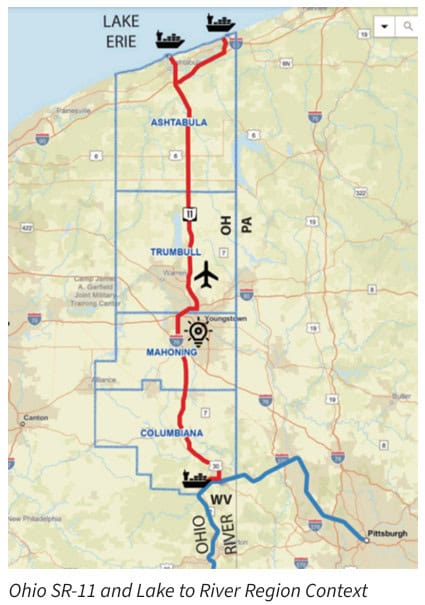
  EQT is planning another pipeline — and this one is big. Through a brand-new subsidiary called Appalachian Transmission Gateway LLC (ATG), the Marcellus/Utica’s largest driller has opened bidding on the “POWER Pipeline,” a 42-inch, 50-mile line that would carry a full 1 billion cubic feet per day (Bcf/d) of gas from Greene County, Pennsylvania, west to the Clarington hub in Monroe County, Ohio. The open season quietly began Aug. 26 and runs through Oct. 26. We found no press release announcing it — the notice simply went up, and the trade press caught it a week later.
  A Dallas-based hyperscaler wants to build a 1.7-million-square-foot computing campus — plus its very own 450-megawatt natural gas power plant — on a reclaimed strip mine in Washington County, PA. The gas would come off a lateral tied to Energy Transfer’s Rover Pipeline, which runs right past the property line. Prime Data Centers made its first real presentation to the Hanover Township Board of Supervisors Monday night, in front of a fire hall packed past capacity with residents who are, to put it mildly, not sold. Three hours of testimony later, the supervisors scheduled four more hearings.
  Here’s a pipeline fight where the bad guys aren’t the greens. Last Friday, the U.S. Court of Appeals for the D.C. Circuit sided with the Federal Energy Regulatory Commission (FERC) and Enbridge subsidiary East Tennessee Natural Gas (ETNG), tossing out a challenge brought not by environmental radicals but by the pipeline’s own customers — a group of small-town gas utilities in Tennessee, Virginia, and Alabama who said they were being stuck with the bill for an upgrade they never asked for.
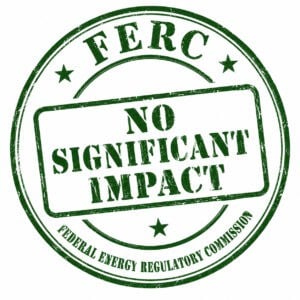 In April, we told you the Federal Energy Regulatory Commission (FERC) was taking a fresh look at the revived Constitution Pipeline and the associated Wright Interconnect project, and that the agency had to decide whether a relatively quick Environmental Assessment (EA) would do the job — or whether it would drag the projects through a full-blown, years-long Environmental Impact Statement (EIS). We got our answer on August 21. FERC staff issued the EA for both projects — 79 pages plus appendices — and the bottom line is the one supporters have been waiting on: building Constitution “would not constitute a major federal action significantly affecting the quality of the human environment.” In plain English — no significant impact. No years-long supplemental EIS is needed.
  Iroquois Gas Transmission System’s Enhancement by Compression (ExC) project has cleared FERC. It has cleared New York. The one thing standing between it and a shovel is a state air permit for two gas-fired compressor units in Brookfield, Connecticut. The Hartford Courant checked in on that fight yesterday — and buried the two most important facts halfway down the story. Quick refresher for anyone joining late: ExC is a $272 million upgrade that adds horsepower at three existing compressor stations — Dover and Athens in New York, Brookfield in Connecticut. No new pipe. Just more compression, squeezing an additional 125 MMcf/d (125 million cubic feet per day) through the existing 414-mile line into New York City and New England. That’s roughly a 10% throughput gain on a line that already exists, feeding two of the most gas-starved, highest-priced energy markets in the country. (The Courant puts the project at $275 million; we’ve used the $272 million figure Iroquois has cited. Small gap, worth pinning down.)
 The single most important piece of pipe for Marcellus/Utica wet gas drillers is about to get a lot cheaper to use — and Enterprise Products Partners (EPD) just said so out loud. On its second quarter earnings call, EPD told analysts that the tolls it charges on ATEX, the 1,230-mile ethane pipeline running from Washington County, PA to Mont Belvieu, TX, now often cost more than the ethane moving through it. Enterprise executive Justin Kreider put it plainly: “There is going to be some degree of a rate reset.” A new analysis from East Daley Analytics puts numbers behind that comment — and finds that roughly half of ATEX’s capacity comes up for renewal in 2028.
  A federal appeals court in Washington on Tuesday threw out all eleven claims that environmental groups and Louisiana fishermen filed against Venture Global’s CP2 LNG export terminal and the pipeline that will feed it. The terminal sits 1,300 miles from Washington County, Pennsylvania — but buried in this decision is a holding that should make every Marcellus/Utica pipeline developer very happy. The case is For a Better Bayou v. FERC, No. 24-1291 (consolidated with Nos. 24-1292 and 25-1157). It was argued March 24 and decided August 25. Senior Judge Douglas Ginsburg, a Reagan appointee, wrote for a unanimous panel that also included Judge Karen Henderson (George H.W. Bush) and Judge Patricia Millett (Obama).