
Enbridge: Beacon Open Season Swamped, More M-U Gas Headed to Boston
 Enbridge reported second quarter results on Friday, July 31, and buried in a Canadian midstream giant’s quarterly slide deck — a document that is 90% oil sands, Permian, and balance sheet talk — is the best piece of news Appalachian producers have gotten out of New England in fifteen years. Project Beacon, Enbridge’s proposed expansion of the Algonquin Gas Transmission (AGT) system into New England, ran a binding open season from May 18 to July 1. An open season is simply a pipeline asking shippers to raise their hands and commit, in writing, to buy capacity. CEO Greg Ebel told analysts the response “significantly exceeded our initial expectations.” Matthew Akman, who runs Enbridge’s gas transmission business, said Beacon would be “multiple times” the size of the AGT Enhancement project already underway, and that a big enough Beacon could save New England utility customers more than $1 billion a year. Read More “Enbridge: Beacon Open Season Swamped, More M-U Gas Headed to Boston”
 TC Energy issued its second quarter 2026 update on July 30, and the headline numbers were strong: comparable EBITDA of C$2.9 billion, up 12% over 2Q25, and full-year guidance now tracking the upper end of the C$11.6–$11.8 billion range. Nice, but that’s investor stuff. The news that matters for Marcellus/Utica landowners, drillers, and midstreamers is sitting in the project tables — and in a demand forecast TC has now raised two years running.
  Dominion Energy reported second-quarter 2026 results on July 31, and while Wall Street focused on the penny-counting, there were three items in the release and on the analyst call that matter to Marcellus/Utica producers, midstreamers, and landowners: two new gas-fired power plants moving into permitting, a merger timeline that’s now locked in at the state level, and a nine-figure write-off on renewable assets that tells you which way the wind is actually blowing.
  Let’s be honest — corporate “sustainability reports” are usually 100+ pages of stock photography, buzzwords, and pie charts about employee engagement. We normally give them a wide berth. But Williams released its 2025 Sustainability Report on July 29, and this one is different. Underneath the ESG wrapping paper is a straight-up growth story, and a surprising amount of it runs directly through the Marcellus and Utica. If you’re a landowner in Licking County, a driller in the Utica dry gas window, or anyone who owns WMB shares, there’s real news here.
  Antero Midstream Corporation (AM) posted second quarter 2026 results on Tuesday and held its analyst call yesterday morning. A quick word on the corporate plumbing for newer readers: Antero Midstream and Antero Resources (AR) are two separate publicly traded companies that share a management team. AR drills the wells; AM gathers, compresses and moves the gas and handles the water. Different shareholders, same brain trust. The headline number is a good one. AM gathered 4.1 Bcf/d (billion cubic feet per day) during the quarter, a 19% jump year over year and a company record. Compression volumes rose 17%. Most of that growth came from the HG Midstream assets AM bought earlier this year and has now fully digested. Processing and fractionation capacity at AM’s joint venture ran at 100% utilization — you can’t do better than full.
  National Fuel Gas Company (NFG) — the Williamsville, NY company that drills (Seneca Resources), pipes (NFG Supply Corporation, Empire), and sells gas at the meter (NFG Distribution Corp) — issued its fiscal third quarter update Wednesday evening and talked it over with analysts Thursday morning. NFG’s fiscal year ends September 30, so their “third quarter” is everyone else’s second quarter (April–June). There’s a lot in here for Marcellus/Utica watchers, but two items stand out: Supply Corporation more than tripled the size of its Line N System Upgrade Project, and Seneca is about to start writing big checks to landowners in Tioga County.
  Detroit-based DT Midstream (DTM) reported second quarter 2026 results this week, and while the headline numbers were fine but unremarkable, the Appalachian news buried in the deck is worth your attention. DTM booked net income of $112 million ($1.09 per diluted share) and adjusted EBITDA of $305 million, declared a $0.88 per share dividend, and reaffirmed full-year 2026 adjusted EBITDA guidance of $1.155–$1.225 billion. Fine. Now here’s the part that matters if you own minerals in Belmont County or run a rig crew in Susquehanna County: DTM just signed up a new 380 MMcf/d interconnect on the NEXUS Gas Transmission pipeline that will feed a gas-fired power plant serving a new data center in Ohio — and it’s expanding its Appalachia Gathering System by 100 MMcf/d to shove more supply into NEXUS and Texas Eastern.
  Yesterday we told you about Project Oak Leaf, Eastern Gas Transmission and Storage’s (EGTS) 52.5-mile expansion that will carry Leidy gas down to Maryland and Virginia (see
  We periodically go pipeline-notice hunting to see what’s throttling Marcellus/Utica molecules on any given day (see
  Back in May, we told you about a new 28-mile intrastate natural gas pipeline Enbridge Gas North Carolina (EGNC) wants to build in Chatham and Lee counties, running from Siler City southeast to Moncure (see
  There’s a brand-new pipeline project on the board for our region, and it’s a good one. Eastern Gas Transmission and Storage (EGTS) — a BHE GT&S company, which means it ultimately belongs to Warren Buffett’s Berkshire Hathaway Energy — is proposing Project Oak Leaf, a 52.5-mile expansion of its PL-1 system that will move an extra 250,000 dekatherms per day (Dth/d) of natural gas from Clinton County, Pennsylvania down to customers in Maryland and Virginia. (A dekatherm is a heat measurement roughly equal to one thousand cubic feet of gas, so call it about 250 MMcf/d — 250 million cubic feet per day.) EGTS plans to file its application with the Federal Energy Regulatory Commission (FERC) in the fourth quarter of this year, with construction starting in early 2028 and gas flowing by the end of 2029. The Frederick (MD) News-Post picked up the story yesterday. Four public open houses are already on the calendar, the first one next week.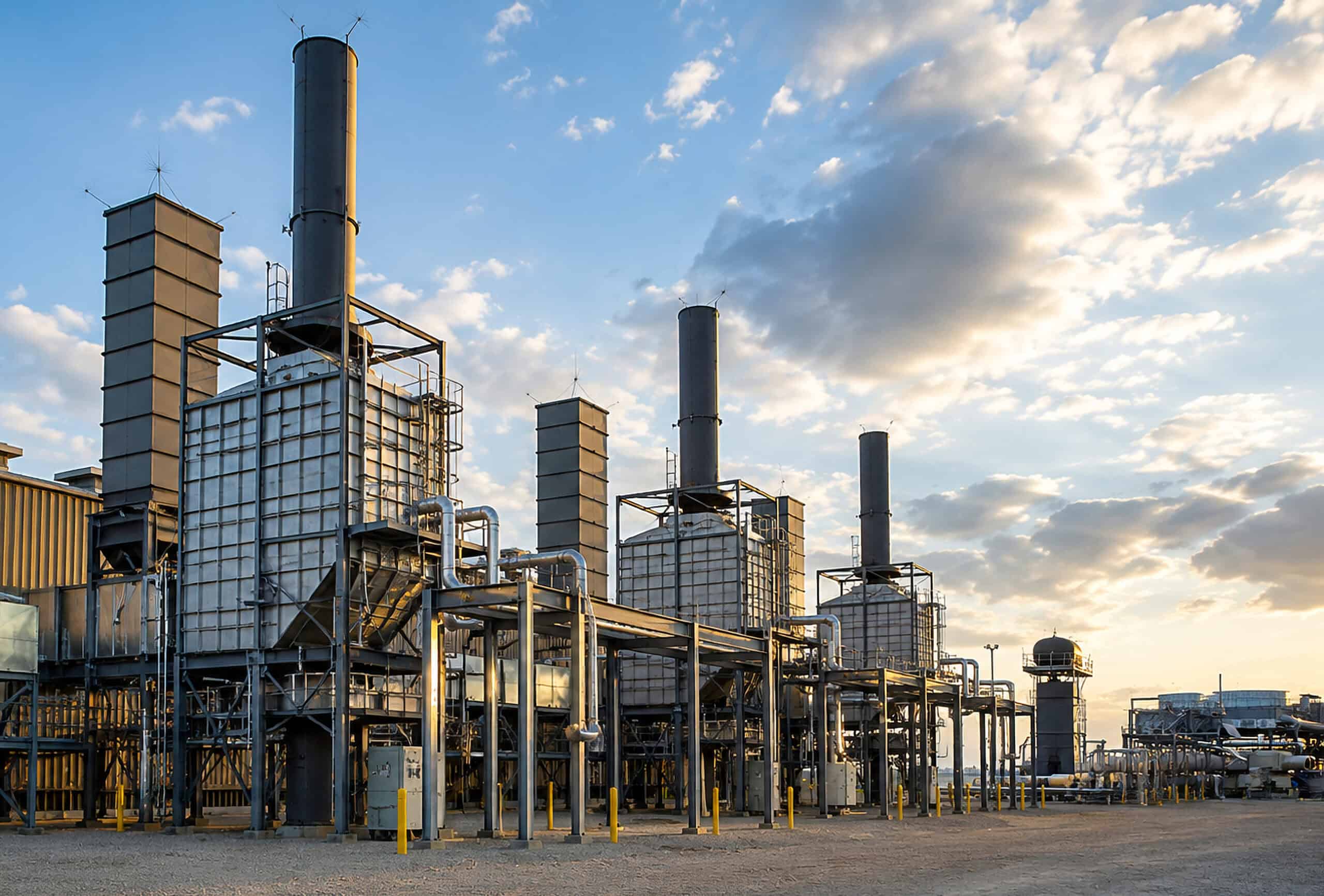
 Back in May we told you about FERC’s proposal to modernize its natural gas “blanket certificate” program (see
  In April, we brought you the news that the Federal Energy Regulatory Commission (FERC) had issued a Draft Environmental Impact Statement (DEIS) for the Kosciusko Junction Pipeline Project (see
  Chesapeake Utilities Corporation (NYSE: CPK) and its subsidiary Peninsula Pipeline Company (PPC) announced on July 13 a new intrastate natural gas pipeline project in South Florida called the Florida Energy Pathway, or FEP. The line will be 24 inches in diameter, running from Palm Beach County to Miami-Dade County. It’s already anchored by firm commitments of nearly 250,000 dekatherms per day from multiple investment-grade shippers. (A dekatherm, or Dth, is a heat measurement roughly equal to a thousand cubic feet of natural gas — so think of it as about 250 MMcf/d, or 250 million cubic feet per day.) Upstream supply will come courtesy of Florida Gas Transmission’s Phase IX expansion. The price tag is around $1.2 billion, with an in-service date of 2030. Chesapeake plans to sell off up to 49% of the project to one or more partners. CEO Jeff Householder pinned the need on Florida’s booming population, its growing economy, and “significant energy supply constraints” in the south Florida market.
  Add another name to the growing list of pipeline projects chasing Northeast Marcellus/Utica gas: Tennessee Gas Pipeline (TGP), a Kinder Morgan subsidiary, launched a non-binding open season on July 13 for its proposed 219 South Project. The idea is to grab gas from as far north as TGP’s Station 219 Pool in Pennsylvania (Zone 4) and move it south through Ohio, West Virginia, Kentucky, and Tennessee — up to 530,000 Dth/d (that’s dekatherms per day, roughly equivalent to 530 Mcf/d). TGP says demand along its “200 Line,” the backbone connecting Pennsylvania to Tennessee, is growing fast enough to justify testing shipper appetite now. If it goes forward, in-service is targeted for December 1, 2029. The open season runs through August 13. Below are the key details, straight from TGP’s posting.