Homer City Gas Plant Wastewater Permit Draws Fire at DEP Hearing
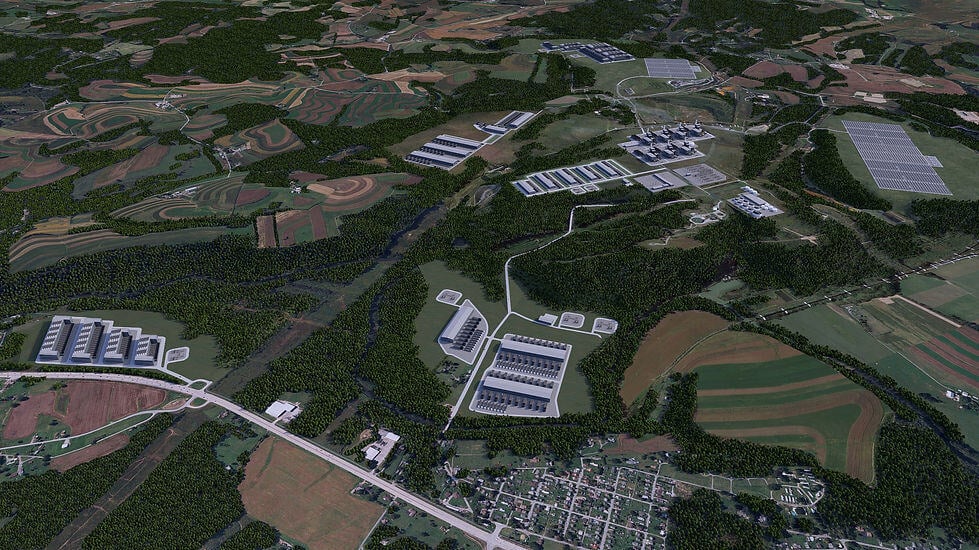
 The Homer City Energy Campus in Indiana County, PA, will be one of the country’s largest natural gas-fired power plants under construction. It burns Marcellus gas, and it needs a lot of water to keep cool. On Wednesday, the Pennsylvania Department of Environmental Protection (DEP) held a public hearing on a permit change that would let the plant send up to 6.8 million gallons a day of used cooling water into Blacklick Creek. All of the roughly a dozen speakers opposed it. DEP says it will decide before the current permit expires at the end of this year. Here’s what the opponents said, and what DEP’s own paperwork says, which is a different story. Read More “Homer City Gas Plant Wastewater Permit Draws Fire at DEP Hearing”
 Back in August, we told you Amazon Web Services (AWS) was “in discussions” to land data centers at the massive Homer City Energy Campus in Indiana County, PA (see
  The Marcellus/Utica region received 16 new drilling permits last week, September 7 – 13, down from the 28 permits issued two weeks ago. Pennsylvania issued 13 of the new permits. Ohio issued 3 new permits. And West Virginia issued no new permits. The drillers who received new permits last week were: CNX Resources, EOG Resources, EQT, Infinity Natural Resources, and Range Resources.
  The hill above Homer City now has more people working on it than the borough below has living in it. Homer City Generation dropped a Labor Day announcement on Friday: more than 1,800 direct-hire tradespeople and skilled contractors are on site building the 4.4-gigawatt (GW) gas-fired plant and data center campus rising from the bones of what was once Pennsylvania’s largest coal-fired power station. The borough of Homer City has roughly 1,800 residents. That’s a nice bit of symmetry, and it says more about what this project means to Indiana County than any press release paragraph could.
  We finally have a number. Two weeks after a casing failure sent frack water gushing across the Infinity Natural Resources (NYSE: INR) Cooper well pad in Young Township, Indiana County, PA, the Department of Environmental Protection (DEP) has put an estimate on it: 336,000 gallons of frack flowback water released during the incident. An “undetermined amount” of that reached Whiskey Run, the small stream below the pad. Here’s what that number actually means — and what it still doesn’t tell us.
  In April 2025, Knighthead Capital Management, Homer City Redevelopment (HCR), and Kiewit Power Constructors Co. announced a plan to convert the former Homer City Generating Station, previously the largest coal-fired power plant in Pennsylvania (Indiana County, 50 miles east of Pittsburgh) into a more than 3,200-acre natural gas-powered data center campus, designed to meet the growing demand for artificial intelligence (AI) and high-performance computing (see
  Earlier this month, Homer City Generation announced the early completion of demolition and excavation work at its Indiana County, Pennsylvania, site, marking a major milestone in transforming the former coal-fired power plant into a gas-fired power plant and AI data center complex (see
  Homer City Generation announced the early completion of demolition and excavation work at its Indiana County, Pennsylvania, site, marking a major milestone in transforming the former coal-fired power plant into a gas-fired power plant and AI data center complex. Over nine months, partner Independence Excavating led 130 union workers and 65+ pieces of equipment to recycle over 112,000 tons of scrap material and excavate approximately 3 million cubic yards (comparable to the Great Pyramid’s volume), all while maintaining zero safety incidents.
  At a Pennsylvania DEP hearing in Indiana County, environmental extremists opposed a proposed 5.8-mile, 30-inch natural gas pipeline serving Homer City Redevelopment’s planned $10 billion, 4.5-GW gas-fired power plant and hyperscale data center campus. The pipeline would cross streams, wetlands, and floodways, potentially affecting Muddy Run, Blacklick Creek, and various tributaries. Reminding us of Chicken Little in The Sky is Falling, speakers warned of water pollution, setbacks to acid mine drainage restoration, drought-related water stress, and inadequate transparency around the fast-moving project.
 The Pennsylvania Department of Environmental Protection (DEP) is seeking public comment on an Individual Stormwater Permit for a 5.8-mile natural gas pipeline in Indiana County. Serving the proposed Homer City Generation LP 4.5 GW power plant and data center, the 30-inch pipeline will traverse Black Lick, Burrell, and Center Townships, involving several stream and wetland crossings. The DEP will host a public hearing on May 12 from 5 to 7 PM at the Indiana Theater regarding Homer City Generation’s proposed 5.8-mile natural gas pipeline in Center Township. In response to this new project, local anti-fossil fuel groups are actively mobilizing. So-called “Concerned Residents of Western PA” (CROW) is holding a preparation meeting this afternoon to help “citizens” draft their public comments and build speaking confidence.
  Homer City Redevelopment, LLC has reached a significant milestone with the commencement of vertical construction, known as “first steel,” at the Homer City Energy Campus in Pennsylvania. Following extensive foundation work, the project has transitioned to above-ground construction, starting with the Gas Insulated Switchgear building. This facility is currently the largest natural gas-powered energy project under construction in the United States, replacing a decommissioned coal plant.