
Energy Services | Industrywide Issues | New York | Pennsylvania | Pipelines | Schoharie County | Susquehanna County | Williams
Uncle Sam Writes $42M Check to Jump-Start Constitution Pipeline
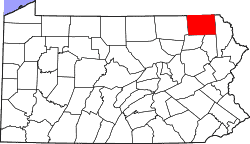
 The Trump administration just put real money where its mouth is on the Constitution Pipeline. Yesterday the U.S. Department of Energy (DOE) announced it will spend up to $42 million in Defense Production Act (DPA) money to nudge Williams’ long-dead, now-revived 125-mile pipeline from Susquehanna County, PA to Schoharie County, NY closer to reality. The money won’t buy a single length of pipe—it pays for permitting and pre-construction work. And it doesn’t change the fact that New York and its Big Green allies are still fighting the project tooth and nail. But it sends a loud message: Washington now officially considers Constitution a national security asset. Read More “Uncle Sam Writes $42M Check to Jump-Start Constitution Pipeline”
 The Marcellus/Utica region received 29 new drilling permits last week, September 28 – October 4, nearly double the 16 permits issued two weeks earlier. Pennsylvania issued 20 of the new permits. Ohio issued 9 new permits. And West Virginia got skunked, issuing no new permits. The drillers who received new permits last week were: Blackhill Energy, Coterra Energy (now Devon Energy), EOG Resources, Expand Energy, Gulfport Energy, Infinity Natural Resources (INR), and Snyder Brothers.
  The highly functional and responsible Susquehanna River Basin Commission (SRBC), unlike its dysfunctional and irresponsible counterpart, the Delaware River Basin Commission (DRBC), continues to support the shale energy industry by approving water withdrawals and consumptive use requests for responsible, safe shale drilling. The SRBC published a notice in the September 26th Pennsylvania Bulletin that the SRBC approved and/or renewed 35 general water use permits in August for individual shale gas well drilling pads in Bradford, Clinton, Elk, Lycoming, Sullivan, Susquehanna, Tioga, and Wyoming counties.
  An activist hedge fund that has been quietly leaning on Devon Energy since June has now put its demands in writing, and it’s asking for a lot more. Toms Capital Management sent Devon a letter earlier this month urging the company to explore “strategic alternatives, including a sale.” In other words, sell the whole company, not just a few pieces. Toms says it’s now one of Devon’s five largest shareholders. Why do we care here in Appalachia? When Devon swallowed Coterra Energy in May, it got the old Cabot Oil & Gas Marcellus position in Susquehanna County along with it. If Devon itself gets sold, the future of that NEPA gas acreage (and the royalty checks it generates) is up for grabs.
  Expand Energy — America’s #1 gas producer, which drills in Pennsylvania under the name Expand Oper LLC — just picked up a fresh batch of Notices of Violation from DEP. Pressure tests witnessed by DEP inspectors on Aug. 6 and Aug. 13 confirmed new casing/cementing defects in four wells across three pads in Susquehanna and Wyoming counties, while two more pads remain under watch for older, unresolved issues.
  It finally happened. Chord Energy, the Bakken-focused driller that inherited a big non-operated slice of the northeast Pennsylvania (NEPA) Marcellus when it bought Enerplus in 2024, has found a buyer. That buyer is POSCO International, the trading and energy arm of South Korean steel giant POSCO. The price is $550 million. MDN first told you in February 2025 that Chord was thinking about selling this asset, and in July 2025 that it was actively shopping it (see links below). The deal covers approximately 32,000 net acres and trailing 12-month (TTM) production of approximately 121 MMcf/d (MMcf/d means million cubic feet per day). The gas is all “residue” gas, meaning dry gas with no NGLs (natural gas liquids like ethane and propane).
  Devon Energy’s Coterra unit is asking Pennsylvania regulators for permission to lay 18.4 miles of 20-inch freshwater pipeline across three Susquehanna County townships — which is a strange thing to spend money on if you’re about to sell the place. The Department of Environmental Protection (DEP) published the notice in the September 5 Pennsylvania Bulletin, opening a comment window that closes October 5. The project is the Brooks to Forwood Temporary Waterline, running through Springville, Lathrop, and Lenox townships.
  In April, we told you the Federal Energy Regulatory Commission (FERC) was taking a fresh look at the revived Constitution Pipeline and the associated Wright Interconnect project, and that the agency had to decide whether a relatively quick Environmental Assessment (EA) would do the job — or whether it would drag the projects through a full-blown, years-long Environmental Impact Statement (EIS). We got our answer on August 21. FERC staff issued the EA for both projects — 79 pages plus appendices — and the bottom line is the one supporters have been waiting on: building Constitution “would not constitute a major federal action significantly affecting the quality of the human environment.” In plain English — no significant impact. No years-long supplemental EIS is needed.
  Epsilon Energy (NASDAQ: EPSN) keeps calling its Susquehanna County, PA, acreage a “legacy” asset — and then keeps telling investors it’s sitting on up to 200 billion cubic feet of gas it hasn’t produced yet. At the EnerCom Denver energy investment conference on Tuesday, Epsilon’s VP of Finance put hard numbers on the northeast Pennsylvania position for the first time, disclosed pad-level economics that are rare to see in public, and dropped the news item that matters most to anyone with a lease inside the Auburn dedication: the company is reviewing an expansion of the Auburn Gas Gathering System to handle drilling coming in 2028 and beyond.
  Epsilon Energy (NASDAQ: EPSN), the non-op partner that bankrolls a chunk of Expand Energy’s Marcellus drilling in Susquehanna County, PA, reported Q2 2026 results last week showing Pennsylvania gas production down sharply — but for a reason that’s actually good news for the wells coming next. Epsilon also sold off a package of small Marcellus overriding royalty interests for $3.9 million and confirmed five new wells are headed for completion by December, which should boost both production and Auburn Gas Gathering System throughput.
  Devon Energy and Williams spent the last week of July doing something that doesn’t show up on a reserve report: teaching northeastern Pennsylvania teenagers how the gas business actually works. Then, on July 30, the Pennsylvania Chamber Foundation named both companies “Greatest Places to Intern in PA.” Six days later, Devon CEO Clay Gaspar told analysts he’s fielding “no shortage of incoming phone calls” about which assets he might sell — with the Marcellus at the top of everybody’s list. Which raises a question nobody on Wall Street is asking: who inherits the workforce machine?
  Peregrine Energy Partners, the Dallas-based royalty buyer we’ve been tracking since 2019, is back in the Marcellus/Utica with its checkbook open. Yesterday (Aug. 4), the company announced it closed five separate mineral and royalty deals — two of them right here in the M-U — totaling roughly 3,680 net royalty acres and interests in more than 1,240 producing wells. The first Appalachian deal is a cash-flowing overriding royalty portfolio in Susquehanna County, PA, covering about 936 gross acres and 86 producing horizontal Coterra Energy (now Devon Energy) wells, with more than 50 DUCs and PUDs behind them in both the Upper and Lower Marcellus.