
Antero Resources | Ascent Resources | Beech Resources | Bradford County | Doddridge County | Energy Companies | Expand Energy | Harrison County | Lycoming County | Noble County | Ohio | Pennsylvania | Range Resources Corp | Washington County | Weekly Permits | West Virginia | Wetzel County
16 New Shale Well Permits Reported for PA-OH-WV Sep 21 – 27
 The Marcellus/Utica region received 16 new drilling permits last week, September 21 – 27, down 1 from the 17 permits issued two weeks ago. Pennsylvania issued 6 of the new permits. Ohio also issued 1 new permit. And West Virginia issued 9 new permits. The drillers who received new permits last week were: Antero Resources, Ascent Resources, Beech Resources, Expand Energy, and Range Resources. Read More “16 New Shale Well Permits Reported for PA-OH-WV Sep 21 – 27”
 Accounting giant Ernst & Young dropped its annual reserves benchmarking study yesterday, and while the press release leads with oil, the real story for our part of the country is buried in the tables: EQT is now the largest holder of proved natural gas reserves in the United States, and Appalachian-focused producers control roughly a third of all the gas reserves booked by America’s 30 biggest publicly traded drillers.
  Appalachian drillers just got a hard lesson in how fast the money can vanish. New analysis from RBN Energy shows pre-tax profits at gas-weighted producers cratered 75% in the second quarter — and nine of the ten companies in RBN’s gas-weighted peer group are Marcellus/Utica operators. This is an M-U report card, whether RBN calls it one or not. The piece, written by Nicholas Cacchione and published August 26, covers second quarter results for 37 publicly traded exploration and production companies (E&Ps). RBN sorts them into three buckets: Oil-Weighted, Diversified, and Gas-Weighted. Every company in that last bucket except Comstock Resources — a Haynesville player — has major operations in the Marcellus or Utica.
 Six days after WhiteHawk Minerals (NYSE: WHK) filed its first quarterly report as a public company, CEO Daniel Herz took the stage at EnerCom Denver and did something CEOs usually avoid: he put a dated natural gas price forecast on the record. He thinks $4 gas is the number that unlocks the next wave of supply, he doesn’t think the Haynesville gets where people expect, and he thinks the back half of this decade is going to be a roller coaster.
 WhiteHawk Minerals (NYSE: WHK), the Philadelphia company that has quietly become one of the largest mineral and royalty owners in the Marcellus, filed its first full quarterly report as a public company this week: $111.8 million of new acquisitions, record production of 70.0 MMcfe/d, and its first real dividend at $2.00 per share annualized. But the most interesting thing WhiteHawk said all week wasn’t in the press release. It came out of CEO Daniel Herz’s mouth on Thursday’s earnings call — some of the biggest drillers in Appalachia are now partnering with WhiteHawk to buy minerals ahead of the drill bit.
  On July 30, French environmental services giant Veolia announced it had been picked by “a major project developer” to operate and maintain a 350-megawatt (MW) microgrid that will power an artificial intelligence data center campus in Ohio. The press release carried a New Albany, Ohio dateline. It’s a genuinely big deal — a behind-the-meter power plant that will supply 100% of a data center campus without leaning on the grid at all. Here’s the dots nobody else has connected. This is the same Veolia that Antero Resources and Antero Midstream spent six years suing over a botched frack wastewater plant in West Virginia. And Veolia announced this shiny new Ohio contract exactly six days after wiring Antero a check for $371 million. You can’t make this stuff up.
  Antero Resources, the biggest driller in West Virginia and roughly 11% of all Appalachian production, dropped its second quarter 2026 numbers on July 29 and held its analyst call the next morning. Three things jumped off the page: a record quarter, a dry gas well result that borders on spectacular, and a rare public admission that Antero turned down a power deal in its own backyard because the money wasn’t good enough.
  Despite rising Northeast gas demand from retiring coal plants and new data centers, plus added Appalachian pipeline capacity, production growth isn’t guaranteed—operators prioritize capital discipline, debt reduction, and shareholder returns over volume. Appalachia has held flat at roughly 33-36 Bcf/d since 2020. Can anything tempt Marcellus/Utica drillers to drill and produce more than they are now? According to RBN Energy, sustained Henry Hub prices above $4/MMBtu (versus the current $3.50-$3.60 long-dated curve) and better takeaway infrastructure could be enough of a temptation.
 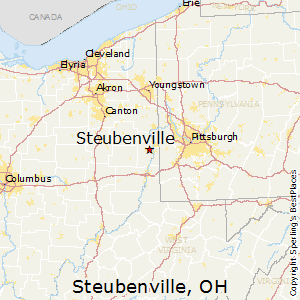 After months of deliberation, Steubenville (Jefferson County), Ohio, City Council voted to accept a bid and proceed with leasing the city’s mineral rights to the oil and gas industry, including areas near residential neighborhoods and Beatty Park. Some residents voiced strong opposition, citing threats to the park’s ecosystem, health concerns, and insufficient public involvement, urging the council to reject bids or form a resident-inclusive committee. Fourth Ward Councilman Royal Mayo voted against it, questioning fracking’s health effects. First Ward Councilman David Albaugh supported it, noting that surrounding areas are already fracked and that no well pad would be built in Steubenville. The money (over $1 million!) is expected within 90 days.