Columbia Pipeline Group | Commodity Price | Energy Services | Industrywide Issues | Pipelines | TC Energy/TransCanada | West Virginia
Update: MXP Pipeline Fixed Early, Appalachian Gas Prices Bounce
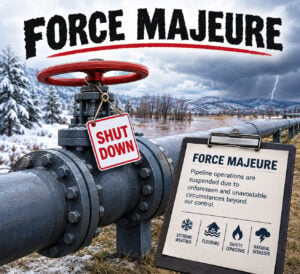
 On Friday, we told you a leak on Columbia Gas Transmission’s Mountaineer XPress (MXP) pipeline had pushed Appalachian gas down to $1.06 (see Mountaineer XPress Leak Sinks Appalachian Gas Price to $1.06). There’s an update, and most of it is good news. TCO fixed the leak and lifted its force majeure Friday afternoon, a day earlier than it had predicted. Local prices had already started to recover in Friday morning trading. But the second outage we flagged, on Texas Eastern in Kentucky, won’t be fixed until early November. Read More “Update: MXP Pipeline Fixed Early, Appalachian Gas Prices Bounce”
 The feds have spoken: this winter in the Northeast will most likely be warmer than normal, and maybe a little soggier, too. NOAA’s Climate Prediction Center released its official winter outlook last Thursday (Oct. 15), and a “super” El Niño is calling the shots. For those who make a living from Marcellus/Utica gas, a warm winter means less gas burned to heat homes, and that means softer prices. The market noticed. November futures slid 12 cents on Friday. But here’s the twist. In pipeline-starved New England, traders are still betting on $20-plus gas in January. A mild winter can’t fix what bad policy broke.
  The PJM Interconnection, the outfit that runs the power grid for 13 states plus Washington, D.C. (including Pennsylvania, Ohio, and West Virginia), had a rough week last week. Unusually warm October weather, combined with a big chunk of power plants down for fall maintenance, pushed PJM into emergency mode on October 13 and 14. The lights stayed on. But PJM says weeks like this are becoming normal, because electricity demand from data centers is growing faster than new power plants and power lines are being built. PJM’s answer? More power plants.
  Last Thursday, in a unanimous 5-0 vote, the Federal Energy Regulatory Commission (FERC) proposed something it has twice before refused to do: create a “blanket” authorization program for LNG plants. That’s regulatory-speak for letting LNG export terminals (and the smaller LNG “peak shaver” storage plants up here in the Northeast) make upgrades, swap out equipment, boost capacity, and even build new liquefaction trains, tanks, and marine berths without begging FERC for a separate, case-by-case order each time. Interstate pipelines have had a blanket program like this since 1982. LNG never did. FERC Chairman Laura Swett called it “historic,” and for once the word fits. The proposal is a notice of proposed rulemaking (NOPR), not a final rule, and the usual suspects are already lining up against it, including nine blue-state attorneys general. But if it goes through, more gas gets out the door faster, and that’s good news for the Marcellus/Utica.
  On Thursday, physical (spot) natural gas sold at Louisiana’s Henry Hub (the national benchmark) went for $3.30 per MMBtu. On the same day, gas sold at Texas Eastern M-2, which is the main price point for gas produced in southwestern Pennsylvania, West Virginia, and Ohio, went for $1.055. That’s the same molecule of methane, and our version fetched about 32 cents on the dollar. Why? Because a pipeline carrying Appalachian gas out of the region sprang a leak again. Here’s what happened, why it matters to your royalty check, and why there’s some good news on the horizon.
  Last month we told you Ohio had asked PJM to dust off the “State Agreement Approach,” a grid-planning tool invented for New Jersey’s offshore wind, and use it instead for the $4.2 billion in power lines feeding the 10-gigawatt SoftBank data center and gas plant complex at Piketon (see
  The Homer City Energy Campus in Indiana County, PA, will be one of the country’s largest natural gas-fired power plants under construction. It burns Marcellus gas, and it needs a lot of water to keep cool. On Wednesday, the Pennsylvania Department of Environmental Protection (DEP) held a public hearing on a permit change that would let the plant send up to 6.8 million gallons a day of used cooling water into Blacklick Creek. All of the roughly a dozen speakers opposed it. DEP says it will decide before the current permit expires at the end of this year. Here’s what the opponents said, and what DEP’s own paperwork says, which is a different story.
  Former Sen. Joe Manchin says he’s “tickled to death” about the bipartisan permitting reform bill now waiting for a Senate vote. He puts the odds it becomes law at “well past 50%.” We’d love to believe him. We don’t. On Oct. 5 we called passage “a coin flip, maybe a little better” (see
  The Federal Energy Regulatory Commission (FERC) on Thursday took a chainsaw to one of the slowest, most litigated parts of its pipeline review process. In a 4-1 vote, FERC issued a draft policy statement saying it will no longer require pipeline and LNG companies to submit “air dispersion modeling” for new or expanded compressor stations and LNG terminals. Why should Marcellus/Utica folks care? Because nearly every project that moves more of our gas to market, such as Iroquois ExC and MVP Boost, involves building or beefing up compressor stations. Faster approvals mean more pipe, more takeaway capacity, and (eventually) better prices for drillers and royalty owners.
  Researchers at the University of Southern California (USC) built a $250 gadget that sits over an old, abandoned oil or gas well and sniffs for methane leaks around the clock, reporting its findings online. The research paper behind it leans on a well-known 2014 Princeton study of abandoned wells in Pennsylvania. That study is worth a second look, because its “average” leaking well isn’t so average. Read the fine print, and you’ll find most old wells leak a tiny amount, or nothing at all, while a handful of bad actors drive the headline numbers. That’s why a cheap tool that can tell the difference could save taxpayers a lot of money.
  The Delaware Riverkeeper Network and PennFuture fought for years for the right to challenge Transco’s Regional Energy Access (REA) pipeline permits before Pennsylvania’s Environmental Hearing Board (EHB). They got their wish. Then they lost at the EHB. And yesterday, they lost again in federal court. A three-judge panel of the U.S. Court of Appeals for the Third Circuit unanimously upheld the state Department of Environmental Protection’s (DEP) water permits for the Williams-owned pipeline expansion. The court said the groups never showed that the extra water testing they demanded would have changed a thing. Even better, the court handed down a ruling on Pennsylvania’s Environmental Rights Amendment that could make life a lot harder for anti-drillers going forward.
  Infinity Natural Resources, the Morgantown, WV-based driller that bought Antero Resources’ Ohio Utica assets for $1.2 billion earlier this year, isn’t done shopping. CEO Zack Arnold told Hart Energy at its SUPER DUG conference in Houston in September that Infinity is “actively looking for the next opportunity.” Arnold also dropped a few other nuggets worth your attention: Infinity has drilled its first deep dry gas Utica well in a Pennsylvania field that has only ever produced from the Marcellus; a “couple” of unnamed operators are starting to develop the Marcellus in eastern Ohio; and newly available state and federal lands in Ohio are a fresh source of drilling locations.
  Europe blinked. On Wednesday, the European Commission (the EU’s executive branch) proposed delaying its world-first methane rules for imported oil, natural gas, and coal by one year. The rules were set to kick in on January 1, 2027. Under the new proposal, they won’t start until 2028. That’s good news for U.S. LNG (liquefied natural gas) exporters, which supply more than half of Europe’s LNG, and, by extension, for the drillers and royalty owners whose gas feeds those export plants. Pressure came from France, the U.S., many EU countries, and the oil and gas industry. Big Green, as you’d expect, is having a meltdown. The delay still needs a thumbs-up from the European Parliament and EU member governments, and some want a longer, three-year pause.