
Seismos CEO: Closed-Loop Fracking Already Used in Marcellus/Utica

Back in March, we told you about “closed-loop” fracking from Seismos and its partner ProFrac. The technology listens to a well while it’s being fracked and adjusts the job in real time, while the stage is still being pumped (see ProFrac and Seismos Bring “Closed-Loop Fracking” to U.S. Shale). At the time we asked: Is it coming to the Marcellus/Utica? Last week Seismos opened a new research center in Texas, and its PR team offered MDN some time with founder and CEO Panos Adamopoulos. We sent five questions specific to our region. The headline answer: yes, closed-loop fracturing has already been used in “the basin.” Seismos won’t say who used it or how many stages they pumped. But Panos did confirm that drillers don’t need ProFrac to use it, and he laid out the math on how much more gas a well might produce. He also says the same acoustic technology can inspect pipelines from the inside, including here in Appalachia. Read More “Seismos CEO: Closed-Loop Fracking Already Used in Marcellus/Utica”
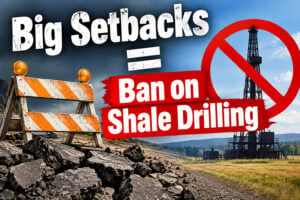 The radical green groups trying to ban new Marcellus/Utica drilling in Pennsylvania through the back door haven’t gone away. They push shale well “setbacks” out to as much as a mile. Yesterday (Oct. 7), a coalition led by the Clean Air Council and Environmental Integrity Project (EIP) marked the two-year anniversary of its rulemaking petition and pushed in Harrisburg, calling on the Shapiro administration to act. The Department of Environmental Protection (DEP) still plans to deliver its recommendation to the Environmental Quality Board (EQB) by the end of this year. The antis are making noise. We need to make more.
  The Pittsburgh Tribune-Review (via the TribLive website) ran a big Saturday feature arguing that Western Pennsylvania’s drilling rebound is being driven by the data center boom. The legwork is real — five township officials, two activist groups, a CNX executive, a Pitt professor. The framing isn’t. The story gives readers three different answers to “how many wells does Pennsylvania have,” gets the cause of last year’s drilling backward, and then, twelve hundred words in, quietly disproves its own headline.
  Eight anti-fossil fuel groups gathered on the banks of the Delaware River on September 2 to hold a press conference defending the Delaware River Basin Commission’s ban on fracking. Here’s the part that made us laugh: they already won in July. Republican leadership never even offered the amendment that would have stripped the DRBC of its power to ban drilling. So why hold a rally to defend something that isn’t under attack? Because they’re nervous — and when you read what they’re claiming, you can see why.
  A new Penn State study went looking for radium from fracking in southwestern Pennsylvania drinking water. It tested 91 private wells and springs in Washington and Greene counties and found exactly zero samples above the EPA limit — and the radium it did find carries the chemical fingerprint of the rock the water sits in, not Marcellus brine. You wouldn’t know that from Penn State’s press release headline, which falsely blares, “
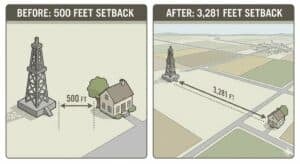 Every so often the antis tell you exactly what they’re up to, and you just have to sit back and enjoy it. On Saturday, Inside Climate News ran a story on the ongoing campaign by the Environmental Integrity Project (EIP), Clean Air Council, and their friends to jack up setbacks — the required distance between a well pad and the nearest building — from the current 500 feet to distances that would end new shale drilling in Pennsylvania. The new twist? They’ve hitched the campaign to the data center boom. More data centers means more gas, and more gas means (in their telling) more danger, so hurry up and pass the rules. It’s the same petition MDN has been tracking since 2024, dressed in a 2026 outfit.
  The highly functional and responsible Susquehanna River Basin Commission (SRBC), unlike its dysfunctional and irresponsible counterpart, the Delaware River Basin Commission (DRBC), continues to support the shale energy industry by approving water withdrawals and consumptive use requests for responsible, safe shale drilling. The SRBC published a notice in the July 25th Pennsylvania Bulletin that the SRBC approved and/or renewed 21 general water use permits in June for individual shale gas well drilling pads in Clearfield, Lycoming, Sullivan, Susquehanna, Tioga, and Wyoming counties.
  Thanks to the work of David Hess at the PA Environment Digest Blog, which tracks Department of Environmental Protection (DEP) notices published in the Pennsylvania Bulletin, we know of two water pipeline projects (for EQT and Expand Energy) approved by the DEP related to drilling new shale wells in two different northeastern PA counties: Lycoming and Bradford. Water is used for fracking. New water pipelines mean new fracking is on the way in those locations.
  What a disappointment. We don’t know why, but at yesterday’s U.S. House Committee on Transportation and Infrastructure meeting on the Water Resources Development Act (WRDA), an amendment to overturn the Delaware River Basin Commission’s (DRBC) authority to ban fracking was NOT introduced. The WRDA passed and now goes to the House for a vote — without the amendment that would have overturned the DRBC frack ban, which illegally strips landowners’ property rights in Wayne and Pike counties (in Pennsylvania). The only conclusion we can draw is that the Republican leadership, for whatever reason, didn’t want it attached to the bill. Meaning they caved. Again, what a disappointment.
  For the past decade, landowners in Wayne and Pike counties in northeastern Pennsylvania have unfairly been denied the ability to profit from fracking on (and under) their property, simply because they happen to live inside the imaginary boundaries of the Delaware River Basin, an area under the iron hammer control of the Delaware River Basin Commission (DRBC). The DRBC, unlike its counterpart in the Susquehanna River Basin (SRBC), is controlled by left-wingers. They falsely claim that allowing fracking anywhere in the basin would destroy the water supply of 14 million people. Congress is now on the cusp of overturning this ongoing tragedy.
  We have an update on the lawsuit to overturn New York’s laws that ban shale fracking. In April, a father and son who own mineral rights for a 164-acre tract in Delaware County, NY, filed a lawsuit (with the help of the Pacific Legal Foundation) against New York for “taking” their rights to profit from fracking their minerals (see
  The Ohio Oil and Gas Land Management Commission (OGLMC) is set to vote on Monday to open roughly 23,000 acres of publicly owned wildlife preserves in eastern Ohio to fracking. The panel will weigh accepting bids on about 15,000 acres split between Jockey Hollow and Egypt Valley, plus opening another 8,000 acres of Egypt Valley. Approval would bring Ohio’s leased public land to more than 30,000 acres across Salt Fork State Park and six wildlife areas, mostly in the Belmont-Harrison-Guernsey region. Ohio has already collected roughly $57 million in signing bonuses, plus 18–20% royalties.
 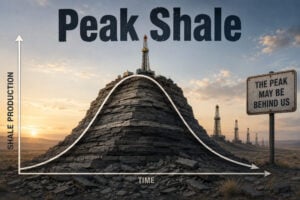 At the 2026 Unconventional Resources Technology Conference (URTeC) conference in Houston, Texas, experts debated whether U.S. shale has “peaked.” AllianceBernstein’s Bob Brackett noted that the sector has added 10 million bbl/d of oil since 2013, with Delaware Basin wells producing 300,000 bbl in two years, but flagged stalled productivity since 2021 and stubbornly low recovery factors (meaning less than 10% of the oil in the shale is actually recovered). Chevron’s Birlie Bourgeois called for a “next chapter” via AI, better fractures, and EOR surfactants, which have boosted productivity up to 20%.
  Seneca Resources, National Fuel Gas Company’s exploration and production arm, and Evolution Well Services announced a three-year strategic agreement to deploy electric hydraulic fracturing technology (e-fracking) across Seneca’s Appalachian Basin operations, including the Marcellus and Utica shales. The companies said Evolution’s electric frac systems, in-house power generation and field-gas conditioning will use Seneca’s own responsibly sourced natural gas to power completions. This isn’t the first time Seneca has used e-fracking.