
NextEra to Build 2 GW of New Gas Plants to Power $100B KY AI Campus
 A coalition of energy and utility companies announced on Wednesday (July 29) that they’re turning a chunk of the U.S. Department of Energy’s (DOE) old Paducah uranium enrichment site in far western Kentucky into a massive data center campus. The gas angle: NextEra Energy will build and own up to 2 gigawatts (GW) of new natural gas-fired generation to power the thing. That’s 2,000 megawatts (MW) of brand-new, on-demand gas burn dropped into a state sitting at the western end of a pipeline system that reaches back toward Appalachia. Here’s the deal in brief… Read More “NextEra to Build 2 GW of New Gas Plants to Power $100B KY AI Campus”
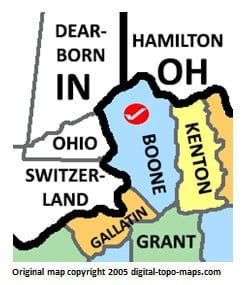 Texas Gas Transmission, LLC, a subsidiary of Boardwalk Pipelines, LP, wants to build the Dearborn County Lateral Project — roughly 12 miles of new 20-inch natural gas pipeline that begins at Texas Gas’s existing system in Dearborn County, Indiana, dips south across the Ohio River into Boone County, Kentucky, then hops back over the river into Hamilton County, Ohio. The destination is Vistra Corp.’s Miami Fort Power Plant, a coal-fired station slated for shutdown until someone had the good sense to convert it to natural gas instead. The lateral would move 265,000 dekatherms per day (Dth/d) of firm transportation service. A dekatherm is roughly one thousand cubic feet of gas, so call it about 265 MMcf/d (million cubic feet per day). Texas Gas filed with FERC in late May. Boone County leaders are not thrilled.
 Diversified Energy and real estate firm Maverick Holdings have secured an option on 100 acres at Letcher County’s Gateway Industrial Park near Jenkins, aiming to use an existing natural gas compressor station to fuel an off-grid, 100-megawatt power plant that could attract data centers or manufacturers. The Appalachian Industrial Development Authority signed an 18-month joint development agreement in March, though some board members were asked to sign NDAs. Local officials remain cautiously optimistic, citing potential tax revenue and infrastructure funding, but stress the project is still in early, unproven stages.
  Owensboro (KY) Municipal Utilities (OMU) is studying a proposed 545-megawatt natural gas power plant on roughly 30 acres at the former Elmer Smith Station site along the Ohio River, where coal generation ended in 2020. The developer, Green River East GenCo, holds an option to lease and has filed a grid interconnection application. OMU hired GDS Associates for a six-month study funded by the developer. OMU General Manager Tim Lyons stressed that the early-stage project isn’t guaranteed and that OMU won’t own the roughly $1 billion plant, citing customer risk. Instead, the plant may pursue power purchase agreements ahead of joining the MISO market in 2027. The plant will employ 15–20 workers.
  In September 2022, MDN told you about a new 53-mile pipeline project in Western Kentucky — a 16-inch natural gas pipeline to feed natgas to the southern Pennyrile Region (see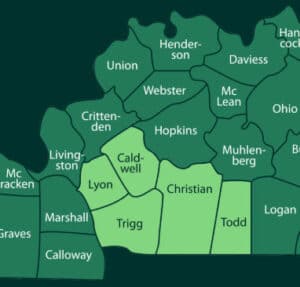
 Kentucky has experienced rapid economic growth in recent years, similar to other southern states. Data centers are looking to Kentucky for future expansion. Last fall, Louisville Gas and Electric Company (LG&E) and Kentucky Utilities Company (KU), both part of PPL Corporation, forecasted in their Integrated Resource Plan (IRP) the need for additional power generation due to the expected influx of data centers and economic development across their service territories (see
  In December 2022, Louisville Gas and Electric Company (LG&E) and Kentucky Utilities Company (KU), both subsidiaries of PPL Corporation, announced a plan to replace 1,500 megawatts of aging coal-fired generation (nearly one-third of Kentucky’s coal fleet) with two 645-MW natural gas combined-cycle units along with several unreliable, intermittent solar projects (see
  In May 2021, MDN told you that Louisville Gas and Electric Company (LG&E) had won Kentucky state approval to build a new 12-inch, 12-mile pipeline south of Louisville to supply gas to homes and businesses (including a Jim Beam distillery) in Bullitt County—homes and businesses that can’t connect to LG&E’s local natgas utility system because it is currently maxed out (see
  Anti-fossil fuel zealots, led (and funded) by the odious Sierra Club, made silly horse’s rear-ends of themselves yesterday at Waterfront Park in Louisville, Kentucky. A small group (under 20 judging by photos) engaged in a fake funeral procession with a box shaped like a black coffin with the words “DIED FROM FOSSIL FUELS” written on the side of it to object to the construction of a tiny, 12-mile pipeline in the area. Here’s the thing: The people engaging in these theatrics were all wearing clothes made FROM fossil fuels, wearing hats made from fossil fuels, sporting sneakers made from fossil fuels, most with glasses made from fossil fuels, carrying banners and signs made from fossil fuels, speaking into a PA system that was made with fossil fuels, and carrying a fake coffin that was painted with paint that comes from fossil fuels. Do they know just how stupid they looked?