
ARCH2 Hydrogen Hub Goes Dark; EQT, CNX Pivot to Data Center Power
 Remember the hydrogen hubs? Three years ago, the Biden administration handed out $7 billion to build seven of them, including two with deep Pennsylvania roots: the Appalachian Regional Clean Hydrogen Hub (ARCH2), awarded $925 million to make “blue” hydrogen from Marcellus/Utica gas, and the Mid-Atlantic Clean Hydrogen Hub (MACH2), awarded $750 million to make “green” hydrogen from wind and solar power (see Hydrogen Hub Winners Announced – WV Takes Prize in M-U Region). According to a new Inside Climate News article (the mouthpiece of Big Green), ARCH2 has gone completely dark. Former partners deny they were ever involved or won’t return calls. MACH2 says its award is still “active,” but nobody is spending money until Washington makes up its mind. Each hub has drawn only about one-fifth of its Phase One money. And the punchline? Many former ARCH2 partners, including EQT and CNX, have moved on to building gas-fired power plants for data centers. Read More “ARCH2 Hydrogen Hub Goes Dark; EQT, CNX Pivot to Data Center Power”
 We’ve said it here more times than we can count: hydrogen has no customers. A new investigation from RealClearInvestigations, published Sept. 1, backs that up with numbers — and the picture it paints of the federal hydrogen push should worry anyone who thought ARCH2 was going to become a big new buyer of Marcellus/Utica gas. Reporter James Varney’s piece walks through what’s become of the Biden administration’s National Clean Hydrogen Strategy and Roadmap, released in June 2023. That plan promised $9.5 billion in spending would produce 100,000 jobs by 2030 and cut economy-wide emissions 10% by 2050. Three years on, the biggest single piece of it — $3 billion split between two West Coast hydrogen hubs — is frozen and tied up in court. California’s ARCHES hub says on its own website that the state has paused activities. Thirteen Democratic attorneys general sued in February to force the money out the door.
 The left and many on the right are banking on hydrogen as the next BIG THING in energy. Hydrogen fuel cell cars and burning hydrogen to heat your home are just two applications people dream will come true in the next 25 years. Of course, they’ve been dreaming about hydrogen for more than 50 years, but the history of hydrogen is for another post. We pay attention to hydrogen because 95% of all hydrogen today is produced by steam cracking natural gas. Ergo, hydrogen has the potential to be a big, important, new customer for our molecules. Everyone and his brother continues to make predictions about the hydrogen market over the next 35 years. Norwegian company DNV has its own crystal ball prediction, the “Hydrogen Forecast to 2060.”
  Three weeks ago, the Trump Department of Energy announced it is moving forward with funding for five of the original seven Biden-awarded hydrogen hub projects, spending $5 billion of the originally allotted $7 billion (see
  Somewhat disappointingly, the Trump Department of Energy is moving forward with funding for five of the original seven Biden-awarded hydrogen hub projects, spending $5 billion of the orignally-alloted $7 billion. The preserved projects include the West Virginia-led Appalachian Regional Clean Hydrogen Hub (ARCH2), which is a project that will use Marcellus/Utica natural gas as the feedstock to produce “blue” hydrogen, which is hydrogen made from natgas where carbon dioxide from the process is captured and either used or stored underground. ARCH2 qualified for (and will now receive) up to $925 million of taxpayer money.
  Quantum Pleasants has successfully completed a year-long validation of its Omnis Quantum Reformer (OQR) technology at the Pleasants Power Station in West Virginia. This breakthrough ultra-high-temperature pyrolysis technology produces hydrogen on-site at half the cost of existing methods by utilizing the state’s coal and natural gas resources. Independent evaluations confirmed the system’s safety and economic viability, paving the way for the 1,300 MW facility to become the world’s first large power plant to operate on 100% hydrogen fuel. Right here in the heart of the Marcellus/Utica!
  Sorry, Field of Dreams, but if you build it, they don’t necessarily come. That’s the hard lesson for one of the biggest boondoggles of the Biden years—seven hydrogen hub projects (from 33 finalists) promised a collective $7 billion in federal funding (see
  Duke Energy breathlessly announced the launch of the DeBary Hydrogen Production Storage System, claiming to be the first U.S. project to demonstrate an end-to-end process for producing, storing, and combusting 100% green hydrogen. Located in Volusia County, Florida (near Daytona Beach), the facility uses solar energy to power electrolyzers that extract hydrogen from water. This stored hydrogen then fuels a turbine modified to burn hydrogen to meet peak electricity demand. Duke thinks that it can overcome the unreliable nature of solar power by using solar when the sun is shining to split water into oxygen and hydrogen, and storing the explosive hydrogen for later use. Below, we bring you the big claims by Duke Energy—in their own words—and then tell you why we consider their claims lacking.
  A big, fat, red flag has just been waved by researchers at Auburn University and Stanford University regarding the future of hydrogen as a nirvana energy source.
  In October 2024, the Bidenistas announced seven hydrogen hub projects (from 33 finalists) that would receive a collective $7 billion in federal funding (see
  This story has nothing to do with the Marcellus/Utica (apologies in advance), other than the companies involved have operations in or purchase molecules from the M-U region. We decided to launch an occasional “Bizarre Files” to call attention to energy news that is, well, bizarre. How about this: France-based TotalEnergies, along with Netherlands-based TES and several Japanese utility companies, are collaborating to produce what is called electric natural gas (e-NG), also known as e-methane, in Nebraska. The e-NG will be exported to Japan. Here’s where it gets interesting, and bizarre…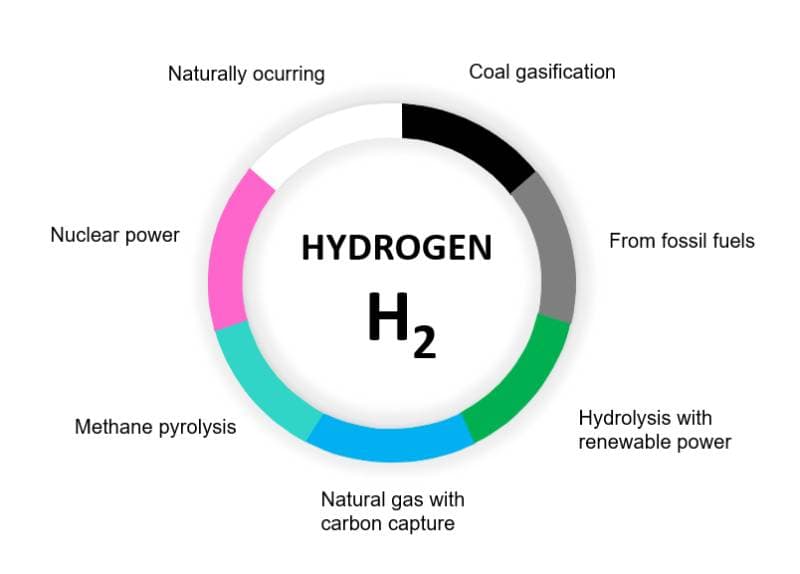
 Last Thursday, MDN informed you about a public hearing scheduled for that day by the West Virginia Department of Environmental Protection (WV-DEP) for the Adams Fork Energy Project in Mingo County (see
 Verne, Inc., a California-based energy company, announced last week that it will open its first manufacturing plant in the Marcellus Energy Park near Muncy, Lycoming County, PA. Verne developed a process to increase the density of hydrogen by storing the gas in a cold and compressed state, making it more efficient to transport in larger volumes. The new PA facility (which should be up and running in nine months) will build the storage tanks for this cold hydrogen. The hydrogen will be transported via truck to power data centers, drilling sites, construction sites, and more.