
Armstrong County | Beaver County | CNX Resources | Energy Companies | EQT Corp | Marion County | PennEnergy Resources | Pennsylvania | Weekly Permits | West Virginia
Shale Permits Fall to 4 Last Week; Ohio Posts a Big Fat Zero
 The Marcellus/Utica region received a paltry 4 new shale well permits last week, Oct. 26 – Nov. 1, down 5 from the anemic 9 the week before. Pennsylvania issued 2 new permits, Ohio issued none, and West Virginia issued 2. The drillers who received new-well permits last week were: CNX, EQT, and PennEnergy Resources. It was a sleepy week. Ohio didn’t issue a single horizontal shale permit of any kind: no new wells, no deepens, no location changes. Maybe somebody went on vacation at ODNR? The busier paperwork was on older permits: 11 modifications across PA and WV, eight of them for one EQT pad in Wetzel County. Read More “Shale Permits Fall to 4 Last Week; Ohio Posts a Big Fat Zero”
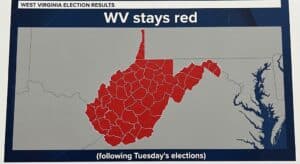 On Tuesday, while Democrats were flipping Congress and the Pennsylvania Senate, West Virginia did… mostly what West Virginia does. Sen. Shelley Moore Capito won a third term, both GOP congressmen won again, and Republicans kept big supermajorities in the Legislature. But dig one layer down, and there’s a warning sign for anyone who profits from Mountain State shale. Democrats more than doubled their seats in Charleston, and the issue that got them there was data centers. Specifically, House Bill 2014, the 2025 law that wiped out local control over data centers and the gas-fired “microgrids” built to power them. Here’s what happened and why it matters for WV gas.
 Last week we told you that West Virginia Attorney General JB McCuskey had served subpoenas on at least six environmental groups. He wanted nearly 10 years of their records, and his legal hook was the state’s consumer protection law (see
 Antero Resources, the biggest driller in West Virginia, pumped out a company-record 4.234 Bcfe/d (billion cubic feet equivalent per day) in 3Q26. That’s up 23% from a year ago. And Antero did it while shutting in more than 100 MMcfe/d of dry gas on purpose, because local prices got so bad that on some weekends in September and October, gas went for 60 to 65 cents. Antero plans to shut in even more gas in 4Q, so it lowered its 4Q forecast to 4.3 Bcfe/d. Back in July, it promised 4.4 to 4.5 Bcfe/d. The good news? Antero says prices for its natural gas liquids (NGLs), meaning propane, butane, and their cousins, have jumped about 50% since 3Q ended. And Antero hedges almost none of its NGLs, so it keeps nearly all of that gain.
 Antero Midstream (AM) has a new pipeline on the drawing board. During Thursday’s 3Q26 earnings call, CEO Michael Kennedy said AM wants to build a North-South pipeline from Antero Resources’ West Virginia field north to the Clarington, Ohio, market. Kennedy said AM is “scoping it right now” and spending “a little initial capital” to assess it, and that “you’ll probably see us FID that in 2027.” (FID means final investment decision, the point where a company commits to build.) There was no press release. The news came out in answer to a question from a Goldman Sachs analyst.
 In August, MDN told you about two federal lawsuits, filed six days apart by Big Green groups, aimed at killing Nationwide Permit 12 (NWP 12). That’s the Army Corps of Engineers permit that lets pipelines cross streams and wetlands without a separate federal review at every single crossing (see

 On Friday, we told you a leak on Columbia Gas Transmission’s Mountaineer XPress (MXP) pipeline had pushed Appalachian gas down to $1.06 (see
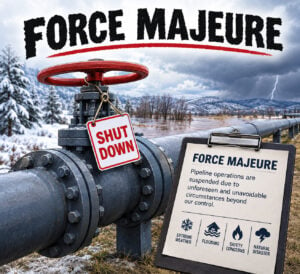 On Thursday, physical (spot) natural gas sold at Louisiana’s Henry Hub (the national benchmark) went for $3.30 per MMBtu. On the same day, gas sold at Texas Eastern M-2, which is the main price point for gas produced in southwestern Pennsylvania, West Virginia, and Ohio, went for $1.055. That’s the same molecule of methane, and our version fetched about 32 cents on the dollar. Why? Because a pipeline carrying Appalachian gas out of the region sprang a leak again. Here’s what happened, why it matters to your royalty check, and why there’s some good news on the horizon.
 A coalition of 26 state attorneys general, led by West Virginia AG JB McCuskey, is urging the Federal Energy Regulatory Commission (FERC) to adopt a proposed rule that would let interstate pipelines do bigger upgrades, faster, without FERC’s full project-by-project review. All three Republican AGs in our neck of the woods signed on: West Virginia’s McCuskey, Pennsylvania’s Dave Sunday, and Ohio’s D. Andrew Wilson. The 24-page comment letter, dated Oct. 6, is a point-by-point rebuttal to a blue-state coalition (New York, Maryland, Massachusetts, California, and friends) that wants FERC to scrap the whole idea. It’s a wonky fight over a wonky program, but it matters a great deal to drillers, pipeline companies, and royalty owners in the Marcellus/Utica.
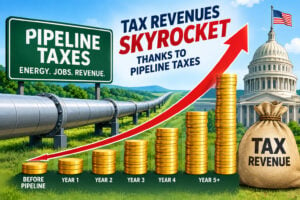 Remember all those years of protesters chaining themselves to equipment, lawsuits by the dozen, and court-ordered work stoppages trying to kill the Mountain Valley Pipeline (MVP)? Here’s what West Virginians got for finally building it: a fat new check. A new report from West Virginia State Treasurer Larry Pack’s office finds that MVP drove a 62% jump in the value of rural utility property in the 11 counties it crosses, generating nearly $27.1 million in new property tax revenue in a single year—about $9.1 million for county commissions and nearly $18 million for local schools. MVP-related utility property accounted for more than 86% of ALL the growth in property tax revenue in those counties. One pipeline. Eighty-six percent.
 A federal judge in Pittsburgh has ruled that two EQT subsidiaries must face most of a lawsuit filed on behalf of four West Virginia kids who claim that emissions from EQT’s shale wells and a nearby compressor station made them sick. On Sept. 23, U.S. District Judge Robert Colville threw out just one of the five claims, a request for a medical monitoring trust fund, and he gave the kids’ lawyers 21 days to fix and refile it. The rest of the case moves forward. That includes a “strict liability” claim that EQT had argued West Virginia law flat-out does not allow against oil and gas operations. It’s a pleading-stage ruling, not a verdict. Even so, it’s a loss for EQT, and it’s one the whole industry should watch.