
DrillDocs Gets a Patent to Keep an AI Eye on Shale Shakers

Ever hear of a “shale shaker?” It’s a large, vibrating sieve used in drilling operations (like oil, gas, and mining) as the first stage of solids control to separate rock cuttings from the drilling fluid (mud) by shaking the fluid over fine mesh screens, letting liquid pass through and discarding the solids, which keeps the mud clean, protects equipment, and improves drilling efficiency. A clever Houston, TX-based company called DrillDocs has just secured a patent for a process that trains a camera on the drill cuttings coming off the shale shaker and uses AI to analyze them. Read More “DrillDocs Gets a Patent to Keep an AI Eye on Shale Shakers”
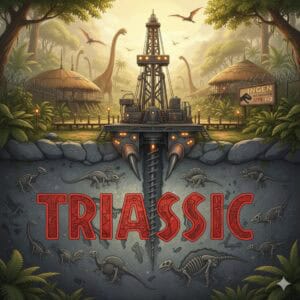 Deep River Data, a company with connections to the cryptocurrency industry, wants to drill for natural gas in Lee County, North Carolina. However, production from the well would not be used to power crypto mining, but instead to fuel an AI data center. If approved, the project would be the first commercial well drilled into the Triassic Basin, a natural gas repository underlying North Carolina and other Eastern Seaboard states. The planned well is conventional, not shale, so it involves no (or very little) fracking. Yet lefty environmentalists have whipped up opposition from the locals by urging them to “ban fracking.”
  On December 17, 2025, a casing failure and loss of well control occurred at one of three wells during fracking operations at a Range Resources pad in Washington County, PA. After gas pressure spiked to 2,000 psi, the company stabilized the well and later installed two kill plugs. Despite Range sending an immediate email notification, the Pennsylvania Department of Environmental Protection (DEP) cited Range for failing to use the required website portal for instant alerts. Additionally, the company missed deadlines for a mandatory Area of Review report regarding potential “communication” with other O&G wells and/or water wells in the area.
 It’s kind of interesting how things sometimes work out. Mark Carney became the 24th Prime Minister of Canada on March 14, 2025, following the resignation of Justin “man-child” Trudeau in January 2025. Before entering federal politics, Carney served as the UN Special Envoy on Climate Action and Finance. He worked (hard) to try to defund fossil energy companies. But what’s this? The Canadian province of Nova Scotia, which banned fracking in 2014, has reversed course and now wants to open up the province for fracking. Not a peep from Carney against Nova Scotia’s plan to allow fracking. Apparently, Carney has found that actually governing a country is a whole lot different from prancing around at the UN bashing fossil energy.
 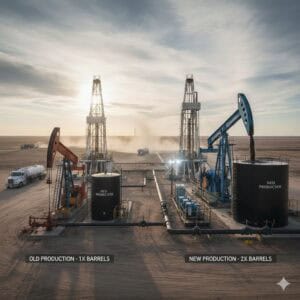 The U.S. shale industry is shifting its strategy from rapid drilling to maximizing recovery from existing wells. With the era of high-growth production ending, operators are increasingly focused on improving recovery rates, which currently average only 10% for oil. Companies like EOG Resources and Occidental Petroleum are utilizing advanced technologies, including EOR techniques like “huff ‘n’ puff” gas injection and data-driven fracking, to extract more resources from mature fields. This transition toward efficiency and capital discipline aims to extend the lifespan of inventory and boost profitability, signaling a move from “shale growth” to “shale sustainability” in a maturing market.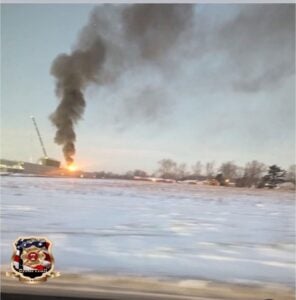
 The Pennsylvania Environmental Quality Board (EQB) held a meeting yesterday to consider whether or not to accept a petition by radical green groups, including the Clean Air Council and Environmental Integrity Project, to “study” the issue of increasing setbacks for shale drilling so far that it would ban ALL new Marcellus/Utica drilling in the Keystone State (no exaggeration). The EQB tabled a decision on whether to accept the petition back in April (see
  Pennsylvania Environmental Quality Board (EQB) will hold a meeting on Tuesday, December 9, to consider whether or not to accept a petition by radical green groups, including the Clean Air Council and Environmental Integrity Project, to “study” the issue of increasing setbacks for shale drilling so far that it would ban ALL new Marcellus/Utica drilling in the Keystone State. The EQB tabled a decision on accepting the petition back in April (see
  Bloomberg writes that shale energy’s next revolution should worry the thug dictators of OPEC. American shale drillers currently extract 10% to 15% of the oil locked in the shale layer, leaving the rest underground. However, engineers are actively trying to change this through new techniques and technologies. What if we could double the amount of oil and gas extracted? It would, once again, change the oil and gas industry worldwide. Double the production for the same investment? It’s a no-brainer.
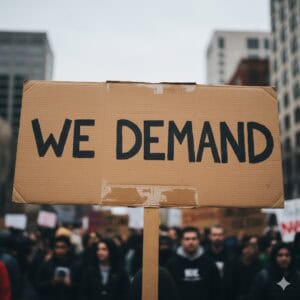 Representatives from Clean Air Council, Earthworks, Environmental Health Project, Environmental Integrity Project (EIP), and Protect PT, some of the worst of the worst radical “green” groups in the Keystone State, rallied at the Pennsylvania State Capitol yesterday to demand (they always demand) that Pennsylvania’s Environmental Quality Board (EQB) accept their petition to consider drafting a new setback regulation in the state that would effectively ban all new shale drilling.
  In the olden days of fracking (20 years ago), drillers would drill and frack one well at a time, called a Zipper Frac. Around five years ago, in 2020, fracking two wells at a time became vogue, a technique called SimulFrac (simultaneous fracturing). Today, SimulFracs are used by all major producers, including those operating in the Marcellus/Utica. Now coming into vogue is the next evolution: TrimulFrac, or fracturing three wells simultaneously. Fracking three wells at a time requires even more sophisticated logistics, real-time monitoring, and effective equipment management.
  Ohio Democrat House members have introduced a bill to solve a problem that doesn’t exist. House Bill (HB) 399 would ban fracking under Lake Erie (which has NEVER been proposed or even thought of), and ban fracking under state-owned parks, which is now happening. With respect to drilling under (not on) state-owned parks, when it happens, nobody knows it’s happening (see
  Pennsylvania state Rep. Greg Vitali, a radical Democrat and the majority chairman of the state House Environmental & Natural Resource Protection Committee, introduced legislation (H.B. 1946) this week that would increase the current setback distances for unconventional oil and gas wells in Pennsylvania from 500 feet to 2,500 feet, effectively banning all new shale drilling in the state. Period. End of sentence. And Vitali (and the other radicals who have signed on to the bill) know it. The bill doesn’t stand a chance in the Republican-controlled Senate, but that’s not the point. The point is (a) fundraising, and (b) there is no other reason, except fundraising.