
MDN Exclusive: 7-Figure Utica Mineral Deal Covers 116 Wells
 Here’s a story you won’t read anywhere else. Strata Petroleum, LLC buys oil and gas mineral rights, and it has quietly sold its mineral interests in 116 producing Ohio Utica wells to Dallas-based Rising Phoenix Royalties. The deal closed effective October 5. Strata managing partner Justin Wainwright reached out to MDN with the news. He won’t disclose the exact price, but he told us it was “well into 7 figures.” The wells are operated by two of the biggest names in the Ohio Utica, EOG Resources and Ascent Resources, and they’re spread across six of the play’s core counties. Strata says it isn’t leaving the region. It plans to keep buying minerals across Ohio, West Virginia, and Pennsylvania. Read More “MDN Exclusive: 7-Figure Utica Mineral Deal Covers 116 Wells”
 Ohio’s Utica shale boom ignited around 2011 in northeastern counties, with Carroll County emerging as the epicenter of early drilling. Operators like Chesapeake Energy targeted the oil and liquids-rich “wet gas” windows in Carroll, Columbiana, and Harrison counties. However, as operators refined their geologic understanding, they discovered the formation’s most prolific “dry gas” window lay to the southeast. Development steadily migrated toward Belmont, Monroe, Jefferson, and Guernsey counties, where deeper, overpressured rock formations yielded massive volumes of natural gas. By the mid-2010s, these southern counties dominated Ohio’s Utica production, eclipsing the northern pioneers that first proved the play’s potential. However, three years ago, Encino Energy “cracked the code” on Ohio Utica oil drilling, and activity began migrating north again (see
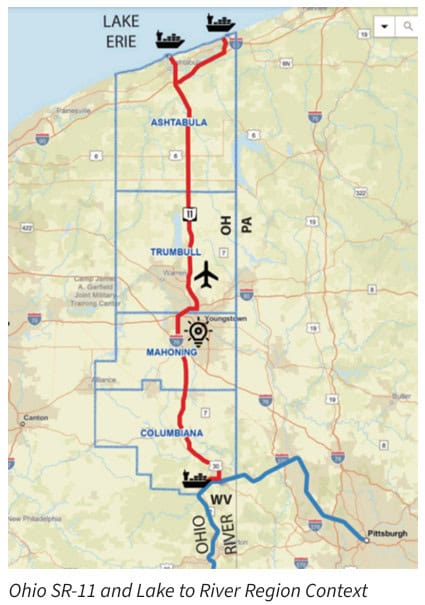
  Ohio’s Utica/Point Pleasant shale production reached a record 48 million barrels of oil in 2025, a 39% increase from the previous year. While natural gas output remained stable at 2 trillion cubic feet, oil volumes have tripled since 2021. This surge was fueled by high-performing wells in the Northern Tier, specifically Columbiana and Mahoning counties, largely driven by EOG Resources and Encino Energy (which EOG bought in mid-2025 for $5.6 billion). Although southern hubs like Harrison and Carroll counties remain major producers, the expansion into northern regions highlights a significant shift in Ohio’s energy landscape and drilling success. Go North, young molecule!
  The combined number of new permits issued to drill shale wells across the Marcellus/Utica region was 26 for the week of Dec. 22 – 28, more than double the 12 issued two weeks ago. Pennsylvania issued 15 new permits, Ohio issued 6, and West Virginia issued 5. Among the companies receiving new permits were Antero, EOG, EQT, Hilcorp, INR, and Range Resources.
 Wow! Is this the Trump effect? For the week of Jan 13 – 19, permits issued in the Marcellus/Utica to drill new shale wells achieved levels we haven’t seen in, oh, about four years. There were 41 new permits issued last week, up significantly from 27 issued the week before and 30 issued two weeks before. The Keystone State (PA) issued a whopping 25 new permits, with 17 (!) going to EQT spread across Greene and Washington counties. Another six permits went to Chesapeake Energy (now Expand Energy) in Bradford County. One permit each went to Range Resources and Apex Energy in Beaver and Westmoreland counties, respectively.