
DTE Names Sites, Costs for 2 Gas Plants, ~300 MMcf/d of M-U Demand
 Last month we told you DTE Energy was about to ask Michigan regulators for permission to build two new natural gas-fired power plants totaling 2,100 megawatts (MW) (see DTE Asks Michigan for 2 Gas Plants — 2,100 MW of New M-U Demand). On Thursday, Sept. 24, the formal ask landed. DTE Electric filed its 20-year Integrated Resource Plan (IRP) with the Michigan Public Service Commission (MPSC), and this time the plants come with addresses, price tags, and dates. A 1,400 MW combined-cycle plant in Handy Township (Livingston County) would cost $3.9 billion and come online by the end of 2031. A 700 MW plant in Milan Township (Monroe County) would cost $2.5 billion and come online by the end of 2032. Together, they replace the 3,066 MW coal-fired Monroe Power Plant, which will shut down in two stages in 2028 and 2032. Michigan produces very little gas of its own, and both sites sit close to pipelines that carry Marcellus/Utica gas into the state. Read More “DTE Names Sites, Costs for 2 Gas Plants, ~300 MMcf/d of M-U Demand”
 The front-month October NYMEX natural gas futures contract settled Friday (Sept. 25) at $3.196 per MMBtu, up 28.4 cents, or 9.75%, for the week. That’s a nice week to be long gas. Most of the fireworks came on Thursday, when a leak on TC Energy’s Mountaineer XPress (MXP) pipeline in West Virginia knocked roughly 1.8 Bcf/d of Appalachian takeaway offline and sent futures up 9.06% in a single day, the biggest one-day gain since January (see
  Four weeks. Same number. The Marcellus/Utica held at 33 rigs again for the week ended September 25, while the national count added four more to reach 599—a new 52-week high for the second week in a row, and one rig shy of 600. Oil rigs up. Gas rigs up. Frac spreads jumped by eight. And the big news on the price board: natural gas futures climbed back above $3, trading around $3.20 per MMBtu. Once again, everything in this report moved except the Marcellus/Utica. But the permit list delivered a plot twist we’ve been waiting for.
 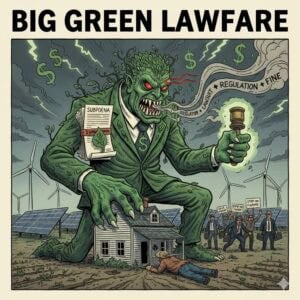 Chatham County, North Carolina’s Board of Commissioners last week unanimously passed a resolution opposing Enbridge Gas North Carolina’s proposed 28-mile natural gas pipeline from Siler City to Moncure. This isn’t a garden-variety “we don’t like it” resolution. It authorizes the county to actively fight the project by challenging environmental permits, teaming up with like-minded groups, working the media, organizing residents, and coaching landowners on how to resist condemnation. In other words, a county government just signed itself up as a Big Green activist group, with taxpayers picking up the tab.
 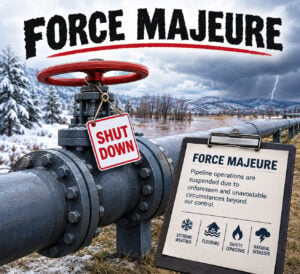 On Thursday morning, a natural gas leak at the Saunders Creek Regulator Station near Milton, WV (Cabell County) forced TC Energy’s Columbia Gas Transmission (TCO) to declare “force majeure” on the Mountaineer XPress (MXP) pipeline, one of the biggest Marcellus/Utica takeaway pipes in the region. Starting with today’s gas day (Friday, Sept. 25), the affected segment of MXP is cut to zero capacity until further notice. TCO estimates the hit to firm customers at 1.8 million dekatherms (MMDth) per day, which is roughly 1.8 billion cubic feet per day (Bcf/d) of Appalachian gas that suddenly needs somewhere else to go. Traders noticed. The October NYMEX futures contract settled up 27.4 cents (+9.06%) at $3.297 per MMBtu, the highest in about three months and the biggest one-day gain since January.
  Boardwalk Pipelines’ Kosciusko Junction Pipeline Project, a 111-mile, 36-inch pipe across Mississippi that will carry Marcellus/Utica gas (and gas from other plays) to Southeast markets, now has all the federal permits it needs. FERC voted to approve the project at its Sept. 10 open meeting. On Sept. 23, the Federal Permitting Council announced that all federal permitting was finished. What’s next? Shovels. Boardwalk’s plan on file with FERC calls for construction to begin in December, about 10 weeks from now, with first gas flowing as early as April 2028.
  Kinder Morgan has a new pipeline project in the works, one MDN has not told you about before, because until yesterday nobody outside the company had heard of it. It’s called the Southeast Connector, and it would run north to south across Middle Tennessee through 10 counties, stitching together two of Kinder’s biggest interstate systems: Tennessee Gas Pipeline (TGP) and Southern Natural Gas (SNG). Kinder VP Allen Fore made the rounds in DeKalb County on Thursday, meeting the county mayor, the Chamber of Commerce, and local media. Land agents may start knocking on doors as early as next week. Target in-service: 2029.
  When Appalachian gas prices fall into the basement, EQT turns down the valves, and CEO Toby Rice says the strategy is paying off. In an interview with Reuters on Tuesday, Rice put a dollar figure on it for the first time: a little over $200 million a year in benefit from selling less gas when prices are low and more when they’re high. He also said EQT, the country’s No. 2 gas producer, will pump more gas in 2026 than last year while spending less to do it. Rice talked up the company’s proposed POWER Pipeline to Ohio, its Mountain Valley Pipeline expansions, and a new 10-year LNG supply deal with Lithuania. His outlook for global gas demand is, let’s say, very bullish.
  Here’s one you don’t see every day. The North Carolina Utilities Commission (NCUC) has said “no” to a Duke Energy gas-fired power plant. On Sept. 18, the commission voted 3-1 to deny Duke Energy Progress a certificate of public convenience and necessity (CPCN, the state’s permission slip to build) for a 255-megawatt (MW) gas-fired “peaker” turbine at the Smith Energy Complex in Richmond County. Price tag: $584 million. The twist? The three commissioners who voted no are all Republican appointees, and the lone vote in favor came from a Democrat. Nobody on the commission said gas is the problem. The problem, they said, is data centers: how much of this plant’s power data centers will use, and who would pay for it.
 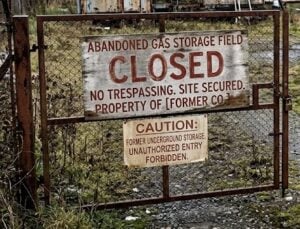 Columbia Gas Transmission (a TC Energy company) has asked federal regulators for permission to permanently walk away from three underground natural gas storage fields straddling the Pennsylvania/West Virginia line near Majorsville — plugging 71 wells, tearing out a compressor station, and abandoning nearly 20 miles of pipe. On September 9, FERC set the clock on its environmental review. If you’re a landowner in Greene or Washington County, PA, or Marshall County, WV, this one lands in your backyard. Here’s the plain-English version of a very technical filing.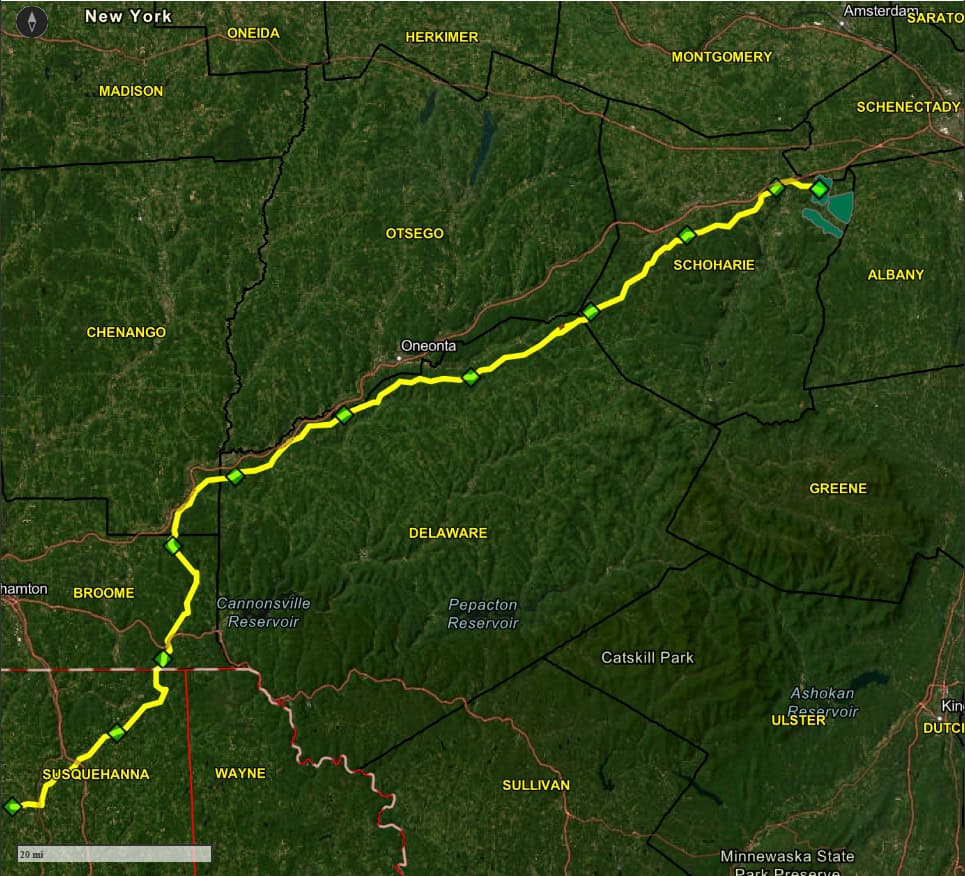
 DeepRock Disposal Solutions wants two of its Noble County, Ohio, injection wells back in service — and the Ohio Department of Natural Resources (ODNR) keeps saying no. ODNR’s Division of Oil and Gas Resources Management shut the Travis and Warren wells in January 2023, blaming them for a 2021 brine eruption that cost the state $1.28 million to clean up. DeepRock argued its case at a hearing in April. It lost. The division chief issued a fresh order on July 31 continuing the suspension, and on Aug. 28 DeepRock appealed to the Ohio Oil and Gas Commission. Here’s the part our readers should circle on the calendar: under Ohio Administrative Code, DeepRock has 120 days from that July 31 order — until roughly Nov. 28 (our count) — to submit a plan fixing what the division found, or plug both wells permanently.
  Yesterday it was a Reuters rumor. This morning it’s official. National Fuel Gas Company (NFG) says its board will decide by October 15 whether to split the 124-year-old company in two. One half would be a brand-new, publicly traded Marcellus/Utica driller made up of Seneca Resources and the NFG Midstream gathering business. The other half, which keeps the National Fuel name, would be a 100% regulated utility and pipeline company. If the board says yes, NFG shareholders would get shares in the new driller, tax-free.