NextEra Picks Fayette County, PA for $13B, 3.75-GW Gas Plant
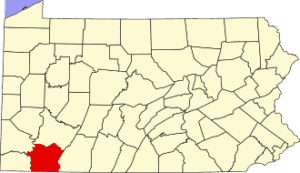
For six months we’ve been asking one question about NextEra Energy’s giant southwestern Pennsylvania gas plant: where? We finally have an answer — Luzerne Township, Fayette County, on 700 acres of former coal ground along the Monongahela River. And with the answer come some numbers that don’t quite match what Washington told us back in March. The Pittsburgh Business Times (PBT) reported yesterday (Sept. 1) that NextEra Energy Resources briefed Fayette County and local officials on what the company is calling the East Riverside Energy Center. The site sits near East Riverside Road and Palmer Adah Road, and NextEra has already bought one piece of the property with agreements in hand for the rest. Longtime readers will recall that back in March we speculated the plant would land in Fayette, Greene, or Washington county (see Speculation on SWPA Location of NextEra’s 4.3-GW Gas-Powered Site). Fayette it is. Read More “NextEra Picks Fayette County, PA for $13B, 3.75-GW Gas Plant”
 A Dallas-based hyperscaler wants to build a 1.7-million-square-foot computing campus — plus its very own 450-megawatt natural gas power plant — on a reclaimed strip mine in Washington County, PA. The gas would come off a lateral tied to Energy Transfer’s Rover Pipeline, which runs right past the property line. Prime Data Centers made its first real presentation to the Hanover Township Board of Supervisors Monday night, in front of a fire hall packed past capacity with residents who are, to put it mildly, not sold. Three hours of testimony later, the supervisors scheduled four more hearings.
  Back in May we told you Dominion Energy had brass you know what announcing a monster 3,000-megawatt (3 gigawatt) gas-fired power plant in Cumberland County, Virginia, while its much smaller Chesterfield peaker project was still stuck in the mud after three years of green lawfare (see
  Here’s a pipeline fight where the bad guys aren’t the greens. Last Friday, the U.S. Court of Appeals for the D.C. Circuit sided with the Federal Energy Regulatory Commission (FERC) and Enbridge subsidiary East Tennessee Natural Gas (ETNG), tossing out a challenge brought not by environmental radicals but by the pipeline’s own customers — a group of small-town gas utilities in Tennessee, Virginia, and Alabama who said they were being stuck with the bill for an upgrade they never asked for.
  In April, we told you the Federal Energy Regulatory Commission (FERC) was taking a fresh look at the revived Constitution Pipeline and the associated Wright Interconnect project, and that the agency had to decide whether a relatively quick Environmental Assessment (EA) would do the job — or whether it would drag the projects through a full-blown, years-long Environmental Impact Statement (EIS). We got our answer on August 21. FERC staff issued the EA for both projects — 79 pages plus appendices — and the bottom line is the one supporters have been waiting on: building Constitution “would not constitute a major federal action significantly affecting the quality of the human environment.” In plain English — no significant impact. No years-long supplemental EIS is needed.
  The Marcellus/Utica finally moved last week — in the wrong direction. Ohio dropped a rig, taking the M-U to 34 and ending a three-week stall at 35. Nationally, the count didn’t budge at all, holding at 588. But that flat number hides something: oil rigs fell five while gas rigs gained five, and not one of those new gas rigs showed up here. Frac spreads slipped again too, down four to 180 — the second straight weekly decline.
  Last week, we covered Enterprise Products Partners signaling a “rate reset” on ATEX, the ethane pipeline that carries Marcellus/Utica ethane to Mont Belvieu (see
  Iroquois Gas Transmission System’s Enhancement by Compression (ExC) project has cleared FERC. It has cleared New York. The one thing standing between it and a shovel is a state air permit for two gas-fired compressor units in Brookfield, Connecticut. The Hartford Courant checked in on that fight yesterday — and buried the two most important facts halfway down the story. Quick refresher for anyone joining late: ExC is a $272 million upgrade that adds horsepower at three existing compressor stations — Dover and Athens in New York, Brookfield in Connecticut. No new pipe. Just more compression, squeezing an additional 125 MMcf/d (125 million cubic feet per day) through the existing 414-mile line into New York City and New England. That’s roughly a 10% throughput gain on a line that already exists, feeding two of the most gas-starved, highest-priced energy markets in the country. (The Courant puts the project at $275 million; we’ve used the $272 million figure Iroquois has cited. Small gap, worth pinning down.)
  When we covered DTE Energy’s second quarter results in July, we grumbled that the company was throwing $10 billion at unreliable renewables and only $2.5 billion at a single new gas plant to replace a retiring coal fleet (see
  Sixty-two days after a wastewater pipeline let go at Equitrans’ Richter impoundment in Aleppo Township, Greene County, the Pennsylvania Dept. of Environmental Protection (DEP) went back out to look at the site on August 18 — and didn’t like what it found. Contaminated water is still moving, soil is still dirty, and DEP says the cleanup has largely stalled. Quick refresher for those just tuning in. On June 17, 2026, Equitrans Water SVC (PA) LLC — the water-handling arm of EQT — reported a wastewater release from a pipeline tied to its Richter Shale Gas Water Impoundment while the site was being reclaimed. DEP issued a cleanup order on June 30 requiring the company to stop contaminated water from migrating off site and from reaching ground or surface water.
  Eureka Resources sold the business at all three of its shuttered Pennsylvania frack wastewater plants. What it did not sell — and legally could not sell — is the obligation to finish hauling the waste out. The Department of Environmental Protection (DEP) put that in writing last week, and added five words that ought to get somebody’s attention in Williamsport: DEP “is considering alternative enforcement measures.” The news comes, again, not from Eureka and not from a DEP press release, but from the Middle Susquehanna Riverkeeper Association, which keeps sending the agency questions and publishing the answers. DEP Northcentral communications manager Megan Lehman replied by email Aug. 20; the Riverkeeper posted the exchange Aug. 24.
  The single most important piece of pipe for Marcellus/Utica wet gas drillers is about to get a lot cheaper to use — and Enterprise Products Partners (EPD) just said so out loud. On its second quarter earnings call, EPD told analysts that the tolls it charges on ATEX, the 1,230-mile ethane pipeline running from Washington County, PA to Mont Belvieu, TX, now often cost more than the ethane moving through it. Enterprise executive Justin Kreider put it plainly: “There is going to be some degree of a rate reset.” A new analysis from East Daley Analytics puts numbers behind that comment — and finds that roughly half of ATEX’s capacity comes up for renewal in 2028.
  The U.S. Court of Appeals for the Second Circuit last Friday slammed the door on Big Green’s attempt to yank the New York water permit for the Williams/Transco Northeast Supply Enhancement (NESE) pipeline. Six environmental groups asked the court to vacate the Clean Water Act Section 401 water quality certification (WQC) that the New York State Dept. of Environmental Conservation (DEC) issued in November 2025. In a summary order issued Aug. 21, a three-judge panel said no. The permit stands. NESE, already under construction, keeps building.
  The Columbus Dispatch — a paper based 120 miles northwest of the action — parachuted into Marietta, Ohio, yesterday with a long story about shale wastewater injection wells that leads with the words “radioactive,” “toxic,” and “Russian roulette,” and waits ten paragraphs to tell readers the one fact that matters most: no evidence of drinking water contamination has turned up. Not now. Not in 15 years. We’ve covered this fight since 2025, and we’ll say again what we said in July — there IS a real problem here, but it isn’t the one the Dispatch is selling.