
MPLX Marcellus Proc. Plants 96% Full, Harmon Creek III Starts Up
 MPLX LP — the Findlay, Ohio midstream giant that bought MarkWest back in 2015 and, in doing so, became the biggest gas processor in the Marcellus/Utica — posted second quarter 2026 results on Aug. 4. Buried in the usual pile of EBITDA-speak is a set of numbers M-U landowners and drillers should care about: MPLX’s Marcellus processing plants ran at 96% of capacity, its Utica gathering systems moved 18% more gas than a year ago, and a brand-new 300 MMcf/d processing plant is starting up in southwest Pennsylvania this month. Full disclosure up front: MPLX is not building all this steel because it likes the scenery. It’s building it because Appalachian producers are drilling again. Read More “MPLX Marcellus Proc. Plants 96% Full, Harmon Creek III Starts Up”
 The Pennsylvania Department of Environmental Protection issued an air quality permit on May 18, 2026, to MarkWest Liberty Midstream, authorizing the expansion of its Harmon Creek Natural Gas Processing Plant in Washington County. The MarkWest name is still used, although the company is now MPLX. The DEP permit approval allows the addition of a third cryogenic plant and a second de-ethanization plant. A number of Big Green groups colluded in an attempt to block the permits, but their demands were ignored.
  In 2015, MPLX (i.e., Marathon Petroleum) bought out and merged with the Utica Shale’s premier midstream company, MarkWest Energy, for $15 billion (see
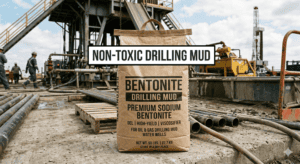 If a tree falls in a forest and no one is around to hear it, does it make a sound? Similarly, if a pipeline being drilled loses 28,500 barrels (1.2 million gallons) of nontoxic drilling mud into an abandoned coal mine void, does it matter? The environmental left is attempting to make a big deal out of MarkWest Liberty Midstream’s drilling project in Washington County, PA, in which the company has, over a series of 19 different episodes, lost a cumulative 28,500 barrels of nontoxic bentonite drilling mud into an old coal mine void as it drilled the Chiarelli to Imperial Pipeline Project, between October 2025 and January 2026. Bentonite is the same stuff used to make kitty litter and toothpaste.
  Pipelines in West Virginia (like most other states) pay property taxes. It’s a significant revenue generator for counties. There are many pipelines in Wetzel County, including three NGL pipelines owned and operated by MarkWest (aka MPLX) that connect to the Mobley Gas Plant. In 2022, MarkWest filed a tax return for the pipelines showing a 35% reduction in value due to less-than-forecasted pipeline usage, a concept called “economic obsolescence based on inutility.” The County Assessor for Wetzel County challenged MarkWest’s claim.

 Last November, MDN brought you the great news that MPLX (aka MarkWest Energy) would file to build an expansion at its existing Harmon Creek facility in Smith Township, Washington County, PA (see
  Last November, three of five supervisors in Cecil Township (Washington County), PA, voted to ban all new fracking via a new setback (distance from well to nearest structure) requirement of 2,500 feet (see
  Marathon Petroleum’s MPLX, formerly MarkWest, operates five complexes in the Marcellus shale. One of the five is the Bluestone Complex in Butler County, PA. Bluestone gathers 200 million cubic feet per day (MMcf/d) of natural gas. Bluestone processes 400 MMcf/d of natural gas, separating methane from other hydrocarbons. The facility then further separates ethane (C2H6) from other NGLs like propane and butane in a process called C2+ fractionation—producing some 81,000 barrels per day. Yesterday, MPLX announced that the Bluestone plant has become the only U.S. natural gas processing facility to achieve the EPA’s ENERGY STAR Challenge for Industry.