
MDN’s Energy Stories of Interest: Tue, Oct 6, 2026
 OTHER U.S. REGIONS: Two federal judges sink New York’s version of the Superfund law; NATIONAL: Natural gas settles higher on storage build projections; Wright says Trump was “well aware of the risks to energy flows” before launching Iran war; With an energy executive order, Trump could solve ‘affordability’ once and for all; Energy services employment adds 5,421 jobs in September; INTERNATIONAL: Oil slides on Saudi price cut; Aramco CEO says oil supply buffer is ‘scarily thin’; Middle East oil exports top pre-war levels for part of September but tanker attacks increase; US LNG exports reach 518.6 Bcf in July, with Asia ahead of Europe; Quebec has second thoughts on oil and gas development bans; Africa’s poorest countries need energy, not empathy. Read More “MDN’s Energy Stories of Interest: Tue, Oct 6, 2026”
 Back in August, we told you Amazon Web Services (AWS) was “in discussions” to land data centers at the massive Homer City Energy Campus in Indiana County, PA (see
  The first domino has fallen. Last Thursday, National Fuel Gas Company (NFG) closed its purchase of CenterPoint Energy’s Ohio natural gas utility, the Dayton-area company formerly known as Vectren Energy Delivery of Ohio. Why should Marcellus/Utica folks care about a utility deal in the Miami Valley? Because NFG’s CEO told us several weeks ago that this closing clears the way to split off Seneca Resources, NFG’s drilling arm, into its own separate company (see
  Four U.S. senators—two Republicans, two Democrats—released the final text last Wednesday of a major bipartisan permitting reform bill called the Bipartisan American Affordability and Jobs Act of 2026. It’s 417 pages long, and buried in it are some of the most pipeline-friendly provisions we’ve seen come out of Congress in years: a 150-day deadline to file lawsuits, a nine-month cap on state water permit reviews for interstate gas pipelines, and a free pass from NEPA review for compressor stations and looping built inside existing pipeline rights-of-way. The catch? It has to clear the Senate (60 votes) AND the House during the lame-duck session after the Nov. 3 elections. The clock is ticking.
  A federal judge in Williamsport has thrown out two 10-year-old lawsuits filed by northeastern Pennsylvania landowners who claimed Anadarko, Mitsui, and Williams (the old Access Midstream) were running a mob-style racket to shrink royalty checks. If that sounds familiar, it should. The same lawyers made the same argument in a sister case we first told you about in 2015, and the same judge tossed that one too. The landowners’ “Chesapeake/Access conspiracy” theory is now zero for three.
  Back in July, we told you Tennessee Gas Pipeline (TGP), a Kinder Morgan subsidiary, had launched a non-binding open season for its 219 South Project (see
  Back in 2022, then-Massachusetts Attorney General (now Governor) Maura Healey hit the campaign trail and bragged, “I stopped two gas pipelines from coming into this state” (see
 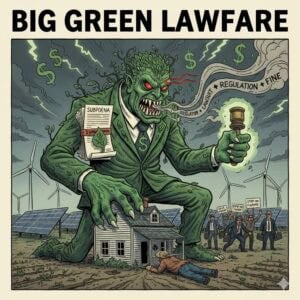 Back in August, we told you FERC had approved Kinder Morgan’s $5.2 billion pair of Southeast pipeline projects, and we told you to expect Big Green to come after it (see
  Five weeks. Same number. The Marcellus/Utica held at 33 rigs again for the week ended October 2, while the national count finally blinked, slipping by one to 598 after three straight weekly gains. Oil rigs up one. Gas rigs down two. Frac spreads inched up again. And the bad news on the price board: natural gas futures gave back last week’s gains, sliding back under $3 to around $2.92 per MMBtu. But the Enverus permit list had a surprise for us, and it’s a good one.
  Thank you for your kind words, thoughts, and prayers last week. My spine surgery last Tuesday went well. The sciatica pain that sent me to the operating table is largely gone. It still lingers a little, but it’s greatly diminished. The pain from the incision, however, was severe at first. It has gotten a little better each day as the swelling goes down and my body heals. I still have miles to go, but at least I’m on the right road.
  The Marcellus/Utica region received 16 new drilling permits last week, September 21 – 27, down 1 from the 17 permits issued two weeks ago. Pennsylvania issued 6 of the new permits. Ohio also issued 1 new permit. And West Virginia issued 9 new permits. The drillers who received new permits last week were: Antero Resources, Ascent Resources, Beech Resources, Expand Energy, and Range Resources.
 For our final
  Every so often the U.S. Energy Information Administration (EIA) publishes something that deserves to be printed out and taped to the wall. This is one of those. To mark America’s 250th, EIA charted the entire history of U.S. energy consumption — from 1776 firewood to 2025 shale gas — and two Pennsylvania milestones show up along the way: Edwin Drake’s first commercial oil well at Titusville in 1859, and the nation’s first full-scale commercial nuclear plant, which came online in the Keystone State in 1957.