 When Appalachian gas prices fall into the basement, EQT turns down the valves, and CEO Toby Rice says the strategy is paying off. In an interview with Reuters on Tuesday, Rice put a dollar figure on it for the first time: a little over $200 million a year in benefit from selling less gas when prices are low and more when they’re high. He also said EQT, the country’s No. 2 gas producer, will pump more gas in 2026 than last year while spending less to do it. Rice talked up the company’s proposed POWER Pipeline to Ohio, its Mountain Valley Pipeline expansions, and a new 10-year LNG supply deal with Lithuania. His outlook for global gas demand is, let’s say, very bullish. Read More “EQT CEO: Shut-Ins Worth $200M a Year; Record Output Coming in 2026”

 Dear MDN Subscriber:
 The front-month October NYMEX natural gas futures contract settled Friday (Sept. 25) at $3.196 per MMBtu, up 28.4 cents, or 9.75%, for the week. That’s a nice week to be long gas. Most of the fireworks came on Thursday, when a leak on TC Energy’s Mountaineer XPress (MXP) pipeline in West Virginia knocked roughly 1.8 Bcf/d of Appalachian takeaway offline and sent futures up 9.06% in a single day, the biggest one-day gain since January (see
  Back in April, we told you the PA Department of Environmental Protection (DEP) had once again extended the three “temporary” air permits for Shell’s ethane cracker plant in Monaca (Beaver County) while the agency slogs through Shell’s full Title V permit application (see
  Four weeks. Same number. The Marcellus/Utica held at 33 rigs again for the week ended September 25, while the national count added four more to reach 599—a new 52-week high for the second week in a row, and one rig shy of 600. Oil rigs up. Gas rigs up. Frac spreads jumped by eight. And the big news on the price board: natural gas futures climbed back above $3, trading around $3.20 per MMBtu. Once again, everything in this report moved except the Marcellus/Utica. But the permit list delivered a plot twist we’ve been waiting for.
 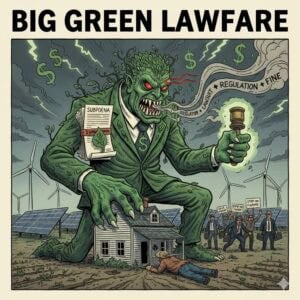 Chatham County, North Carolina’s Board of Commissioners last week unanimously passed a resolution opposing Enbridge Gas North Carolina’s proposed 28-mile natural gas pipeline from Siler City to Moncure. This isn’t a garden-variety “we don’t like it” resolution. It authorizes the county to actively fight the project by challenging environmental permits, teaming up with like-minded groups, working the media, organizing residents, and coaching landowners on how to resist condemnation. In other words, a county government just signed itself up as a Big Green activist group, with taxpayers picking up the tab.
  EQT’s top drilling executive told the
  The Marcellus/Utica region received 17 new drilling permits last week, September 14 – 20, up 1 from the 16 permits issued two weeks ago. Pennsylvania issued 6 of the new permits. Ohio also issued 6 new permits. And West Virginia issued 5 new permits. The drillers who received new permits last week were: Ascent Resources, EOG Resources, EQT, Expand Energy, and Seneca Resources.
 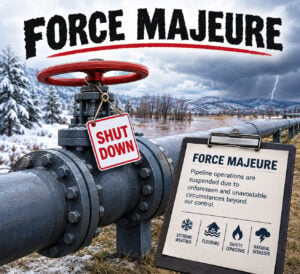 On Thursday morning, a natural gas leak at the Saunders Creek Regulator Station near Milton, WV (Cabell County) forced TC Energy’s Columbia Gas Transmission (TCO) to declare “force majeure” on the Mountaineer XPress (MXP) pipeline, one of the biggest Marcellus/Utica takeaway pipes in the region. Starting with today’s gas day (Friday, Sept. 25), the affected segment of MXP is cut to zero capacity until further notice. TCO estimates the hit to firm customers at 1.8 million dekatherms (MMDth) per day, which is roughly 1.8 billion cubic feet per day (Bcf/d) of Appalachian gas that suddenly needs somewhere else to go. Traders noticed. The October NYMEX futures contract settled up 27.4 cents (+9.06%) at $3.297 per MMBtu, the highest in about three months and the biggest one-day gain since January.
  Boardwalk Pipelines’ Kosciusko Junction Pipeline Project, a 111-mile, 36-inch pipe across Mississippi that will carry Marcellus/Utica gas (and gas from other plays) to Southeast markets, now has all the federal permits it needs. FERC voted to approve the project at its Sept. 10 open meeting. On Sept. 23, the Federal Permitting Council announced that all federal permitting was finished. What’s next? Shovels. Boardwalk’s plan on file with FERC calls for construction to begin in December, about 10 weeks from now, with first gas flowing as early as April 2028.
 Kinder Morgan has a new pipeline project in the works, one MDN has not told you about before, because until yesterday nobody outside the company had heard of it. It’s called the Southeast Connector, and it would run north to south across Middle Tennessee through 10 counties, stitching together two of Kinder’s biggest interstate systems: Tennessee Gas Pipeline (TGP) and Southern Natural Gas (SNG). Kinder VP Allen Fore made the rounds in DeKalb County on Thursday, meeting the county mayor, the Chamber of Commerce, and local media. Land agents may start knocking on doors as early as next week. Target in-service: 2029.
  The Pennsylvania Farm Bureau (PFB) is one of the good guys. Probably 99% of the time, MDN is right there cheering PFB on — for private property rights, for sensible regulation, for keeping Harrisburg off the farmer’s back. But yesterday PFB released a 23-page paper making the case for a “temporary, limited moratorium” on large-scale data center development in Pennsylvania. This is the other 1%. We think PFB is wrong on this one, and we’ll tell you why. Politely. Friends are allowed to disagree.
  MARCELLUS/UTICA REGION: WhiteHawk closes $111M of acquisitions, credit line rises to $175M; OTHER U.S. REGIONS: Renewable advocates worried about influencers and “misinformation” misinform themselves; Hochul to issue $200 energy rebate checks; Is climate activism dead? We went looking for it in New York City; NATIONAL: U.S. natural gas futures rise sharply on pipeline outage; Shale tycoon says Exxon CEO betrayed him in $60 billion deal; Stop Climate Shakedowns Act of 2026; INTERNATIONAL: Crude gains on tight supply signals; Qatar ramps up LNG shipping via Hormuz; A new technology launched for LNG transport.
  An activist hedge fund that has been quietly leaning on Devon Energy since June has now put its demands in writing, and it’s asking for a lot more. Toms Capital Management sent Devon a letter earlier this month urging the company to explore “strategic alternatives, including a sale.” In other words, sell the whole company, not just a few pieces. Toms says it’s now one of Devon’s five largest shareholders. Why do we care here in Appalachia? When Devon swallowed Coterra Energy in May, it got the old Cabot Oil & Gas Marcellus position in Susquehanna County along with it. If Devon itself gets sold, the future of that NEPA gas acreage (and the royalty checks it generates) is up for grabs.