
MDN’s Energy Stories of Interest: Tue, Sep 22, 2026
 NATIONAL: U.S. natural gas futures retreat on cooling weather; Utilities support proposed federal bill to reform judicial review of natural gas pipelines; INTERNATIONAL: Crude falls on Iran diplomacy hopes; Has the oil market changed forever?; Canada sees scope for France LNG partnership, minister says; Qatar says it’s ready to resume LNG operations within weeks of Hormuz reopening; Climate collapse – four billion to perish?; Europe faces ‘decades-low’ winter natural gas storage levels. Read More “MDN’s Energy Stories of Interest: Tue, Sep 22, 2026”
 Three weeks. Same number. The Marcellus/Utica sat at 33 rigs again for the week ended September 18, while the national count added four to reach 595—a fresh 52-week high, topping the 593 we charted on August 14. Oil rigs up. Gas rigs up. Frac spreads up. And WTI closed at $100.74 a barrel with Henry Hub at $2.91. Everything in this report moved except the Marcellus/Utica.
 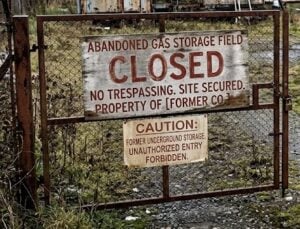 Columbia Gas Transmission (a TC Energy company) has asked federal regulators for permission to permanently walk away from three underground natural gas storage fields straddling the Pennsylvania/West Virginia line near Majorsville — plugging 71 wells, tearing out a compressor station, and abandoning nearly 20 miles of pipe. On September 9, FERC set the clock on its environmental review. If you’re a landowner in Greene or Washington County, PA, or Marshall County, WV, this one lands in your backyard. Here’s the plain-English version of a very technical filing.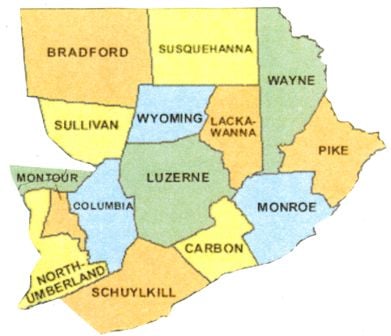
 In a companion post today, we told you that of 22 proposed data center campuses in Northeastern Pennsylvania, exactly one plans to build its own gas-fired power (see Only 1 of 22 NEPA Data Centers Plans Its Own Gas Plant). The Pittsburgh Post-Gazette hands us the mirror image. Reporter Anya Litvak counted 10 new natural gas power plants proposed within an hour’s drive of Pittsburgh — more than 20 gigawatts (GW) of new capacity, most of it chasing data center demand, all of it aimed at the next five years. Pennsylvania’s entire existing generating fleet, every power plant and wind turbine and solar panel in the state, adds up to about 45 GW. Southwestern PA alone is proposing to add 22 GW. That is not an expansion. That is a second Pennsylvania grid.
 The Marcellus/Utica region received 16 new drilling permits last week, September 7 – 13, down from the 28 permits issued two weeks ago. Pennsylvania issued 13 of the new permits. Ohio issued 3 new permits. And West Virginia issued no new permits. The drillers who received new permits last week were: CNX Resources, EOG Resources, EQT, Infinity Natural Resources, and Range Resources.
  It’s a sellout, and we now have the full scorecard. On Tuesday, the Bureau of Land Management (BLM) auctioned drilling rights to 40 parcels of federal minerals under Ohio’s Wayne National Forest (WNF), and every parcel found a buyer. The 2,776.84 acres in Monroe and Washington counties brought $11,097,693 in total receipts. Five companies won leases, and one of them, Apex Energy Operating III LLC, walked off with nearly two-thirds of the acreage. We have BLM’s full parcel-by-parcel results, embedded below. It’s the first federal lease sale in the WNF since March 2017.
  DeepRock Disposal Solutions wants two of its Noble County, Ohio, injection wells back in service — and the Ohio Department of Natural Resources (ODNR) keeps saying no. ODNR’s Division of Oil and Gas Resources Management shut the Travis and Warren wells in January 2023, blaming them for a 2021 brine eruption that cost the state $1.28 million to clean up. DeepRock argued its case at a hearing in April. It lost. The division chief issued a fresh order on July 31 continuing the suspension, and on Aug. 28 DeepRock appealed to the Ohio Oil and Gas Commission. Here’s the part our readers should circle on the calendar: under Ohio Administrative Code, DeepRock has 120 days from that July 31 order — until roughly Nov. 28 (our count) — to submit a plan fixing what the division found, or plug both wells permanently.
  Precision Drilling, the Calgary-based rig contractor that says it’s the #2 drilling company-for-hire in the Marcellus, announced on Sept. 16 that it will keep buying back its own stock for another year. Yawn, right? Stick with us. The buyback is the boring part. The interesting part is the investor presentation Precision put out this month, which lays out why the company thinks gas drilling for LNG exports will keep its rigs busy for years, and why the price of renting a rig is heading up.
  Shale Insight 2026
 Yesterday it was a Reuters rumor. This morning it’s official. National Fuel Gas Company (NFG) says its board will decide by October 15 whether to split the 124-year-old company in two. One half would be a brand-new, publicly traded Marcellus/Utica driller made up of Seneca Resources and the NFG Midstream gathering business. The other half, which keeps the National Fuel name, would be a 100% regulated utility and pipeline company. If the board says yes, NFG shareholders would get shares in the new driller, tax-free.
  It finally happened. Chord Energy, the Bakken-focused driller that inherited a big non-operated slice of the northeast Pennsylvania (NEPA) Marcellus when it bought Enerplus in 2024, has found a buyer. That buyer is POSCO International, the trading and energy arm of South Korean steel giant POSCO. The price is $550 million. MDN first told you in February 2025 that Chord was thinking about selling this asset, and in July 2025 that it was actively shopping it (see links below). The deal covers approximately 32,000 net acres and trailing 12-month (TTM) production of approximately 121 MMcf/d (MMcf/d means million cubic feet per day). The gas is all “residue” gas, meaning dry gas with no NGLs (natural gas liquids like ethane and propane).
  NextEra Energy took its $13 billion, 3,750-megawatt (MW) East Riverside Energy Center to the people on Tuesday night, and the people showed up. Hundreds of Fayette County residents filled Brownsville Area High School for their first look at what would be one of the largest gas-fired power plants in the country. They got poster boards, experts to chat with, and a five-minute slideshow every hour. What they didn’t get was a microphone for questions. We picked up a few new details, including one that producers and pipeline companies should read twice.