
Bradford County | Devon Energy | Education | Energy Companies | Energy Services | Industrywide Issues | Jobs | Lackawanna County | Luzerne County | Pennsylvania | Susquehanna County | Williams | Wyoming County (PA)
Devon, Williams Top PA Intern List; Who Inherits That Bench?
 Devon Energy and Williams spent the last week of July doing something that doesn’t show up on a reserve report: teaching northeastern Pennsylvania teenagers how the gas business actually works. Then, on July 30, the Pennsylvania Chamber Foundation named both companies “Greatest Places to Intern in PA.” Six days later, Devon CEO Clay Gaspar told analysts he’s fielding “no shortage of incoming phone calls” about which assets he might sell — with the Marcellus at the top of everybody’s list. Which raises a question nobody on Wall Street is asking: who inherits the workforce machine? Read More “Devon, Williams Top PA Intern List; Who Inherits That Bench?”
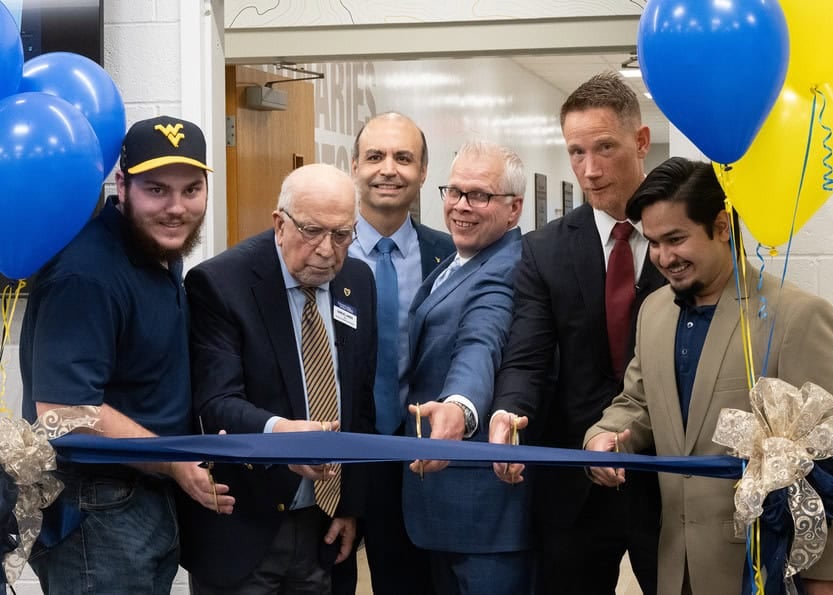
 U.S. Secretary of the Interior Doug Burgum visited Lackawanna College yesterday to observe how students are trained for energy-focused careers in natural gas, petroleum, and robotics. He emphasized that these students will contribute to the growth of key industries, creating significant career opportunities. Burgum, joined by Congressmen Rob Bresnahan and Dan Meuser, commended the college’s programs and shale industry-donated equipment, highlighting their role in an American renaissance driven by energy, innovation, and manufacturing. He also discussed how data centers, or “AI manufacturing,” could utilize Pennsylvania’s Marcellus Shale natural gas to generate electricity, bringing economic benefits and lowered utility costs, drawing parallels to his experience in North Dakota.
  Our friend Bill desRosiers, Manager of Government and External Affairs at Coterra Energy, has authored an excellent article and white paper addressing the topic of how the oil and gas industry can use virtual reality (VR) to attract new blood to the industry. The oil and gas industry is facing a significant workforce challenge: nearly 400,000 U.S. energy workers are nearing retirement, while younger generations remain hesitant to enter the field. In spring 2025, Coterra partnered with Xalter to deploy a multi-state pilot VR program to prepare the next generation of energy workers. Bill draws back the curtain to discuss the company’s experience in using VR for training and to attract new talent to the company.
  We chalk this story up to the category, “We’re winning, and here’s more proof.” When, in your wildest dreams, would you ever think the lefty libs at the University of Pittsburgh (who HATE shale energy and fossil fuels) would launch a degree program for undergraduates that combines natural gas, oil, and unreliable renewables? We thought, NEVER! But that’s just what has happened. The school is launching an “all of the above” engineering degree, allowing students to “move seamlessly between industries.” Get them trained in both fossil fuels and so-called green energy for when the day arrives that fossil fuels are finally dead and green energy rules the land. (Which is when hell freezes over.)
  Pennsylvania’s community colleges stand to be big winners in the data center sweepstakes. In January, MDN brought you the news that TECfusions, based in Tampa, Florida, had purchased 1,395 acres in Upper Burrell (Westmoreland County), PA, for a groundbreaking data center project called TECfusions Keystone Connect (see
 Now we’re teaching our kids how to become eco-terrorists? In Ohio?? It seems the answer to that is YES. Ohio State University (OSU) has a geography class that teaches “the political economy of climate change and the political philosophy of climate justice.” One of the books to be used in the course is: “How to Blow Up a Pipeline.” Ring any bells? There was a movie released with the same title last year (see
  If you’re a high school senior in Ohio looking for help paying for advanced education or training — whether it’s college, university, technical or trade school — listen up! The Ohio Natural Energy Institute (formerly called the Ohio Oil and Gas Energy Education Program, or OOGEEP) is now accepting
  Antero Resources and Antero Midstream have donated a massive $4 million to West Virginia University’s Benjamin M. Statler College of Engineering and Mineral Resources to help train the next generation of petroleum and natural gas engineers. Antero’s gift is the largest philanthropic donation to the school to date. It will support undergraduate and graduate students in the petroleum and natural gas engineering program.
 West Virginia University (WVU), the Mountain State’s public research university, is located in Morgantown, WV. Enrollment at all of WVU’s campuses at one point almost touched 30,000 students. Big university–important university. WVU has a major Petroleum and Natural Gas Engineering program as part of the school’s Benjamin M. Statler College of Engineering and Mineral Resources. However, WVU has a budget problem. Enrollment has been down some 5,000 students from 2014. That’s 5,000 fewer students paying tuition, resulting in a $45 million budget shortfall. So the school is cutting faculty and staff, and in some cases, eliminating programs like creative writing and foreign language studies.
 This is deeply disturbing and angering. The State of New Jersey passed a law in 2020 (signed into law by Phil Murphy) that requires forced teaching (i.e., brainwashing) of so-called climate change (man-made catastrophic global warming and fossil fuels are evil) to the state’s children in grades kindergarten through 12th. We have descended into full Communism. The brainwashing even happens in (of all places) ceramics class! How do you work the fairy tale of global warming into ceramics? By sculpting a crayfish on a clay tile, a species supposedly endangered by global warming. No wonder the students in other countries routinely do better than our students. This is true insanity.
 The Ohio Oil and Gas Energy Education Program (OOGEEP), which has long been a defender and educator working to get the truth out about oil and gas in the Buckeye State, is dropping oil and gas from its name. OOGEEP is rebranding itself as the Ohio Natural Energy Institute. We have to wonder, why are they dropping oil and gas from the name? What does natural energy actually mean?
