
Riverkeeper Claims Dead Philly LNG Project has Come Back to Life
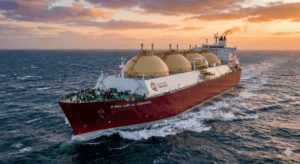 In early 2024, we reported that Penn America Energy CEO Franc James, the potential builder of the proposed Penn America LNG export facility in the Philadelphia area, said that he “pumped the brakes” on the project but that it wasn’t dead yet (see Penn LNG CEO Says Philly Export Project on Hold, “Not Dead Yet”). This past February, MDN reported that the developer, Penn America Energy Holdings LLC, had reportedly been dissolved (see Potential Philadelphia LNG Export Facility Appears to be Dead). While some individual entities may still exist, the core organization responsible for advancing the project is no longer active in its original form. However, THE Delaware Riverkeeper held a webinar on Wednesday evening and made some wild claims: That Penn LNG is alive and kicking and has a “secret plan” to build in a new location along the Delaware River. Read More “Riverkeeper Claims Dead Philly LNG Project has Come Back to Life”
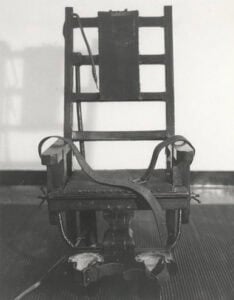 The name Philadelphia Gas Works (PGW) pretty much says it all. PGW is a natural gas utility serving the Philly region. PGW is the country’s oldest and largest municipal-owned gas company, serving 500,000 customers. It’s NOT an electric company; it’s a natural gas company. Yet PGW is now seriously considering two strategies to reduce “carbon emissions” as part of its Low Carbon Pathways project. The first option involves full electrification, shifting from natural gas to electric systems for heating, cooking, and appliances. Again, PGW has ZERO electric infrastructure in place. In Philadelphia, PECO (formerly the Philadelphia Electric Company) is the sole local utility company responsible for delivering electricity. In other words, PGW is considering committing suicide (going out of business) by giving all of its business to PECO. Bring out Old Sparky.
  Earlier this week, MDN told you that WhiteHawk Minerals (formerly WhiteHawk Energy), a natural gas mineral and royalty interest owner in the Marcellus and Haynesville plays, with over 3.4 million gross acres under lease for drilling, started trading its stock following a $200 million IPO (see
  The Philadelphia Gas Commission, for a second time, has postponed a vote on Philadelphia Gas Works’ (PGW) $182 million proposal to replace and expand its natural gas liquefier (LNG plant) in Port Richmond. The commission’s staff and the Public Advocate recommend rejecting the project, arguing it is oversized and could burden customers with unnecessary debt. They also cite incomplete plant and project designs. PGW argues the upgrade is crucial for safety and affordability, preventing potential harm to customers during cold winters and avoiding the need to truck in liquefied natural gas (LNG). Instead of approving the project, the Commission voted to spend $1 million on an environmental impact study and $4 million for an engineering study. That is, they voted to procrastinate.
  The Philadelphia Gas Commission postponed a vote on Philadelphia Gas Works’ (PGW) $182 million proposal to replace and expand its natural gas liquefier (LNG plant) in Port Richmond. The commission’s staff and the Public Advocate recommended rejecting the project, arguing it was oversized and could burden customers with unnecessary debt. They also cited incomplete plant and project designs. PGW argued the upgrade is crucial for safety and affordability, preventing potential harm to customers during cold winters and avoiding the need to truck in liquefied natural gas.
  In early 2024, we reported that Penn America Energy CEO Franc James, the potential builder of the proposed Penn LNG export facility in the Philadelphia area, said that he “pumped the brakes” on the project but that it wasn’t dead yet (see
 One day before Constellation Energy’s Eddystone Generating Station in Delaware County, PA, was due to close its remaining two units, the Trump Department of Energy (DOE) stepped in and ordered the plants to remain active based on Trump’s declaration of an energy emergency across the country (see
 When referring to Big Green groups in Pennsylvania and elsewhere, we often refer to the groups as “colluding,” meaning they coordinate their legal and public relations attacks against fossil fuel companies. It is something we have long suspected but (unfortunately) can’t prove definitively. Somebody is about to prove it. Several of these groups, including POWER Interfaith, Sierra Club, Physicians for Social Responsibility Pennsylvania, Clean Air Council, Vote Solar, PennEnvironment, and the Pennsylvania Public Interest Research Group, attacked a recent proposal by Philadelphia Gas Works (PGW) to raise rates. PGW is asking the PA Public Utility Commission (PUC) to order these groups to provide internal communications that would prove they have been colluding together.
  We have some important new information regarding the proposed Penn LNG export facility in the Philadelphia area.
  Big Green, particularly the New Jersey chapter of the odious Sierra Club, persists in trying to convince the general public that unreliable renewables (solar and wind) are less expensive than alternatives like natural gas. That’s simply a lie (see
 The name Philadelphia Gas Works (PGW) pretty much says it all. PGW is a natural gas utility serving the Philly region. It’s not an electric company; it’s a natural gas company. So, it will probably come as no surprise that PGW belongs to a trade organization called the American Public Gas Association (APGA). Indeed, PGW is the largest member of the APGA. And it would probably not surprise you to learn that the APGA supports President Trump’s efforts to pause and defund much of the money not already distributed from the misnamed Inflation Reduction Act (IRA), which was Biden’s Green New Deal aimed at using billions of OUR taxpayer dollars to try to destroy fossil energy, including natural gas. The swampy left, including its apologists in the media (i.e., PBS), are trying to shame PGW into dropping its membership in the APGA, implying PGW is (via APGA) opposed to having its business destroyed using $700 million from the IRA earmarked for Philly. Imagine that!
 Earlier this week, MDN told you about the final chapter in the tragedy of the Philadelphia Energy Solutions (PES) Refining Complex (see