
DC Circuit Backs FERC on Enbridge’s East Tennessee Gas Upgrade
 Here’s a pipeline fight where the bad guys aren’t the greens. Last Friday, the U.S. Court of Appeals for the D.C. Circuit sided with the Federal Energy Regulatory Commission (FERC) and Enbridge subsidiary East Tennessee Natural Gas (ETNG), tossing out a challenge brought not by environmental radicals but by the pipeline’s own customers — a group of small-town gas utilities in Tennessee, Virginia, and Alabama who said they were being stuck with the bill for an upgrade they never asked for. Read More “DC Circuit Backs FERC on Enbridge’s East Tennessee Gas Upgrade”
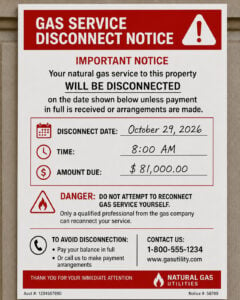 Ohio pumped roughly 2 trillion cubic feet of natural gas out of the ground last year, most of it from the Utica Shale. And yet 43 families in Washington County are being told to find another way to heat their homes by October 29 — because the wells that feed their gas line are running out of gas. The Marietta Times and the Parkersburg News & Sentinel both reported last week that Knox Energy has notified 43 customers in the Belpre area that their natural gas service ends October 29. The reason isn’t a billing dispute or a rate case. It’s geology.
  The name Philadelphia Gas Works (PGW) pretty much says it all. PGW is a natural gas utility serving the Philly region. PGW is the country’s oldest and largest municipal-owned gas company, serving 500,000 customers. It’s NOT an electric company; it’s a natural gas company. Yet PGW is now seriously considering two strategies to reduce “carbon emissions” as part of its Low Carbon Pathways project. The first option involves full electrification, shifting from natural gas to electric systems for heating, cooking, and appliances. Again, PGW has ZERO electric infrastructure in place. In Philadelphia, PECO (formerly the Philadelphia Electric Company) is the sole local utility company responsible for delivering electricity. In other words, PGW is considering committing suicide (going out of business) by giving all of its business to PECO. Bring out Old Sparky.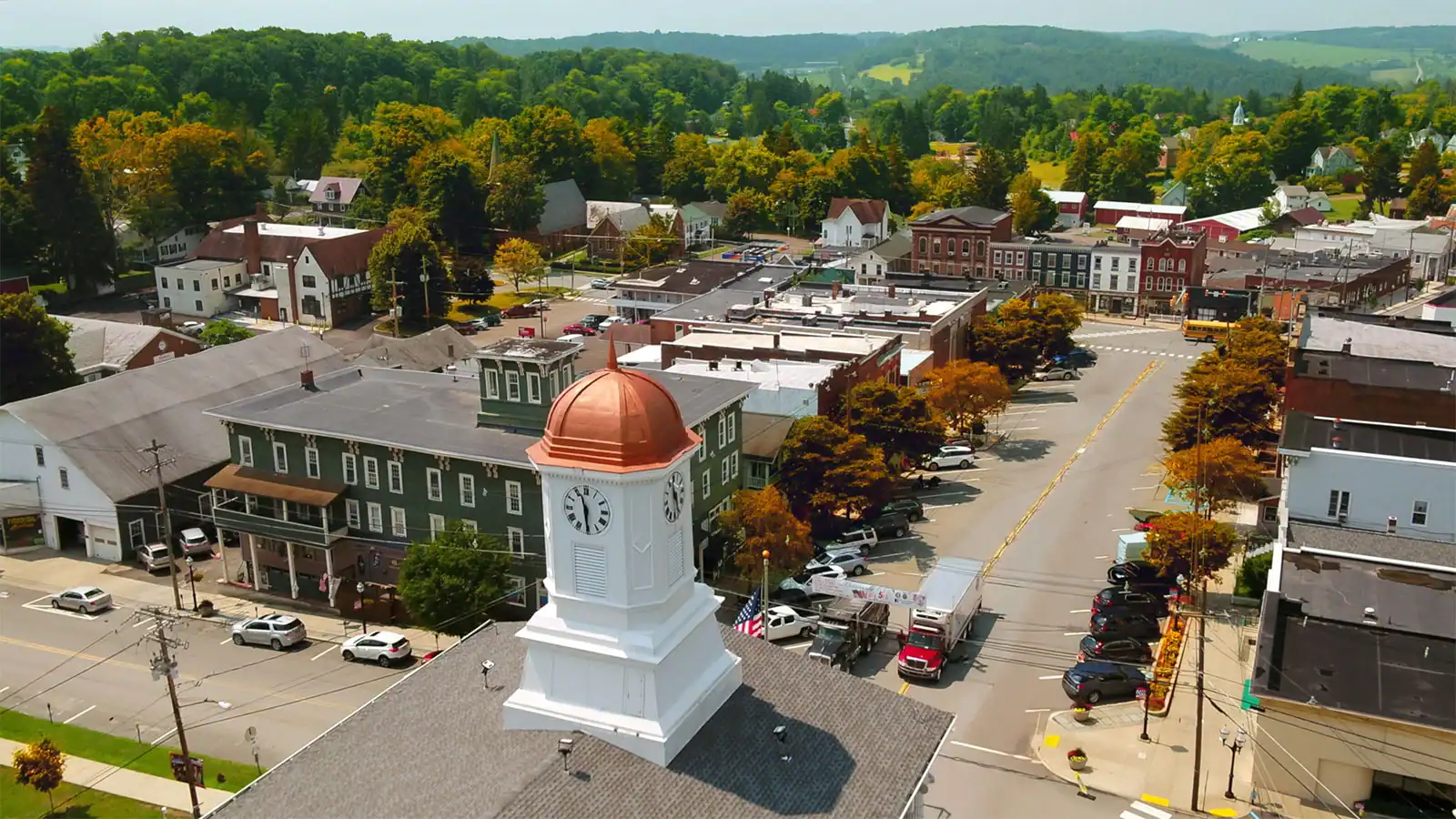
 Yesterday, MDN brought you the big news that NextEra Energy and Dominion Energy will combine in an all-stock transaction, creating the world’s largest regulated electric utility business serving approximately 10 million customer accounts across Florida, Virginia, North Carolina, and South Carolina (see
  This is HUGE and breaking news… NextEra Energy and Dominion Energy announced this morning that they will combine in an all-stock transaction, creating the world’s largest regulated electric utility business serving approximately 10 million customer accounts across Florida, Virginia, North Carolina, and South Carolina. The combined entity, operating under the NextEra Energy name, will be over 80% regulated and benefit from enhanced scale, efficiency, and diversified growth. How much is NextEra paying for Dominion?
  Once again, Pennsylvania Governor Josh Shapiro is attacking the energy industry, this time setting his sights on utility companies that he falsely claims are “unfairly increasing their rates and needlessly raising costs for Pennsylvanians.” Shapiro has hired a radical National Resources Defense Council (NRDC) attorney to serve as his lapdog (Special Counsel for Energy Affordability) to attack utility companies, forcing them into bankruptcy, particularly by pressuring them to use unreliable renewables instead of cheaper fossil fuels.
 One of the great ironies of the Marcellus Shale is that THE TOP two natgas-producing counties in the state, Susquehanna (#1) and Bradford (#2), both of which are rural, don’t, for the most part, offer the gas extracted from under their residents to their residents for everyday use. It costs a lot of money to run local distribution pipelines to homes and businesses for natural gas. Leatherstocking Gas Company is on a mission to change that. Leatherstocking provides natural gas utility service in Susquehanna and Bradford to some 500+ customers. More customers will soon be added to Leatherstocking’s service in Wyalusing (Bradford County) following a recent PIPE grant.
  We simply could not believe this when we read it. We had to re-read it several times to be sure our eyes weren’t lying. Massachusetts Governor Maura Healey is responsible for blocking new natural gas pipelines from entering her state, as she previously bragged but then denied (see
  The rapid expansion of data centers, driven by AI and cloud computing, is creating a surge in energy demand that exceeds renewable capabilities, forcing a shift toward natural gas. Good news for the Marcellus/Utica. However, building new pipelines to handle the extra gas needed is not an overnight process. Industry experts at the recent LDC Gas Forums’ Nat Gas to Power event proposed an ingenious solution that uses existing pipelines to move more gas to new data center customers.
  Earlier this morning, National Fuel Gas Company, a large utility company headquartered in the Buffalo, NY area with both upstream and midstream subsidiaries (Seneca Resources and NFG Midstream), announced a deal with CenterPoint Energy to acquire CenterPoint’s Ohio natural gas utility business (CNP Ohio) for $2.62 billion. The deal includes 5,900 miles of distribution and transmission pipelines and serves approximately 335,000 residential, commercial, industrial, and transportation customers that consume approximately 60 Bcf of natural gas per year. The deal significantly increases NFG’s gas utility customer base, from roughly 750,000 to well over 1 million.
  Over the past year, gas utilities have increasingly targeted data centers as customers for on-site power generation, driven by rising demand from hyperscale, leased, and crypto-mining facilities, particularly in Ohio, Pennsylvania, and Texas. Companies, including Atmos Energy, Chesapeake Utilities, National Fuel Gas, and Enbridge, have signed agreements to supply gas or build pipelines to co-located gas-fired or converted coal-to-gas plants. Utilities view medium-sized data centers as a “sweet spot,” but face hurdles such as limited pipeline capacity, equipment backlogs, and coordination challenges across the gas value chain. Smaller turbines and fuel cells are increasingly used, though supply constraints remain a concern.
  Data center projects are sprouting like dandelions in Pennsylvania. Along with these data centers come work and business opportunities for the oil and gas industry and related industries, such as utilities. Here’s an example. Essential Utilities yesterday announced its subsidiaries will invest $26 million in a major data center project in Greene County, PA. Essential is one of the largest publicly traded water, wastewater, and natural gas providers in the U.S., serving approximately 5 million people across 9 states under the Aqua and Peoples brands. Both brands are involved in this announcement.
  Leatherstocking Gas Company, a subsidiary of Corning Energy Corporation, runs gas mains to residents and businesses in small, mainly rural communities in northeastern Pennsylvania (see