
Md. Gov. Moore Skips Data Center Moratorium, Adds Task Force Instead
 Maryland Gov. Wes Moore took the podium in Annapolis last week and did something that disappointed just about everybody: he did NOT slap a moratorium on new data centers. Instead, he signed an executive order (EO) that creates a new state task force to grade data center projects, a public “dashboard” to track them, and a ban on secret deals between state agencies and developers. He also wants lawmakers to kill a 2020 sales tax break for data centers. The antis at Food & Water Watch (FWW) are grumbling that it’s not enough. What they REALLY want to kill is the gas-fired power plants that would keep the lights on. Read More “Md. Gov. Moore Skips Data Center Moratorium, Adds Task Force Instead”
 Appalachian spot natural gas prices just fell off a cliff. Texas Eastern M-2 — the benchmark hub for Marcellus/Utica gas — dropped 41.5 cents to average $1.245/MMBtu for weekend and Monday deliveries, with some trades printing as low as $1.020, according to NGI (
 It’s that time of year again. Cove Point LNG, the Berkshire Hathaway-operated export terminal on the Maryland shore of the Chesapeake Bay, is heading into its annual maintenance turnaround — and when the plant goes down, roughly 850 million cubic feet per day (MMcf/d) of demand for Marcellus/Utica gas simply evaporates. MDN has obtained the official notice from pipeline operator BHE GT&S laying out exactly what happens and when.
  Forward natural gas prices for this coming winter at the Cove Point LNG terminal in Maryland have gone parabolic — and if you produce, gather, or transport Marcellus/Utica gas, you should care, because the pipes behind this story are the same pipes you use every day. A quick primer: a ‘forward price’ is what buyers and sellers agree today to pay for gas delivered on a future date — think of it as locking in a price months ahead of time. When forward prices spike, it means the market is already betting on tight supply or high demand down the road.
  There’s a brand-new pipeline project on the board for our region, and it’s a good one. Eastern Gas Transmission and Storage (EGTS) — a BHE GT&S company, which means it ultimately belongs to Warren Buffett’s Berkshire Hathaway Energy — is proposing Project Oak Leaf, a 52.5-mile expansion of its PL-1 system that will move an extra 250,000 dekatherms per day (Dth/d) of natural gas from Clinton County, Pennsylvania down to customers in Maryland and Virginia. (A dekatherm is a heat measurement roughly equal to one thousand cubic feet of gas, so call it about 250 MMcf/d — 250 million cubic feet per day.) EGTS plans to file its application with the Federal Energy Regulatory Commission (FERC) in the fourth quarter of this year, with construction starting in early 2028 and gas flowing by the end of 2029. The Frederick (MD) News-Post picked up the story yesterday. Four public open houses are already on the calendar, the first one next week.
  In March, we told you about a deal made by Maryland Eastern Shore developer TeraWulf to acquire the retired Morgantown Generating Station in Charles County (on the Potomac River), proposing to transform the site into a massive natural gas-powered data center campus (see
  AlphaGen (Alpha Generation LLC) is one of the largest independent power producers in the United States, majority-owned by ArcLight Capital Partners. It owns and operates a massive portfolio of critical power infrastructure—including natural gas-fired and floating power stations—to meet rising energy demand driven by grid electrification and data centers. Yesterday, AlphaGen and ArcLight announced they have acquired Brandywine Power, a 250 MW natural gas combined-cycle generating facility in Prince George’s County, Maryland, from Onward Energy Holdings. The plant is fed by Marcellus/Utica molecules.
 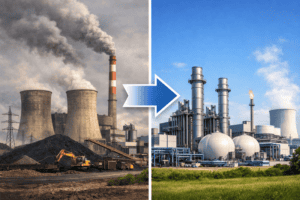 Eastern Shore developer TeraWulf has reached a deal to acquire the retired Morgantown Generating Station in Charles County (on the Potomac River), proposing to transform the site into a massive natural gas-powered data center campus. The plan aims to generate one gigawatt (GW) of power and 500 megawatts of battery storage, bypassing the aging regional grid. While TeraWulf claims support from Governor Wes Moore’s administration, the project faces intense scrutiny from environmental groups and local residents concerned about fossil fuel emissions and transparency. Critics also question the financial stability of the cryptocurrency-focused firm, though company leadership maintains they have the expertise to remediate the site.
  This is one of those “man bites dog” stories. When was the last time you heard about Democrat state legislators from one of the bluest of blue states voting to roll back funding for “green” programs in order to save money? Yeah, like NEVER. At least, until now. Funny how even Dems will throw their precious green philosophies out the window if their job (getting reelected) is on the line. That’s what is happening in Maryland.
  Last week, MDN told you that Maryland State Senator Kevin Harris (Democrat) had recently introduced legislation allowing Big Utilities, such as Exelon, to build and operate power-generation infrastructure using ratepayer funds. We also presented the counterargument to re-regulating what is now a deregulated power market in Maryland (see
  Last October, the Maryland Public Service Commission (PSC) accepted applications for large-scale power projects, also known as “dispatchable” generation, that can provide energy quickly during periods of peak demand under the state’s Next Generation Act (see
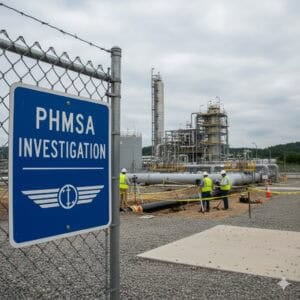 Federal safety officials are investigating leaks of ethane near two small underground storage tanks at the Cove Point LNG export terminal in Maryland and have requested that they be taken out of service immediately, citing potential safety concerns. The cause of the leak appears to be related to the tanks or their piping. However, Cove Point LNG, a facility owned and operated by a Berkshire Hathaway Energy subsidiary, maintains that the 40-gallon tanks are “safe to operate under the current conditions” and that the leaks have never posed an unsafe condition for employees or the community. The Pipeline and Hazardous Materials Safety Administration (PHMSA) issued a proposed safety order in mid-October, and the company has requested an informal consultation to discuss it.
  Each fall, typically in September/October, Cove Point LNG (along the shore of Maryland) shuts down for a few weeks for annual maintenance. According to a notice posted on the Berkshire Hathaway Energy Informational Postings website, reductions in flows to the Cove Point facility would happen between Monday, September 15, and Friday, October 10 (see
  The State of Maryland opened the door on Tuesday to a program that could, theoretically, fast-track energy projects through the state’s regulatory process in hopes of boosting the amount of power generated in the state. For the next 30 days, the Public Service Commission (PSC) will accept applications for large-scale power projects, also known as “dispatchable” generation, which can provide energy quickly during periods of peak demand. The problem is that this effort is merely window dressing. It’s a pretense. No major new natural gas power plants will be built in the state.