
MDN Was Right: Alpha Compute Data Center Is in Tioga County
 A month ago, we took a press release that pointedly refused to name a county, did some division on a tax-assessment number buried in the fine print, and concluded that Alpha Compute Corp.’s (Nasdaq: ALP) proposed 200-megawatt gas-fired AI data center was headed for Tioga County (see MDN Sleuths Out Location of New 200 MW PA Gas Data Center Project). Yesterday, Alpha Compute said it out loud. Tioga County it is. But the confirmation isn’t the real news here. The real news is that the people selling the land and minerals have agreed to finance $47 million of the $55 million purchase price themselves. Read More “MDN Was Right: Alpha Compute Data Center Is in Tioga County”
 Last week we told you Dominion Energy cleared its first hurdle for the monster 3,000-megawatt (3 gigawatt) Cumberland Energy Center in Cumberland County, Virginia (see
  A federal judge in Knoxville has thrown out the environmental review behind the Tennessee Valley Authority’s $2.5 billion Kingston gas plant — and almost nobody has seen the ruling, because it’s sealed. We pulled the public docket and found the whole story hiding in TVA’s own court filings. On August 31, U.S. District Judge Curtis L. Collier granted partial summary judgment to Appalachian Voices, the Center for Biological Diversity, and the Sierra Club, represented by the Southern Environmental Law Center. The judge vacated TVA’s Environmental Impact Statement (EIS) and Record of Decision (ROD) for the plant, which is replacing nine coal units at the old Kingston Fossil Plant in Roane County, Tennessee — the site of the infamous 2008 coal ash spill.
  The hill above Homer City now has more people working on it than the borough below has living in it. Homer City Generation dropped a Labor Day announcement on Friday: more than 1,800 direct-hire tradespeople and skilled contractors are on site building the 4.4-gigawatt (GW) gas-fired plant and data center campus rising from the bones of what was once Pennsylvania’s largest coal-fired power station. The borough of Homer City has roughly 1,800 residents. That’s a nice bit of symmetry, and it says more about what this project means to Indiana County than any press release paragraph could.
 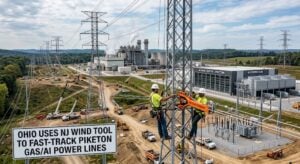 Ohio has asked PJM to dust off a rarely used piece of grid-planning machinery — a tool invented to string wires to offshore wind farms — and use it instead to speed up $4.2 billion in new high-voltage power lines to the 10-gigawatt SoftBank data center and gas plant complex at Piketon. We got our hands on the letter. It’s dated June 15, 2026, from PUCO Federal Energy Advocate Sarah J. Parrot to PJM President and CEO David E. Mills, and it’s been sitting quietly for nearly three months. It surfaced this week because PJM is briefing its Transmission Expansion Advisory Committee (TEAC) on the request today, Sept. 8, to use the “state agreement approach.”
  Pennsylvania’s utility regulators just told the General Assembly what Marcellus drillers have been saying for two years: the electricity business is about to get very busy, and natural gas is going to be the one doing the heavy lifting. On Tuesday, September 1, the Pennsylvania Public Utility Commission (PUC) released its annual Electric Power Outlook for Pennsylvania, this one covering 2025 through 2030. The report is required by state law — the PUC has to collect demand forecasts from the state’s 11 electric distribution companies (EDCs, the utilities that run the poles and wires to your house) and hand a summary to the Legislature and the Governor every September. Usually it’s a snoozer. Not this year.
  Two weeks ago, we told you Net Power had pivoted to building plain old gas plants and would worry about the carbon dioxide later (see
  Fayette County, Pennsylvania, spent six months quietly chasing NextEra Energy’s giant gas plant, and now that it’s landed, county officials are publicly sharing their support. Two follow-up stories — one from the Pittsburgh Business Times, one from Salena Zito at the Washington Examiner — fill in a lot of what we didn’t have yesterday about the East Riverside Energy Center. Including who is actually going to own the thing. Hint: it isn’t NextEra.
  Anti-drilling group Protect PT has opened a new front against the biggest gas-fired AI project in Westmoreland County, Pennsylvania. On Aug. 25, Protect PT and two Upper Burrell residents — Allen Uhler and Guy Fuller — filed a land use appeal in Westmoreland County Court challenging the township supervisors’ approval of TECfusions’ work at the former Alcoa/Arconic research campus. Notably, the appeal doesn’t attack the gas turbines or the Marcellus wells feeding them. It attacks a piece of paper. Or rather, the absence of one.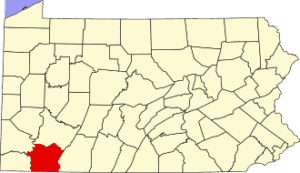
 A new report from two respected energy economists puts a number on something MDN readers have watched play out all year: PJM’s capacity market is broken, and it’s about to cost ratepayers billions — while creating a wide-open lane for reliable Marcellus/Utica gas. The National Center for Energy Analytics (NCEA) published “Regional Transmission Organizations: Problem or Solution?” on August 27. Authors Jonathan A. Lesser (president, Continental Economics) and Brent Bennett (policy director, Life:Powered/Texas Public Policy Foundation) dig into why RTOs (Regional Transmission Organizations) like PJM — the grid operator covering all or part of 13 mid-Atlantic states, including Pennsylvania, Ohio, and West Virginia — are struggling to keep the lights on at a price anyone wants to pay.
 A pile of poster boards in a YMCA gymnasium is not usually where you find the most important number in a $33 billion project. But on Aug. 27, at the Pike County YMCA in Waverly, Ohio, an SB Energy executive told a Columbus Dispatch reporter something that ought to get every Utica producer’s attention: the turbines are already bought. Not ordered. Not “in negotiations.” Bought — for the first phase of what will be the largest gas-fired power plant in American history.
  Back in May we told you Dominion Energy had brass you know what announcing a monster 3,000-megawatt (3 gigawatt) gas-fired power plant in Cumberland County, Virginia, while its much smaller Chesterfield peaker project was still stuck in the mud after three years of green lawfare (see
  The government of New Brunswick, Canada, granted conditional approval last Friday for a 500-megawatt natural gas power plant that provincial officials say is needed to keep the lights on and prevent rolling blackouts within two years. The Canadian Press story that broke the news never asked the obvious question — the one a half-dozen readers asked in the comments section instead. Where does the gas come from? Answer: Appalachia. Or Qatar. Anywhere, really, except New Brunswick, which has outlawed fracking since 2014.
  Nineteen months after TECfusions bought the old Alcoa research campus in Upper Burrell (Westmoreland County), PA, and promised to build 3 gigawatts of gas-fired AI computing capacity, the company announced yesterday that the site is live and delivering GPU capacity to a paying customer. It’s a small first bite of a very large apple—but it’s real, it’s running on gas turbines today, and it sits on top of Marcellus wells the company already owns.