
Chesapeake Floats Reverse Stock Split – Turn 200 Shares into 1
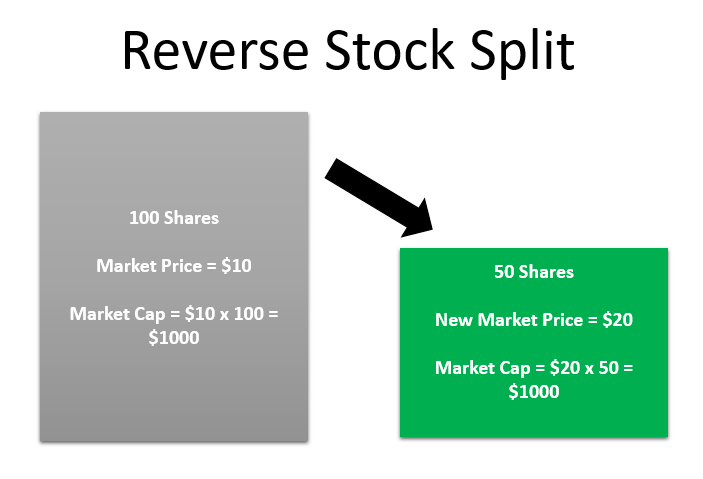 Last December the New York Stock Exchange sent Chesapeake Energy an official notification that the company’s stock price has fallen below the $1/share threshold for more than 30 consecutive trading days and because of it, Chessy’s stock will be delisted from the exchange–unless it can boost the share price within a certain period of time (see NYSE Warns Chesapeake Energy Stock to be Delisted…Unless). Speculation immediately began that Chessy would do a reverse stock split–combining multiple shares into a single share, thereby boosting the price of the remaining shares. Yesterday Chesapeake announced they will ask shareholders to approve such a reverse split.
Read More “Chesapeake Floats Reverse Stock Split – Turn 200 Shares into 1”


 For months MDN has brought you bits and pieces of news from individual drillers, detailing plans to cut back on spending for new drilling in the Marcellus/Utica in 2020. It’s not just happening in the M-U–it’s happening across the country. The experts at RBN Energy have a terrific new post that pulls information about major drillers scaling back into one place. They analyze spending by three different groups of drillers: oil-focused, diversified, and gas-focused drillers. In the third category, all but one of the gas-focused drillers have major operations in the M-U. The stats are sobering. As a collective group, M-U gas drillers have pledged to cut their 2020 budgets 25% from the already-lower spending that happened this year. Ouch.
 Last week Chesapeake Energy received a notification from the New York Stock Exchange that its shares of stock have fallen below the $1/share threshold for more than 30 consecutive trading days and because of it, Chessy’s stock will be delisted from the exchange. Unless. Unless they can get the per share price over the $1/share average in a certain period of time. Chesapeake has responded they are taking several actions, the most relevant/likely being a reverse stock split.
 Masquerading as a nonpartisan, independent nonprofit, the Institute for Energy Economics and Financial Analysis (IEEFA) reportedly “conducts research and analyses on financial and economic issues related to energy and the environment.” The Institute’s stated mission is “to accelerate the transition to a diverse, sustainable and profitable energy economy.” In other words, they’re anti-fossil fuels. We spotted an article appearing on OilPrice.com that quotes a new “study” issued by IEEFA. The article opens by saying, “drillers in Appalachia are in particularly bad shape.” Is it true? Is the end near? Is it a shalepocalypse?
 In an impressive feat of financial jiu-jitsu, Chesapeake Energy has just snapped closed the mouths of those who said the company was imminently heading for bankruptcy following the company’s third quarter update (see
 Yesterday MDN brought you news about Chesapeake Energy and their third quarter update (see
  Chesapeake Energy, still with a sizable amount of acreage and shale wells in the Pennsylvania Marcellus, issued its third quarter update yesterday. Which happened to set off the chattering class buzzing about the possibility the company is close to declaring bankruptcy. This isn’t the first time “experts” have declared Chessy is close to bankruptcy (see this MDN post from 2016:
  Yesterday MDN brought you the news the Pennsylvania Supreme Court has agreed to hear a case challenging whether or not the state Attorney General’s office has the right to use a consumer protection law to prosecute companies like Chesapeake Energy and Anadarko over royalty payment shenanigans (see
  In December 2015, Pennsylvania’s felony-indicted Attorney General, Kathleen Kane (who later was convicted and did jail time) brought a lawsuit against Chesapeake Energy and Anadarko accusing them of royalty fraud (see
  A group of Ohio landowners sued Chesapeake Energy in 2015 in a class action, alleging that Chesapeake had shorted them on royalty payments (see
  In 2017 a group of Ohio landowners did what others had previously done in Pennsylvania, Texas and elsewhere–they filed a proposed class action lawsuit against Chesapeake Energy claiming Chessy had screwed them and about 1,000 other Ohio landowners out of a collective $30 million in royalty payments (see
  Quick: Which company which recently had a board and upper management shakeup and focuses exclusively on Marcellus/Utica drilling is the #1 natural gas producer in the United States? That’s right, EQT. In a list of the top 40 natgas producers in the U.S. (full list below), it’s striking to note that eight of the top 10 are focused exclusively or primarily on the M-U.