
PA Municipal Leaders Say “No” to Proposed Drilling Law
Leaders from 44 Pennsylvania municipalities in seven counties met Tuesday night to express their concern over state legislation nearing passage that would strip away most local control of shale gas drilling. PA Gov. Tom Corbett believes most control for drilling should be handled at the state level, something the drilling industry also favors, giving drillers an even, consistent playing field across the state instead of a patchwork of regulations that differ from area to area and even from township to township.
But local municipal leaders maintain a “one size fits all” is not the answer—that local leaders and the citizens they represent should have a say on which areas in their locales should be industrialized and which should not, and what restrictions they want to place on drilling activities. Their point: Who knows better the local character and conditions than municipal leaders, who answer to local voters?
Read More “PA Municipal Leaders Say “No” to Proposed Drilling Law”
 Does fracking cause earthquakes? MDN has covered various stories in the past on this topic. It seems likely that injection wells (not hydraulic fracturing, but the wastewater from fracking being injected deeply in disposal wells) in some locations have been tied to earthquakes in some areas. Notably, when injection wells in Arkansas stopped pumping pressurized liquids into the wells, earthquakes in the area all but stopped (
 On Thursday, the federal Environmental Protection Agency (EPA) released draft findings of its investigation into groundwater contamination in the small town of Pavillion, Wyoming (a copy of the EPA draft report is embedded below). The EPA says that water in the town contains chemicals consistent with chemicals used in hydraulic fracturing. Fracking has been used in a number of nearby gas wells. Needless to say, major media outlets like the AP, and anti-drilling environmentalists, are breathlessly calling this the “smoking gun” and declaring that fracking really does cause groundwater contamination after all (ban it now!). Not so fast…
 In the ongoing press event that is Dimock, PA, yesterday Gasland creator Josh Fox and actor Mark Rufalo, among others, gathered in Dimock to keep up the pressure and to continue to demagogue what has really happened in Dimock. See MDN’s
  It is no surprise that those who rabidly oppose shale gas drilling in general, and hydraulic fracturing in particular, do so for one primary reason: it threatens renewable energy. In fact, MDN would go so far as to say hydraulic fracturing has single-handedly destroyed the renewable energy movement, and the greenies have brought out the long knives in response.
 A new email from the federal Environmental Protection Agency says the water wells for 19 affected families in Dimock, PA have tested fine and do not pose a threat to those families. Yet, some of those families are still grabbing headlines by playing the victim, claiming their water is undrinkable. Who to believe?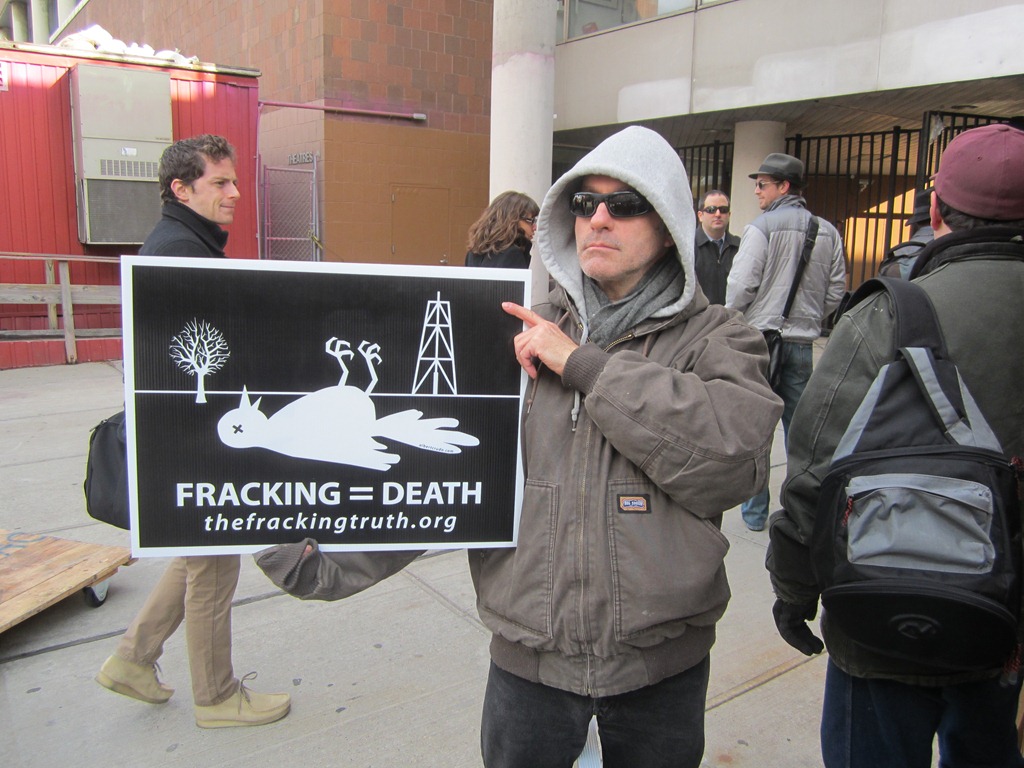
 Yesterday was an interesting experience for MDN editor Jim Willis, sitting in the NY Department of Environmental Conservation (DEC) hearing in New York City. The hearing was the last to be convened by the DEC to accept public comments on new draft drilling regulations proposed by the DEC that will allow high volume hydraulic fracturing to commence in New York State (ie allow shale gas drilling).
 The last two
  MDN recently highlighted a new study of several hundred water wells by Penn State researchers which found no evidence of chemical or methane contamination related to nearby Marcellus gas drilling (