
Chesapeake Floats Reverse Stock Split – Turn 200 Shares into 1
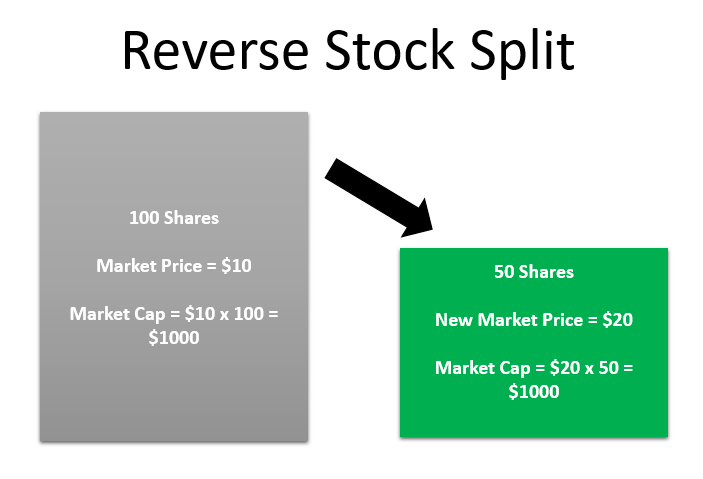 Last December the New York Stock Exchange sent Chesapeake Energy an official notification that the company’s stock price has fallen below the $1/share threshold for more than 30 consecutive trading days and because of it, Chessy’s stock will be delisted from the exchange–unless it can boost the share price within a certain period of time (see NYSE Warns Chesapeake Energy Stock to be Delisted…Unless). Speculation immediately began that Chessy would do a reverse stock split–combining multiple shares into a single share, thereby boosting the price of the remaining shares. Yesterday Chesapeake announced they will ask shareholders to approve such a reverse split.
Read More “Chesapeake Floats Reverse Stock Split – Turn 200 Shares into 1”

 According to super-secret sources, The White House is “strongly considering” a federal aid package for oil and gas companies affected by the Saudi-Russia oil price war and lingering effects from COVID-19 coronavirus panic. The proposed federal aid is called by some a “bailout.” But the Trumpsters and the O&G industry reject that label. Reportedly under consideration is a program of low-interest government loans. Regardless of what you call it (bailout or help), the U.S. has a vested interest in ensuring our domestic O&G industry does not get wiped out, plunging us back into dependence on despotic foreigners for our energy.
 We continue our coverage of the historic (in a bad way) oil price war started by Russia against American shale drillers, now complicated by Saudi Arabia as they have turned the spigot wide open to pump as much oil as they can, resulting in a price crash for oil. From time to time we’ve featured comments and reports issued by IHS Markit, a global analytics company that tracks data in the oil and gas industry. Yesterday we received IHS Markit’s “key conclusions” from the latest assessment of oil markets. It’s called, “Oil Markets and Industry Brace for Crash as Supply Floodgates Open.” We think it’s about the best summation of what has happened (so far), and what’s likely to happen in the near- and medium-term.
 Enverus, a leading oil and gas SaaS and data analytics company, yesterday released its latest FundamentalEdge report, called “Marcellus Natural Gas Flows,” which is focused on natural gas production and pipeline flow patterns in the Marcellus and Utica formations in the Northeast, MidAtlantic, and Midwestern regions of the U.S. Enervus measures gas flows along pipelines and as part of the preview of their report has shared with MDN some fascinating information. Like this: Some 41% of the gas produced in the Marcellus flows to the Mid-Atlantic region. Who knew?!
 On Monday there were dueling rallies at the Capitol in Harrisburg, PA, for and against a new petrochemical bill, House Bill (HB) 1100, that promises to bring thousands of new jobs and billions of dollars of investment to the Keystone State (see
  Although in 2019 the price of natural gas began a decline, and gas-focused companies scaled back drilling programs, the U.S. still hit a new all-time high record of natural gas production. The U.S. Energy Information Administration says U.S. natural gas production measured as gross withdrawals (the most comprehensive measure of natural gas production) averaged 111.5 Bcf/d in 2019, the highest volume on record. The biggest jump in production in 2019 did not come from associated gas in the Permian Basin. Rather, the biggest jump came from (yep) the Marcellus/Utica.
 MARCELLUS/UTICA REGION: Soaring stocks don’t fix — at least yet — what ails Marcellus; ODNR issues 4 Utica drilling permits; NATIONAL: Lower 48 E&Ps punch back by cutting capex as oil prices decimated; Don’t panic over stock market drop; The oil price collapse blame game begins.