
Norway’s Equinor is Shopping for New Assets in the Marcellus Shale
 Norway’s Equinor (formerly Statoil) is expanding its U.S. shale gas footprint, specifically targeting the Marcellus Shale to increase “portfolio longevity.” This strategic move is part of a broader global reshuffling in which Equinor is divesting from mature assets in regions such as Azerbaijan and Nigeria to reinvest in high-growth areas. The U.S. remains Equinor’s largest international development hub, and the company aims to boost non-Norwegian production to 900,000 barrels per day by 2030. By focusing on non-operated positions in Appalachia and the Gulf of Mexico, Equinor is “high-grading” its portfolio to relocate capital toward more sustainable, long-term production assets. Read More “Norway’s Equinor is Shopping for New Assets in the Marcellus Shale”
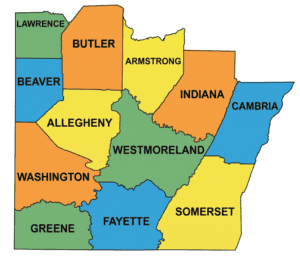
 In July 2022, MDN brought you news of a possible frac-out, or “inadvertent return” that happens when drilling mud pops out of places where it’s not supposed to — places outside the borehole being drilled (see
  Hull Street Energy (HSE) has entered an agreement to acquire two peaking power plants from Rockland Capital, LP, significantly expanding its Milepost Power portfolio. The acquisition includes the 677-megawatt (MW) Lee County Generating Station in Illinois and the 586-MW Tait Electric Generating Station in Ohio. Both facilities operate within the PJM electricity market, providing essential fast-start resources and grid stability amidst tightening supply-demand dynamics. Upon closing later this year, HSE’s total generation capacity will reach nearly 5,000 MW, establishing it as one of the largest private power producers in the United States.
 Dr. Kelvin Kemm is a South African nuclear physicist and past Chairman of the South African Nuclear Energy Corporation (Necsa). In an article on the Committee For A Constructive Tomorrow (CFACT) website, Kemm highlights a political exchange in which Senator John Kennedy exposed a climate advocate’s lack of knowledge about atmospheric CO2 concentrations. Kemm clarifies that CO2 levels are merely 0.04% of the Earth’s atmosphere, illustrating this with a 10,000-golf-ball analogy in which only one “yellow-dotted” ball represents human-added emissions since the 1860s.
  OTHER U.S. REGIONS: Why Massachusetts voters are done with Gov. Healey’s sky-high energy bills; Gov. Hochul wants to delay climate change rules before the election; NATIONAL: U.S. natural gas falls on Trump’s post about U.S.-Iran talks; TotalEnergies signs agreements to end its U.S. offshore wind projects; How demand is redefining the gas turbine market; Democrats’ energy betrayal – subsidizing Beijing while we strike Iran; AI is turning Big Tech into the new power players; INTERNATIONAL: Oil futures crash on Trump negotiations hint.