
Cuomo Forces National Grid to Pay $21M for Gas Pipe Violations
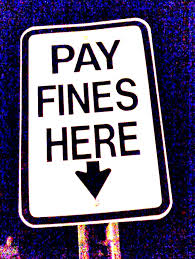 In yet another pathetic attempt to deflect attention away from his own crimes while in office (groping women, forcing nursing homes to accept COVID patients who infected other residents who died), Andrew Cuomo’s office yesterday announced a “settlement” with utility company National Grid (provides natural gas to half of New York City and all of Long Island). Cuomo’s office claims National Grid failed to protect underground gas pipelines from corrosion, which translates into $21 million of fines disappearing into the black hole of the Cuomo administration.
Read More “Cuomo Forces National Grid to Pay $21M for Gas Pipe Violations”
 UGI Corporation, one of Pennsylvania’s largest natural gas utility companies, is buying Mountaineer Gas Company, one of West Virginia’s largest natural gas utility companies, for $540 million. UGI serves 700,000 customers across PA (and one county in Maryland). Mountaineer serves 215,000 customers across WV. Both companies are big buyers of Marcellus/Utica shale gas.
 This would be funny if it weren’t so darned sad. In Lansing, NY, just outside of Planet Ithaca in Tompkins County, the local utility (NYSEG) wanted to build a short pipeline in 2017 to supply new customers with natural gas, but was blocked by crazies who irrationally hate fossil fuels (see
  The mafia, in the person of Andrew Cuomo, has taken over in New York State. The state is now officially, completely, dark and corrupt. We offer into evidence two recent actions to support our view. One is that two major Upstate utility companies, both owned by the Spanish-based Iberdrola, have agreed to stop advertising their natural gas service and won’t build any new gas delivery pipelines in a bid to discourage new gas customers from signing up. The companies have voluntarily agreed to cap their own businesses and revenues–to harm their investors–at the demand of Lord Cuomo. The second action is the state Siting Board has ruled they will NOT consider the negative impact on property values when approving huge wind and solar farms.
 The oil and gas marketplace is often described as being divided into three sectors: upstream, midstream and downstream. Upstream is drilling and producing, midstream is processing and transporting (basically pipelines), and downstream is end-users of all types–converting oil and gas into various products and/or delivering it to end-users. The COVID-19 coronavirus has the power to affect any and all three areas. However, the midstream and downstream (in particular pipeline companies and utility companies) do not expect this insidious virus to affect their operations. Why? It’s called business continuity planning.
 Last August MDN told you about a project in Keene, NH to convert an existing (antiquated) propane delivery system for the 1,200 customers in Keene over to cheaper, more abundant natural gas (see
  The New York Public Service Commission recently approved a petition by Consolidated Edison Company of New York, Inc. (Con Edison) for a $5 million, three-year natural gas demand response pilot program, one of the first demand response projects for natural gas. Demand response (DR) programs, somewhat common in the electricity sector, helps manage utility usage during periods of peak demand. How do they do it? In the case of Con Ed’s now-approved program, the utility will pay its customer to use less natural gas.