
Universities Float Plan for Utica-Powered Microgrid in Cleveland
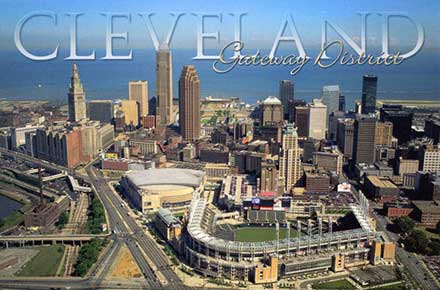 Cleveland State University and Case Western Reserve University have floated a bold plan to build a $100 million microgrid to power the city of Cleveland, OH’s central business district in downtown, a 2-3 square mile area. At the heart of the microgrid would be a Utica gas-fired combined heat and power system (CHP). The CHP plant would produce up to 48 megawatts of electricity and act as a backup and/or alternative to the grid. The cost per kilowatt-hour would higher than electricity from the regular grid, but hey, it would mean virtually 100% up-time, providing electricity when grid demand is extreme (hot summers, cold winters). It’s all about reliability.
Read More “Universities Float Plan for Utica-Powered Microgrid in Cleveland”
 In January 2015 MDN highlighted an ongoing squabble near Cleveland, in Cuyahoga County, OH, between the Ohio Dept. of Natural Resources (ODNR) and the Ohio Oil and Gas Commission (OOGC) (see
  There are some 408 parks that are part of the National Park System in the United States. The National Park Service (NPS) is the government agency charged with managing those parks. The NPS has just put everyone on notice that new regulations for oil and gas drilling on and under those parks is coming. In some cases mineral rights are not owned by the government and drilling does happen on or under the parks. Oil and gas drilling currently happens in 12 of the 408 parks, including drilling operations in the Cuyahoga Valley National Park between Akron and Cleveland in Northeast Ohio. Just over half of the drilling operations happening in those 12 National Parks is exempt from NPS regulations. In an annoucement (below), the NPS said (1) we’re about to make drilling regs more strict, and (2) the new regs will apply to all drilling in all National Parks, including the places where it’s currently exempt from NPS rules–even if the mineral rights are not owned by the NPS. It is another power grab by the federal government. The Bureau of Land Management (BLM) tried this tactic with non-park federal lands–a move that landed it in court (see
  Three weeks ago anti-drillers in the Cleveland suburb of Broadview Heights were handed a crushing defeat in which a County Common Pleas Court judge struck down a so-called community “bill of rights”–the only “right” of which was to deny legitimate oil and gas drillers the ability to conduct business. We pointed out what sore losers anti-drillers are (see
  We’ve commented before on the lawless tendencies of anti-drillers, particularly in Ohio where, when they lose a court case, they declare the government is illegitimate (see