
PA Sen. Gene Yaw Introducing Bill to Speed Up Utica Drilling
 Pennsylvania State Senator Gene Yaw is introducing legislation to modernize Pennsylvania’s 1961 Oil and Gas Conservation Law, which currently relies on standards predating modern horizontal drilling. By aligning the statute with contemporary practices, the bill aims to accelerate permit reviews for Utica wells and treat them consistently with Marcellus shale operations. Yaw argues that updating these outdated rules will reduce resource waste, minimize surface impacts, and prevent natural gas from being left underground. Read More “PA Sen. Gene Yaw Introducing Bill to Speed Up Utica Drilling”
 Williams is addressing the surging energy needs of data centers by deploying modular natural gas-fired power units. In fact, the company has a 6-gigawatt (GW) project backlog by the early 2030s. Williams executive Jaclyn Presnal highlights that modularization provides essential “speed to power” and extreme reliability through built-in redundancy, outperforming traditional large-scale plants for phased projects. These initiatives incorporate batteries to manage AI-driven loads and leverage pipeline expansions, such as the Transco Power Express (see
  Epsilon Energy, a relatively small company, used to concentrate most of its effort on developing Marcellus Shale wells. However, over the past few years, the company has expanded into other plays and now owns assets in the Anadarko (Oklahoma), the Permian (Texas), the Powder River Basin (Wyoming), and the Western Canadian Sedimentary Basin (in Alberta, Canada). In the Marcellus, Epsilon does not do its own drilling. It is a joint venture partner with (gives money to) Expand Energy, and Expand does the drilling in the Marcellus. Epsilon issued its latest quarterly update yesterday, discussing what’s on the docket for 2026. And, what’s on the docket is that Expand plans to drill five new wells this year on Epsilon’s leased acreage in northeast Pennsylvania.
 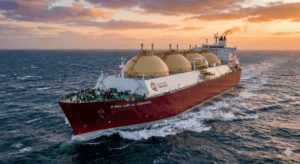 The Marcellus Shale Coalition writes that Pennsylvania sits at the center of U.S. Liquefied Natural Gas (LNG) development, as highlighted by the EU–U.S. LNG Cooperation 2.0 Summit held in February in Pittsburgh. Utilizing the Appalachian Basin’s vast resources, the state has driven the shale revolution, making the U.S. a leading global energy exporter. This production has been vital for European energy security, providing a critical alternative to Russian gas.
  Morningstar DBRS has published an interesting commentary that will be of interest to MDN readers and those with an interest in LNG: “From Risk to Relevance: Middle East Disruption Elevates North American LNG.” The escalating conflict in the Middle East has disrupted global LNG supply, damaged infrastructure in Qatar, and constrained shipping. These developments have heightened buyer concerns around supply security and transit risk, prompting a reassessment of LNG sourcing strategies. As a result, North American LNG has gained strategic relevance (preference), supported by jurisdictional stability and expanding export capacity.
  In December, representatives from Chesapeake Utilities and BHE GT&S, a subsidiary of Berkshire Hathaway Energy, presented a proposal to the Port Canaveral Authority to construct a new LNG liquefaction facility in Brevard County, FL (see
  OTHER U.S. REGIONS: Chevron warns California risks energy crisis due to Iran war; New York approaches the green energy cliff with morons in charge; NATIONAL: U.S. natural gas futures edge up ahead of storage data; Brother Love the Earth’s Traveling Salvation Show; Technology to be integral part of shale development in US; US shale oil production seen to plateau, Chevron CEO says; Propane sees record production and elevated inventories as export constraints emerge; INTERNATIONAL: Crude falls as Iran talks confuse market; Iran is drafting law to introduce tolls for Hormuz transit; ADNOC CEO says weaponizing Hormuz is economic terrorism; The truth about the energy transition and the need for affordable secure energy; U.S. natural gas exporters answer Asia’s calls for ‘help,’ but aid can’t come overnight.