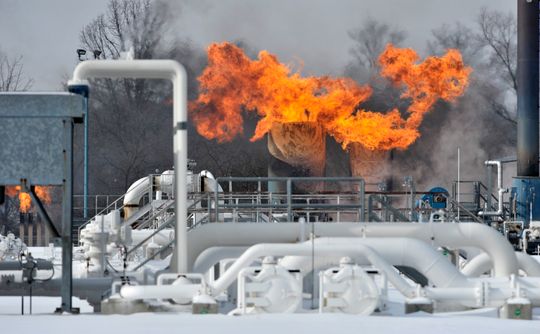
A pipeline compressor station for Consumers Energy (Michigan utility company) experienced an explosion and fire yesterday morning. The facility is located in the Lower Peninsula of Michigan in Macomb County. Read More “Michigan NatGas Compressor Station Catches Fire, Explodes”
At the end of July NEXUS Pipeline was 80% complete and made big boasts that it would be ready to flow during the third quarter of this year (see NEXUS Pipeline Update – Now 80% Complete, on Schedule for 3Q18). By golly, they are true to their word. Earlier this week NEXUS told the Federal Energy Regulatory Commission (FERC) they are ready to go, and asked permission to begin service by September 28, flowing 967 million cubic feet per day (MMcf/d) along the pipeline that will eventually carry 1.5 billion cubic feet per day (Bcf/d). The NEXUS Pipeline project is owned by DTE Energy and Spectra Energy (Enbridge). It is a $2 billion, 258-mile interstate pipeline that runs from Columbiana County in eastern Ohio across Ohio to an interconnection with DTE Gas in Washtenaw County, Michigan. Eventually, via the Vector Pipeline, gas from NEXUS will flow to the Dawn Hub in Ontario, Canada. Radical environmental groups fought the project tooth and nail. CORN (Coalition to ReRoute Nexus), and the far-left Sierra Club, launched multiple lawsuits and regulatory actions against the pipeline. We’re happy to report they lost. And now NEXUS is ready to flow… Read More “NEXUS Pipeline Asks FERC for Sept 28 Startup to Flow 967 MMcf/d”
Is there any fixing stupid? We suppose not. So-called environmentalists are opposing a plan by the University of Michigan to update the main campus’ Central Power Plant with a natural-gas fired turbine to produce electricity for the Central and Medical Campus buildings. By doing so, the University will leapfrog to achieving 50% of its goal to reduce so-called greenhouse gas emissions by 25% by 2025 (seven short years from now). Put another way, by building this gas turbine and using the electricity it generates, the University of Michigan will be halfway to their emissions reductions goals. One turbine. Clean natural gas. It’s a win/win all the way around. Yet environuts oppose the plan because it is a “long-term investment in fossil fuels.” Again we ask, is there any fixing stupid?… Read More “Enviros Oppose U of Michigan Plan to Use Gas-Fired Electricity”
Any time a new natural gas-fired power plant is announced in the northeast, southeast, or Midwest, we’re interested. Why? Because they are gas-hungry beasts, using huge quantities of natural gas. And chances are plants in those regions could (likely do) use Marcellus/Utica Shale gas to power them–at least in part. They are an important new source of demand for our gas. Often overlooked are existing gas-fired power plants, especially those that don’t run 24/7/365. They’re an important market for our gas too. We spotted a story about one such plant, in Marquette County, Michigan. Tuesday afternoon the Marquette Board of Light and Power board approved a new natural gas wholesale price agreement for the Marquette Energy Center–a small 54 megawatt generator that runs from 7am to 10pm each day. Plants typically don’t cut deals with drillers directly. Instead, they buy gas on contract from a broker, a “gas marketer” that buys and sells natural gas. Three of the four companies bidding on the Marquette Energy Center contract are on a list of the Top 25 North American Gas Marketers, a list tabulated and published quarterly by our friends at NGI (Natural Gas Intelligence). In fact, the top gas marketer in the country (has been for years) is the company that won the Marquette contract–BP… Read More “Michigan Town Signs with BP to Supply Natgas to Power Plant”
Last June DTE Energy filed paperwork in Michigan to build a new “state-of-the-art” natural gas-fired power plant in St. Clair County (see DTE Energy Files to Build New Natgas-Fired Elec Plant in Michigan). The gas-fired plant will produce 1,150 megawatts of electricity, enough to power 850,000 homes, helping to offset three coal-fired plants set to retire by 2023. Environmental groups launched a campaign to oppose the project (see Michigan Anti Fossil Fuelers Oppose DTE Gas-Fired Plant Proposal), but their efforts were too little too late. In April, the Michigan Public Service Commission approved the project (see List of 6 NatGas-Fired Electric Plants Coming to Michigan). The plant project has a name–the Blue Water Energy Center. Today is the day DTE Energy, the builder, will officially break ground for Blue Water Energy Center. Ahead of schedule! Why our excitement over this project? There is a considerable amount of Utica/Marcellus gas heading into Michigan via the Rover and NEXUS pipelines. Blue Water Energy is a potential (we’d say likely) customer for M-U gas supplies… Read More “DTE Energy’s Michigan Gas-Fired Plant Breaks Ground Today”
Last Thursday, May 24, Energy Transfer Partners requested (frankly, begged) the Federal Energy Regulatory Commission (FERC) to approve final startup for the rest of Rover Pipeline not yet flowing–by June 1st. ET has contracts to honor and they promised shippers the full pipeline would be up and running by June 1st. ET requested permission to start up the “Majorsville Lateral, Supply Connector Line B, and Mainline B between CS1 and CS2 and between CS3 and the terminus,” along with a request to begin flowing on the “Burgettstown Lateral.” Note that some of the project has two pipelines, side by side (the Mainline and Supply Connector). ET asked that the second pipes in both cases be allowed to start up, along with the Majorsville and Burgettstown Laterals (see the map). ET got some of what it wanted–everything but permission to start up the laterals–yesterday from FERC. With the startup of Mainline B and Supply Connector B, ET says the Rover Pipeline project is now capable of flowing the full 3.25 billion cubic feet per day of natgas all the way to the Dawn Hub in Ontario, Canada. The only “problem” remaining is to find enough gas to flow the full 3.25 Bcf/d. They won’t be flowing the full 3.25 Bcf/d until all of the laterals are brought online… Read More “M-U Gas Now Travels to Dawn Hub in Canada via Rover Pipeline”
Last June DTE Energy filed paperwork in Michigan to build a new “state-of-the-art” natural gas-fired power plant in St. Clair County (see DTE Energy Files to Build New Natgas-Fired Elec Plant in Michigan). The gas-fired plant will produce 1,100 megawatts of electricity, enough to power 850,000 homes. If all goes according to plan, the new $1 billion plant will go online in 2022, helping to offset three coal-fired plants set to be retired by 2023. The process is long to approve and then build such a project, with many hoops to jump through. The first hurdle, perhaps THE major hurdle, is an approval by Michigan utility regulators. That happened in April. Right on cue the far-left Sierra Club, Natural Resources Defense Council (NRDC), and Earthjustice, all of which seem to have unending sources of cash to file lawsuits, have together filed an appeal with the Michigan Court of Appeals to reverse the Michigan Public Service Commission (MPSC) decision to approve the project… Read More “Big Green Sues to Stop DTE Energy’s MI Gas-Fired Electric Plant”
An order from the Federal Energy Regulatory Commission (FERC) issued yesterday allows Energy Transfer (ET) to begin full operations along the North Market Segment of the Rover Pipeline–a $3.7 billion, 711-mile natural gas pipeline that runs from PA, WV and eastern OH through OH into Michigan and on to Canada via the Vector Pipeline. On April 13 ET asked FERC for permission to start up service along another major chunk of it’s massive Rover Pipeline (see Rover Pipe Asks FERC for OK to Open New Segments in OH, MI). ET eagerly wants to begin service along a 100-mile segment of Rover in northwest Ohio on into Michigan. FERC has been approving ET’s April 13th request in dribs and drabs. With yesterday’s approval, the entire length of the Rover pipeline is now substantially operational. There are still a few places not yet in service, but ET says they are on track to have the project 100% operational by the end of June. When fully operational, Rover will flow 3.25 billion cubic feet per day (Bcf/d) of Marcellus/Utica gas, some it going all the way to the Dawn Hub in Ontario, Canada. Currently Rover is capable of flowing 1.7 Bcf/d. With this new addition, we expect that number will jump considerably… Read More “FERC Allows Rover Pipeline Startup in Michigan, Close to 100% Done”
Last June DTE Energy filed paperwork in Michigan to build a new “state-of-the-art” natural gas-fired power plant in St. Clair County (see DTE Energy Files to Build New Natgas-Fired Elec Plant in Michigan). The gas-fired plant will produce 1,100 megawatts of electricity, enough to power 850,000 homes. If all goes according to plan, the new $1 billion plant will go online in 2022, helping to offset three coal-fired plants set to retire by 2023. Although environmental groups launched a campaign against the project (see Michigan Anti Fossil Fuelers Oppose DTE Gas-Fired Plant Proposal), their efforts were too little too late. Last week the Michigan Public Service Commission approved the project! In addition, we spotted an article about five more natgas-fired plants planned for Michigan (full list below). As we always point out, there is a considerable amount of Utica/Marcellus gas heading into Michigan via the Rover and NEXUS pipelines. These plants are all potential customers for our gas supplies… Read More “List of 6 NatGas-Fired Electric Plants Coming to Michigan”
Last Friday, Energy Transfer Partners asked the Federal Energy Regulatory Commission (FERC) for permission to start up service along another major chunk of it’s massive Rover Pipeline (see Rover Pipe Asks FERC for OK to Open New Segments in OH, MI). ET wants to begin service along a 100-mile segment of Rover in northwest Ohio and in Michigan. ET also asked for permission to start up a segment of Mainline B in Crawford and Wayne counties (OH). The 100-mile segment through Michigan, called the Market segment, completes the pipeline, connecting to the Vector Pipeline in Livingston County, Michigan, which will allow Utica/Marcellus gas to flow all the way to the Dawn Hub in Ontario, Canada via Vector. In last Friday’s request, ET asked FERC to hurry it up because customers are desperate (our words) to get their Utica/Marcellus gas to market. ET requested a starting date no later than April 25–next Wednesday. Unfortunately there’s been no word, as of today, from FERC. The silence is deafening… Read More “Rover Pipeline Still Waiting on FERC to Start Up Michigan Segment”
Last June DTE Energy filed paperwork in Michigan to build a new “state-of-the-art” natural gas-fired power plant in St. Clair County (see DTE Energy Files to Build New Natgas-Fired Elec Plant in Michigan). The gas-fired plant will produce 1,100 megawatts of electricity, enough to power 850,000 homes. If all goes according to plan, the new $1 billion plant will go online in 2022, helping to offset three coal-fired plants set to be retired by 2023. The process is long to approve and then build such a project, with many hoops to jump through. The first major hurdle, perhaps THE major hurdle, is an approval by Michigan utility regulators. The deadline for that approval is almost here–April 27. With the deadline looming, Big Green, with its ongoing, irrational hatred of all fossil fuels, has ramped up opposition to the project. An approval by regulators is being complicated by the fact that DTE filed two months after new energy laws went into effect, but before the Public Service Commission finalized its guidelines under those new laws, in December. Apparently there’s an issue with the application as it relates to the December guidelines–an issue that would potentially delay the project another year or more… Read More “Michigan Anti Fossil Fuelers Oppose DTE Gas-Fired Plant Proposal”
On Friday Energy Transfer Partners asked the Federal Energy Regulatory Commission (FERC) for permission to start up service along another major chunk of it’s massive Rover Pipeline. ET wants to begin service along a 100-mile segment of Rover in northwest Ohio and in Michigan. ET also asked for permission to start up a segment of Mainline B in Crawford and Wayne counties (OH). The 100-mile segment, called the Market segment, completes the pipeline as it connects to the Vector Pipeline in Livingston County, Michigan. ET says 99% of all pipeline for Rover is now in the ground and done. Some 83% of underground horizontal direction drilling (HDD) required to install small portions of the pipeline under creeks, rivers, bridges, roads, etc. is now done. It won’t be long now until Rover is done done. Here’s the latest great news that most of the rest of the pipeline is now ready to begin service… Read More “Rover Pipe Asks FERC for OK to Open New Segments in OH, MI”
NEXUS Pipeline, a $2 billion, 255-mile interstate pipeline currently under construction running from Ohio through Michigan–eventually with a connection to the Dawn Hub in Ontario, Canada. NEXUS got final approval for the project from the Federal Energy Regulatory Commission (FERC) last August, the first major pipeline to get approved following a newly restored quorum at FERC (see New FERC Quorum Votes Final Approval for NEXUS Pipeline). However, radical environmental groups have fought the project tooth and nail. CORN (Coalition to ReRoute Nexus, folks we call CORNballs), and the far-left Sierra Club, launched lawsuits and regulatory actions against the pipeline. The City of Green, OH initially blocked construction, but later cut a deal to allow the pipeline through the area ($7.5 million talks, see Antis of Green, OH Finally Face Reality – Will Allow NEXUS Pipe). While a few Green antis are attempting to force a referendum to reverse the deal struck by the city, pretty much all of the other opposition has thrown in the towel. We haven’t read/heard from the CORNballs (or Sierra Club) in months. And now, antis in Michigan are admitting defeat–they admit that NEXUS will get built and become operational this year… Read More “Despite Opposition, NEXUS Pipe Will be Done & Running This Year”
In December MDN brought you the news that the Lansing, Michigan Board of Water & Light (BWL) wants to build a brand new $500 million natural gas-fired power plant (see Lansing, MI to Build New 250 MW Gas-Fired Electric Plant). The new plant will generate 250 megawatts of electricity, create 1,200 construction jobs, and go online in 2021. It will replace (and retire) two BWL coal-fired plants. Out with old, in with the new. We’re interested in the project because it is a potential new demand source for Marcellus/Utica Shale gas. On Tuesday, BWL voted, unanimously, to approve borrowing up to $500 million to construct the project. They did so over the objections of a group of fossil fuel haters who apparently would rather sit in the dark rather than build a plant that uses a dreaded fossil fuel. BWL board members had to put up with the usual fossil fuel speechifying, and then proceeded to move forward like the adults they are, over the objections of the petulant children present… Read More “Lansing, MI Approves Borrowing $500M for Gas-Fired Electric Plant”
In October 2016, Indeck Energy announced a plan to build a $1 billion electric generating plant (powered by natural gas) in Niles, Michigan, not far from Chicago (see $1B Electric Plant Planned Near Chicago, M-U Connection?). Although there has been no mention of Marcellus/Utica gas feeding the plant (so far), we have little doubt that our gas will be used to power the plant. A number of pipelines already do, or soon will, serve that region with our gas. The State of Michigan gave its blessing and approval for the project over a year ago (see Indeck Gets Michigan Approval for $1B Gas-Powered Electric Plant). Indeck, at the time, said they planned to begin construction by the end of 2017. Didn’t happen. What’s the holdup? A couple of easements are required from Amtrak (Come on Amtrak! Get with the program!). Indeck now says construction is slated to begin in August of this year, and the plant is due to be up and running in early 2021… Read More “Indeck to Start Building $1B Gas-Powered Electric Plant in Michigan”
Michigan is not within the Marcellus/Utica Shale region, so you may wonder why we would highlight a story about a new natural gas-fired electric plant proposed for Michigan. Although there is no shale drilling in Michigan (at least not yet), we still have an interest in the state. Why? Pipelines from the Marcellus/Utica are right now being built to Michigan (Rover, NEXUS). In addition, Marcellus/Utica gas is already flowing to points in the Midwest via pipelines like the reversed Rockies Express (REX). Once the gas makes its way West, it catches a ride on other pipelines to feed places like Chicago, and (yes) Michigan. In other words, it’s a pretty good bet that the gas that will feed this plant if/when it gets built, will come from our region. Competitive Power Ventures (CPV) is proposing to build a new power plant in Livingston County. So far it’s still only talk. However, the talk is starting to get serious. CPV recently purchased a 7-year option to buy 145 acres of farmland where the plant would be located. In other words, money is now starting to get spent, which is a good sign. Here’s the particulars we could find about this project… Read More “CPV Proposes New $1B Gas-Fired Elec Plant in Livingston, Mich.”

 At the end of July NEXUS Pipeline was 80% complete and made big boasts that it would be ready to flow during the third quarter of this year (see
  Is there any fixing stupid? We suppose not. So-called environmentalists are opposing a plan by the University of Michigan to update the main campus’ Central Power Plant with a natural-gas fired turbine to produce electricity for the Central and Medical Campus buildings. By doing so, the University will leapfrog to achieving 50% of its goal to reduce so-called greenhouse gas emissions by 25% by 2025 (seven short years from now). Put another way, by building this gas turbine and using the electricity it generates, the University of Michigan will be halfway to their emissions reductions goals. One turbine. Clean natural gas. It’s a win/win all the way around. Yet environuts oppose the plan because it is a “long-term investment in fossil fuels.” Again we ask, is there any fixing stupid?…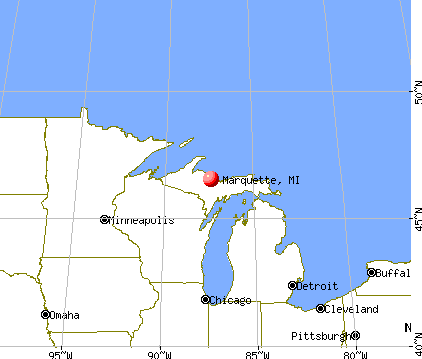


 An order from the Federal Energy Regulatory Commission (FERC) issued yesterday allows Energy Transfer (ET) to begin full operations along the North Market Segment of the Rover Pipeline–a $3.7 billion, 711-mile natural gas pipeline that runs from PA, WV and eastern OH through OH into Michigan and on to Canada via the Vector Pipeline. On April 13 ET asked FERC for permission to start up service along another major chunk of it’s massive Rover Pipeline (see
  Last June DTE Energy filed paperwork in Michigan to build a new “state-of-the-art” natural gas-fired power plant in St. Clair County (see
  Last Friday, Energy Transfer Partners asked the Federal Energy Regulatory Commission (FERC) for permission to start up service along another major chunk of it’s massive Rover Pipeline (see

 In December MDN brought you the news that the Lansing, Michigan Board of Water & Light (BWL) wants to build a brand new $500 million natural gas-fired power plant (see
  In October 2016, Indeck Energy announced a plan to build a $1 billion electric generating plant (powered by natural gas) in Niles, Michigan, not far from Chicago (see